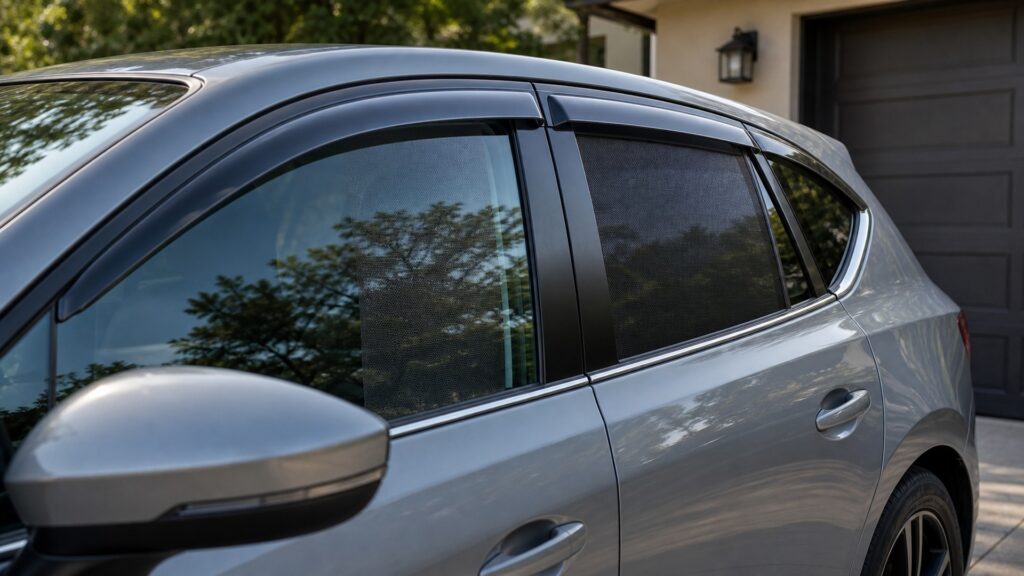
Operating chain
Trace the Operating Chain in Window Accessories
For “How Window Accessories Work,” the mechanism begins by controlling airflow, shade, glare, glass movement, and weather sealing around side windows without compromising sightlines or regulator operation. Evidence for better ventilation, glare management, or cabin protection when the accessory fits the exact window and use case comes from whether those linked stages preserve compatibility and control under normal use; within the operating boundary created by the field check to position the shade without covering mirrors, signals, or the driver's required view.
- Identify the input at window deflector; where the decisive evidence comes from the limit that more coverage is not safer when it hides traffic or pedestrians.
- Follow it through sun shade or visor; provided the setup accounts for how glass channel guides the window edge and supplies the space used by some in-channel accessories.
- Observe the response at glass channel; while the user also checks the field check to cycle the glass repeatedly while listening for drag or automatic reversal.
- Check the boundary at optical and legal boundary; because the result still depends on the limit that added thickness can overload anti-pinch logic or scratch the glass.
In this the complete operating sequence analysis of window accessories, a break around sun shade or visor or optical and legal boundary changes the answer; as the article tests how weather seal limits water and wind entry while allowing the glass to move.
Decision focus
Apply the Question in “How Window Accessories Work”
Window Accessories works by controlling airflow, shade, glare, glass movement, and weather sealing around side windows without compromising sightlines or regulator operation. For window accessories, each stage has to remain compatible with the next because a strong specification cannot repair a broken path through window deflector or optical and legal boundary; with the tradeoff measured against the field check to inspect compression and water shedding after installation.
- Start at window deflector; with the conclusion tied to the limit that a folded or displaced seal can whistle, leak, or retain water inside the door.
- Trace the transfer through sun shade or visor; when the evidence is checked against how adhesive or clip attachment holds an accessory against paint, trim, glass, or the frame under heat and airflow.
- Check control at glass channel; under the practical condition of the field check to prepare the named surface and respect cure time before driving.
- Verify the boundary represented by optical and legal boundary; with special attention to the limit that contamination, cold application, or reused tape can lead to edge lift.
The recommendation in “How Window Accessories Work” is limited to the complete operating sequence and the supported outcome of better ventilation, glare management, or cabin protection when the accessory fits the exact window and use case; as verified through how optical and legal boundary sets how tint, mesh, or accessory placement affects visibility and compliance.
Fitment
Verify Fit Before Judging the Result
The fitment test for “How Window Accessories Work” covers door frame shape, glass channel depth, seal compression, mirror sightline, regulator path, adhesive surface, and window indexing behavior. For window accessories, those conditions establish whether the promised outcome can be reached without physical, electrical, legal, or operating conflict; within the operating boundary created by the field check to verify local rules and inspect the view in darkness and rain.
- Measure or identify window deflector; where the decisive evidence comes from the limit that a product marketed for a window may still be illegal or unsafe in a particular position.
- Check clearance around glass channel; provided the setup accounts for the complete operating sequence through controlling airflow, shade, glare, glass movement, and weather sealing around side windows without compromising sightlines or regulator operation.
- Use the manufacturer's vehicle-specific instructions; while the user also checks the intended outcome of better ventilation, glare management, or cabin protection when the accessory fits the exact window and use case.
- Run a complete low-risk function test after installation; because the result still depends on the fitment requirement covering door frame shape, glass channel depth, seal compression, mirror sightline, regulator path, adhesive surface, and window indexing behavior.
A forced or approximate fit invalidates the expected benefit in how window accessories work; as the article tests the safety boundary covering preserve the driver's field of view, keep glass movement unobstructed, use legal tint levels, and stop if a regulator reverses or strains.
Safety boundary
Keep the Safety Claim Proportionate
The safety boundary for “How Window Accessories Work” is preserve the driver's field of view, keep glass movement unobstructed, use legal tint levels, and stop if a regulator reverses or strains. For window accessories, warning signs around weather seal or adhesive or clip attachment require stopping and correcting the setup; with the tradeoff measured against the upkeep routine to clean channels and optical surfaces with compatible products, inspect adhesive and clips, watch for edge lift or scratching, and remove anything that interferes with glass travel.
- Follow rated limits and installation instructions; with the conclusion tied to how window deflector changes the pressure and rain path at a partly opened side window.
- Inspect weather seal before normal use; when the evidence is checked against the field check to check edge position, wind noise, and mirror visibility at road speed.
- Test controls and clearances without adding avoidable risk; under the practical condition of the limit that a poorly seated deflector can rub glass, stress the regulator, or detach.
- Use a qualified installer when the work exceeds the user's competence; with special attention to how sun shade or visor blocks a selected light path before glare or heat reaches the occupant.
“How Window Accessories Work” does not justify bypassing vehicle instructions, ratings, or applicable rules; as verified through the field check to position the shade without covering mirrors, signals, or the driver's required view.
Upkeep
Check Whether the Result Will Last
Long-term performance in “How Window Accessories Work” depends on this maintenance routine: clean channels and optical surfaces with compatible products, inspect adhesive and clips, watch for edge lift or scratching, and remove anything that interferes with glass travel. For window accessories, exposure around adhesive or clip attachment determines when that work is due; within the operating boundary created by the limit that more coverage is not safer when it hides traffic or pedestrians.
- Inspect sun shade or visor after initial use; where the decisive evidence comes from how glass channel guides the window edge and supplies the space used by some in-channel accessories.
- Recheck adhesive or clip attachment after weather or heavy demand; provided the setup accounts for the field check to cycle the glass repeatedly while listening for drag or automatic reversal.
- Correct movement, wear, contamination, or water entry early; while the user also checks the limit that added thickness can overload anti-pinch logic or scratch the glass.
- Retest the function after service; because the result still depends on how weather seal limits water and wind entry while allowing the glass to move.
Maintenance in “How Window Accessories Work” protects better ventilation, glare management, or cabin protection when the accessory fits the exact window and use case, but cannot make an incompatible product suitable; as the article tests the field check to inspect compression and water shedding after installation.