HubSpot Sales Hub vs Zoho CRM: Which Sales CRM Software Is Better?

HubSpot Sales Hub and Zoho CRM both work for growing sales teams, but they solve growth pressure differently. HubSpot focuses on adoption, engagement, pipeline activity, and customer-platform context. Zoho CRM focuses on configurable modules, automation, analytics, multichannel records, and suite value. The right choice depends on whether the team needs cleaner selling behavior now or broader CRM control over time.

By: Review Streets Research Lab
Updated: September 4, 2026
Approx. 10-12 min read
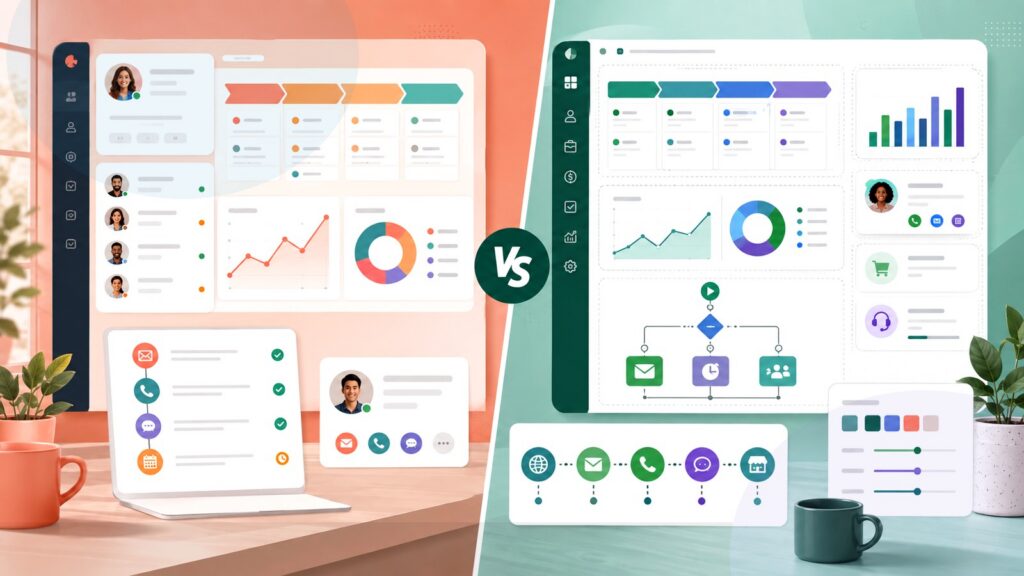
HubSpot Sales Hub vs Zoho CRM business comparison image

Head-to-head

HubSpot Sales Hub vs Zoho CRM: Which Sales CRM Software Is Better?

HubSpot Sales Hub is the better default when fast seller adoption, engagement workflows, and customer context matter most. Zoho CRM is better when customization, automation breadth, and suite value carry the decision.

HubSpot Sales Hub comparison image

HubSpot Sales Hub

HubSpot Sales Hub fits teams that want sales reps working from an approachable CRM with sequences, meetings, quotes, calling, email context, reporting, and easy links to marketing or service workflows.

Score 8.8/10 Best for sales teams needing fast adoption and engagement tools Focus Seller adoption Why buy Engagement
  • Easy engagement workflows for reps
  • Good fit with marketing and service context
  • Useful reporting without deep customization
VS
Zoho CRM comparison image

Zoho CRM

Zoho CRM fits teams that want configurable sales processes, modular records, workflow automation, analytics, AI assistance, multichannel engagement, and a broader business software suite at a controlled cost.

Score 8.7/10 Best for value-focused teams wanting broad CRM customization Focus CRM control Why buy Suite value
  • Flexible modules and workflow automation
  • Strong value across a broad CRM feature set
  • Good match for Zoho-centered operations
Metric
HubSpot Sales Hub
Zoho CRM
Winner
Seller adoption
Stronger for teams that want an approachable sales workspace and engagement tools
Good after configuration, but the broader feature set needs more setup discipline
HubSpot Sales Hub
Customization breadth
Configurable enough for many teams without becoming a heavy admin project
Stronger for custom modules, layouts, workflows, blueprints, and tailored processes
Zoho CRM
Engagement tools
Better for sequences, meetings, quotes, calling, email tracking, and rep workflow context
Good multichannel engagement, especially when combined with Zoho automation
HubSpot Sales Hub
Suite direction
Best when marketing, sales, service, and content should share one customer platform
Best when the business wants CRM connected to Zoho's wider operations suite
Tie
Reporting model
Easier for teams that want useful sales reports without deep system design
Good for buyers willing to configure analytics around custom processes
HubSpot Sales Hub
Cost control
Strong value when adoption saves time and reduces implementation friction
Stronger when broad CRM features at controlled cost are the priority
Zoho CRM
Real-world context
This comparison turns on adoption versus configuration. HubSpot is safer when the business needs reps productive quickly. Zoho CRM gets more persuasive when leaders want deeper process design and suite economics.

Why people choose it

  • Stronger default for teams prioritizing rep adoption
  • Good outreach, meeting, quote, and CRM timeline experience
  • Natural fit when marketing and sales share customer context

Why people choose it

  • Broader customization and automation options for the price
  • Useful analytics, AI support, and multichannel customer records
  • Compelling when the buyer wants more of the Zoho ecosystem
Winner: HubSpot Sales Hub HubSpot Sales Hub wins for most teams that need a polished sales engagement workflow with less setup friction. Zoho CRM remains the stronger choice for buyers who will actively configure and govern a broader CRM suite.
Read FAQs

Deep dive

What actually matters in this matchup

This matchup turns on whether growth is blocked by sales adoption or by CRM flexibility. HubSpot makes everyday engagement easier for reps. Zoho CRM gives administrators more room to shape records, automation, analytics, and suite-connected processes. That matters once reps start.

Rep experience: HubSpot Sales Hub is easier to recommend when reps need a clean workspace for outreach, meetings, quotes, and pipeline updates. Zoho CRM can support similar work, but the experience depends more on thoughtful configuration. That keeps adoption and admin balanced.

Admin control: Zoho CRM becomes more compelling when a team wants custom modules, layouts, scoring, automation paths, and suite-specific workflows. HubSpot gives enough configuration for many teams, but it is less about designing a bespoke CRM system. That keeps adoption and admin balanced.

Lifecycle context: HubSpot is strongest when sales needs shared customer context from marketing and service activity. Zoho CRM is strongest when CRM must connect to a broader operations suite and the buyer values flexible business-app adjacency. That keeps the rollout decision grounded.

Cost shape: HubSpot can save money by reducing friction and speeding adoption. Zoho CRM can save money through broader capability and suite value. The better cost story depends on whether time-to-use or customization breadth removes more waste. That distinction matters when sellers and admins need different things.

Reporting: HubSpot reporting is more approachable for teams that want pipeline, activity, and engagement insight quickly. Zoho CRM offers deeper room for custom process analytics, but managers must define the workflow and data structure carefully. Use that lens before choosing the broader suite.

Final choice: Choose HubSpot when sellers need to use the system immediately and customer context matters. Choose Zoho CRM when the team is ready to configure a broader CRM environment and wants strong feature breadth for the spend. That keeps the decision tied to adoption, configuration, and daily ownership.

Methodology

How we evaluated the matchup

This review separates seller adoption from administrator flexibility, using official product information and workflow fit.

Scope: We reviewed HubSpot Sales Hub as an adoption-friendly sales engagement CRM and Zoho CRM as a configurable suite-centered CRM. The analysis uses official sources and workflow fit, not instrumented hands-on testing. That distinction matters when sellers and admins need different things.

What we compared: The scoring considers rep usability, sequence and meeting workflows, pipeline management, customization, automation, AI support, analytics, customer-platform context, suite integration, implementation effort, administrator ownership, plan limits, and total value for growing teams. That keeps adoption and admin balanced.

Interpretation: HubSpot wins because fewer teams fail from too much seller clarity. Zoho CRM stays close when the buyer has enough ownership discipline to turn its broader configuration options into clean, useful process design. That keeps the rollout decision grounded.

Buyer checks: Ask each vendor to demonstrate a lead handoff, rep follow-up day, custom field change, automated task path, manager dashboard, data export, mobile update, integration setup, and support path for administrators. That distinction matters when sellers and admins need different things.

FAQ

HubSpot Sales Hub vs Zoho CRM: common questions

Which product is easier for sales reps?
HubSpot Sales Hub is usually easier for reps because engagement tools, contact timelines, meetings, and pipeline tasks are presented in a more guided workflow. Zoho CRM can be easy too, but configuration quality matters more. That distinction matters when sellers and admins need different things.
Where does Zoho CRM beat HubSpot Sales Hub?
Zoho CRM beats HubSpot when buyers want more custom modules, workflow flexibility, suite connections, and broad CRM capability for the spend. It is strongest when someone will actively design and maintain the process. That distinction matters when sellers and admins need different things.
Which is better for sales engagement?
HubSpot Sales Hub is better for most engagement-led teams because sequences, meetings, calling, email tracking, quotes, and CRM context sit close together. Zoho CRM is stronger when engagement is part of a wider configured suite. That distinction matters when sellers and admins need different things.
Which is better for customization?
Zoho CRM is better for deep customization, especially around modules, layouts, automation, scoring, and process rules. HubSpot is better when the team wants useful configuration without turning CRM into a heavy admin project. That distinction matters when sellers and admins need different things.
Which is better for reporting?
HubSpot is easier for standard pipeline, activity, and engagement reporting. Zoho CRM can support more custom analytics, but buyers should confirm they have clean fields, ownership rules, and reporting discipline before relying on that depth. Use that lens before choosing the broader suite.
Should a Zoho user choose Zoho CRM?
Often, yes. Existing Zoho users should give Zoho CRM serious consideration because suite fit can reduce fragmentation. They should still compare HubSpot if sales engagement adoption is the bigger operational pain. That keeps the decision tied to adoption, configuration, and daily ownership. That matters here.
What should buyers verify before selecting?
Verify current editions, automation limits, required add-ons, email sync, calling tools, mobile experience, permissions, data export, support response, onboarding help, migration services, and whether integrations are native or require middleware. That keeps the decision tied to adoption, configuration, and daily ownership. That matters here.

Is this review based on hands-on testing?
No. It uses official product information, public documentation, and buyer workflow analysis. Teams should confirm current product limits, security requirements, pricing, demos, and implementation details directly with each vendor. That keeps the decision tied to adoption, configuration, and daily ownership. That matters once reps start.

Key Takeaways

  • HubSpot wins the adoption-first case.
  • Zoho CRM wins stronger customization value.
  • Engagement workflows favor HubSpot Sales Hub.
  • Suite economics keep Zoho CRM attractive.
  • Reporting depends on clean process design.
  • Pick the system your team will maintain.

Verdict

The Better Default for Adoption-Led Sales Teams

HubSpot Sales Hub is the stronger default when the team needs reps using outreach, meetings, quotes, pipeline tasks, and customer context quickly.

#1 Winner

HubSpot Sales Hub

HubSpot Sales Hub wins because most teams benefit first from seller adoption and engagement clarity before they benefit from deeper CRM customization.

  • Stronger everyday engagement workflow for reps
  • Cleaner path for marketing-to-sales context
  • Less administrative friction for many growing teams

Runner-up

Jump to the Head-to-Head

Tip: Give sales reps and administrators separate demo scorecards. Their answers will show whether adoption or customization is the real bottleneck.

Where to Buy

Use the official HubSpot and Zoho CRM pages to confirm demos, plan limits, automation access, and current onboarding options.

Vendor terms, demos, pricing, and feature availability change regularly. Some links may earn a commission and never affect rankings.

Accessories You’ll Want

  • Rep workflow scorecard (measures how quickly sellers can complete daily outreach and pipeline updates)
  • Customization backlog (captures modules, fields, automations, and layouts the buyer actually needs)
  • Lifecycle handoff sketch (shows where marketing, sales, and service records must meet)
  • Suite cost worksheet (compares licenses, add-ons, admin time, onboarding, and integration work)
  • Reporting ownership plan (assigns dashboard creation and data hygiene after launch)

Tip: Score the rep experience and the admin experience separately before choosing.