
Interior Comfort Buying Guide for Interior Comfort Protection Needs
A protective layer changes the surface it covers. It can reduce abrasion and staining, but it can also hold heat, trap a spill, block seat ventilation, alter passenger sensing, reflect in the windshield, or cross a side-airbag seam. Preservation is useful only when the underlying cabin system keeps doing its job.
Map the threat before selecting the barrier. Shade addresses sunlight differently from a dash cover; a removable cargo pad handles pet claws differently from a front-seat cover; a spill tray is not a substitute for drying upholstery. Follow exact vehicle restrictions near seats and restraints, secure every piece, and schedule inspection reveals so hidden moisture, wear, or material changes are found early.
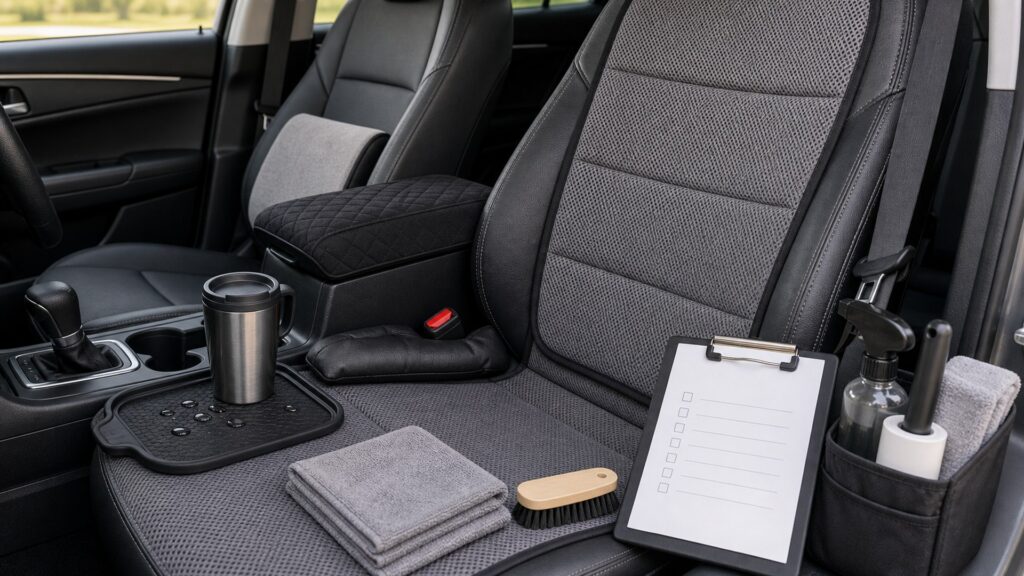
Buying framework
Set the surface preservation baseline before buying
Convert the desired surface preservation improvement into physical, functional, and maintenance requirements.
Create a surface inventory: List seat cushions and backs, dashboard, console, door trim, carpet, cargo-facing panels, windows, controls, and high-touch areas.
Assign each damaging exposure: Record sunlight duration, surface heat, friction, spills, food oils, pet claws, hair, footwear, chemicals, child use, and cleaning frequency.
Mark non-coverable functions: Identify airbag seams and panels, occupant sensors, belts, buckles, head restraints, heaters, ventilation perforations, vents, displays, and sight lines.
Schedule inspection reveals: Set removal intervals based on spill risk, humidity, heat, odor, pet use, abrasion, and whether the barrier conceals the protected surface.
Who this is for
Match the solution to the surface preservation user
Different bodies, occupants, routes, climates, and cabin layouts justify different surface preservation priorities.
Sun-exposed parked vehicle: Parking orientation, exterior shade, removable windshield protection, UV-stable materials, and reflection checks lead the plan.
Food-and-drink household: Washable localized barriers and rapid spill access help when they preserve restraints, sensing, drying, and seat functions.
Pet-carrying owner: Use secured protection for claws, hair, moisture, and dirt outside prohibited seat areas, with carrier or harness compatibility.
Work-wear driver: Target abrasion and contamination at approved zones while preserving airbag seams, belt hardware, controls, and heated or ventilated surfaces.
What to pay attention to
Evidence that predicts surface preservation performance
Specifications matter only when translated into what changes inside the exact vehicle during surface preservation use.
Threat-to-Surface Match
Separate UV, heat, spills, abrasion, pet contact, dirt, and chemical exposure by seat, dash, console, door, and cargo-facing surface.
Protection Side Effects
Check airbags, sensors, belts, heaters, ventilation, reflections, moisture drying, attachments, cleaning chemistry, and hidden wear.
Safety-system exposure: Reject protection crossing deployment seams, restraint hardware, occupant-sensing surfaces, or warning-defined no-cover areas on the exact vehicle.
Thermal compatibility: Assess hot-surface behavior, heater limits, ventilation airflow, insulation, odor, adhesive performance, and whether trapped heat changes occupant comfort.
Liquid pathway: A cover should reveal, contain, or release spills in a controlled way without routing moisture into seams, wiring, foam, carpet, or hidden cavities.
Attachment method: Straps, hooks, elastic, adhesive, and clips must avoid airbags, tracks, wiring, sharp edges, trim damage, controls, and changing seat positions.
Optical behavior: Dash and window-adjacent materials should not create windshield glare, conceal displays, narrow views, or shed distracting reflections.
Cleaning chemistry: Verify approved cleaners, stain removal, colorfastness, residue, drying temperature, waterproof-layer care, and effects on the original material below.
Avoid these traps
Mistakes that compromise surface preservation
Convenience becomes a defect when an add-on alters controls, restraints, airbags, visibility, airflow, or secure storage.
Covering a seat to protect an airbag seam: Preservation cannot justify restricting deployment; follow exact owner-manual instructions and avoid unverified seat covers.
Leaving a waterproof barrier over a spill: Containment slows spread but can also slow drying; remove it, clean both layers, and inspect foam, carpet, and wiring.
Installing a fuzzy dashboard mat for glare: Texture and color may still reflect or move, and the pad can cover airbag panels or sensors; test views and exact restrictions.
Using one cleaner on every cabin material: Leather, coated fabric, plastic, rubber, display surfaces, adhesives, and protective layers can react differently.
Decision guidance
Choose a defensible surface preservation path
Select the least intrusive option that proves the required surface preservation outcome under representative conditions.
Use shade before surface covers for UV: Reduce parked sunlight with properly stored exterior or windshield solutions where they preserve driving visibility and require no seat-system contact.
Use localized washable barriers for spills: Protect the credible zone with quick removal and drying rather than wrapping unaffected seats and controls.
Use cargo-focused pet protection: Keep claws, hair, and wet paws on secured surfaces designed around carriers, airflow, tie-downs, and cargo access.
Leave safety-sensitive surfaces original when support is unclear: Accept normal care and wear rather than adding an accessory that may alter airbags, sensors, belts, heat, or ventilation.
Ownership & compatibility
Maintain the surface preservation result
Inspection, cleaning, adjustment, records, and replacement keep the original surface preservation decision valid.
Perform under-cover inspections: Look for moisture, dye transfer, abrasion, compressed foam, blocked perforations, adhesive residue, odor, corrosion, and changed safety labels or seams.
Review attachments after heat cycles: Elastic, hooks, adhesive, clips, and fabric can loosen, shrink, or harden; remove products that migrate or stress trim.
Replace by function, not appearance: End use after lost securement, incompatible cleaning, optical reflection, material breakdown, hidden moisture, blocked airflow, or uncertain safety compatibility.
FAQ
Questions to resolve for surface preservation
Use exact vehicle documentation and product instructions to settle these points.
Can a seat cover protect upholstery safely?
Does a waterproof cover prevent seat damage?
Can dashboard covers reduce heat?
What protects seats from pet claws?
Will a cover block ventilated-seat airflow?
How often should protective layers be removed?
Are universal airbag seams reliable?
Can interior protectant be used on controls?
What should be done after a hidden spill?
Bottom line
Preserve safety while improving surface preservation
A successful upgrade remains compatible, removable, understandable, and safe throughout ownership.
Match the barrier to the threat: Use distinct strategies for sunlight, heat, spills, abrasion, pets, chemicals, and daily contact.
Preserve surface functions: Keep airbags, sensors, belts, heaters, ventilation, controls, displays, views, and drying behavior unchanged.
Reveal what is hidden: Remove protection on schedule, inspect both layers, correct moisture or wear, and retire incompatible materials.
Reading Shortcuts
Move through the comfort-surface protection decision in order.
Decision Reminders
Protection fails when it conceals damage or disables the surface below.
- Create a surface inventory: Verify and record this requirement.
- Assign each damaging exposure: Verify and record this requirement.
- Mark non-coverable functions: Verify and record this requirement.
- Perform under-cover inspections: Verify and record this requirement.
- Review attachments after heat cycles: Verify and record this requirement.
- Replace by function, not appearance: Verify and record this requirement.
Glossary Snippets
Terms used in this comfort accessory plan.
When to Use a Top 10 Review
Use rankings only after the requirements are fixed.
- Match the barrier to the threat: Use this as a shortlist filter.
- Preserve surface functions: Use this as a shortlist filter.
- Reveal what is hidden: Use this as a shortlist filter.
- Exclude: Use this as a shortlist filter.
Already down to 2–3 options? A Comparison is usually the faster next step.
When to Use a Comparison
Compare finalists through the seating, belt, airbag, sensor, control-reach, visibility, airflow, securement, power, and removal trial; make UV exposure an explicit recorded result.
- Create a surface inventory: Check both candidates against this requirement.
- Assign each damaging exposure: Record the result for each shortlisted option.
- Mark non-coverable functions: Use the same operating conditions for both tests.
- Schedule inspection reveals: Keep the evidence with the final decision.
Still exploring? Start with a Top 10 to build a shortlist first.