
Laser Hair Removal Devices Buying Guide for At-Home Treatment Goals
An at-home laser device can aim for gradual reduction in eligible pigmented hair, often with a smaller treatment spot than IPL. The realistic tradeoff is precision versus session time, and the outcome still requires an initial course plus maintenance rather than guaranteed permanent removal.
Define target zones, acceptable coverage time, and expected reduction before purchase. Official documentation should confirm the light technology, wavelength, eligible hair and skin, prohibited areas, patch testing, sun guidance, and warranty.
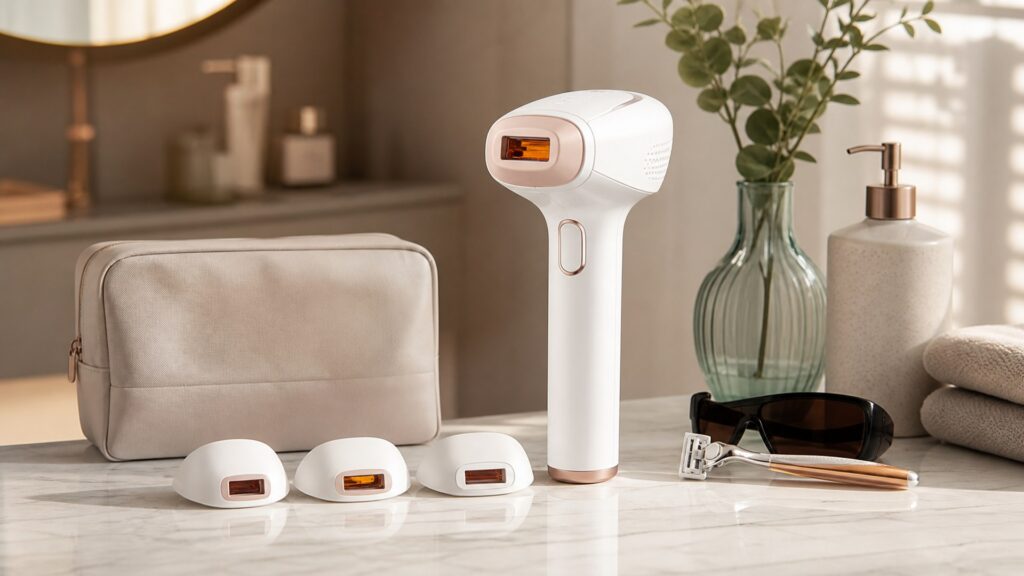
Buying framework
Define the at-home treatment goals routine before comparing products
Use the setting, frequency, and skin priorities to narrow laser hair removal devices logically.
Start with the use case: Map hair pigment, thickness, density, skin tone, marks, tanning, and every intended zone.
Rank the practical tradeoffs: Verify technology and compatibility for the exact model.
Check instructions early: Estimate pulses, placement precision, course length, full-zone time, and maintenance.
Use profiles
Match laser hair removal devices to the person and pace
Three shopper profiles expose different priorities for at-home treatment goals.
Routine-focused buyer: A small-zone user may value deliberate laser placement around labeled boundaries.
Performance-focused buyer: A large-leg-area user must accept the time required by a narrow spot.
Occasional or flexible user: A light-haired user should not expect precision wavelength to overcome inadequate pigment.
Specifications
Read the specifications through a at-home treatment goals lens
Translate technical language into visible routine benefits.
Handling lens
Time one complete proposed zone at the conservative level.
Ownership lens
Judge reduction after the course and maintenance rather than early shedding alone.
Skin-Tone Compatibility: Small treatment spots reduce coverage per pulse and increase placement count.
Energy Settings: Pulse rate determines speed only when contact and repositioning remain accurate.
Treatment Window: Wavelength claims require credible product documentation.
Pulse Speed: Skin and contact sensors guide use without validating every mark.
Safety Sensors: Cooling can improve comfort during a long precise session.
Common mistakes
Avoid shortcuts that undermine at-home treatment goals
A good purchase can still disappoint when selection or use is based on the wrong assumption.
Buying from one metric: Do not buy a laser device expecting one-session permanent removal.
Skipping compatibility checks: Avoid assuming narrow precision makes near-eye or tattoo use acceptable.
Ignoring post-use care: Do not purchase before verifying true technology and full-zone workload.
Decision guidance
Choose the simplest option that covers the real need
Use these decision rules to finish a shortlist for at-home treatment goals.
Choose the basic format when: Choose a consumer laser when documented eligibility and precision match the zone.
Choose the flexible format when: Select IPL or another method if safe large-area coverage is the higher priority.
Pause before upgrading when: Seek professional guidance when pigment, medication, or skin condition complicates eligibility.
Ownership & compatibility
Plan for clean, repeatable ownership
The best value remains convenient after the first few uses.
Consumables and replacements: Patch-test, map pulses, and log every treatment according to instructions.
Cleaning and storage: Protect the window and let the device cool before cleaning.
Routine compatibility: Track maintenance needs and replacement or service support.
FAQ
Laser Hair Removal Devices Buying Guide for At-Home Treatment Goals FAQ
Practical answers about choosing and owning laser hair removal devices for at-home treatment goals.
What matters most when choosing laser hair removal devices for at-home treatment goals?
Is the most expensive option better for at-home treatment goals?
How should I compare two similar laser hair removal devices options?
Bottom line
Buy for repeatable at-home treatment goals results
A focused shortlist is easier to own and use well.
Prioritize fit: Define gradual reduction and maintenance as the real outcome.
Verify the limits: Balance laser precision against pulses and full-zone time.
Count ownership costs: Require credible technology documentation before buying.
Reading Shortcuts
Jump to the key laser hair removal devices decisions.
Decision Reminders
Keep these checks beside your shortlist.
- Check skin-tone compatibility: Check all skin-tone, hair-color, medication, and body-area restrictions.
- Check energy settings: Patch test exactly as directed before broader treatment.
- Check treatment window: Never aim toward the eyes and follow all eye-safety directions.
Glossary Snippets
Plain-language laser hair removal devices terms.
When to Use a Top 10 Review
Use a ranked list to identify a manageable set of strong candidates.
- You are still exploring: A ranked list can reveal the main formats and price tiers.
- You want a shortlist: Start broad, then confirm fit with this buying guide.
Have finalists? Use a Comparison.
When to Use a Comparison
Use a direct comparison when only a few candidates remain.
- Features are close: Side-by-side details clarify meaningful differences.
- Prices overlap: Compare ownership value, not only purchase price.
Still exploring? See the Top 10.