
LED Acne Devices Buying Guide for Device Features and Attachments
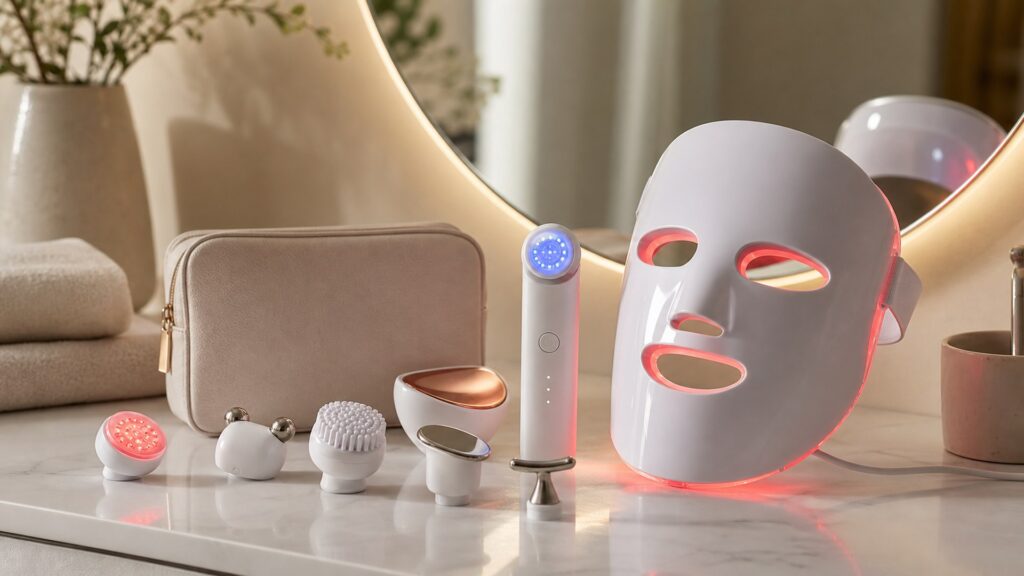
LED acne devices may include blue and red modes, mixed wavelengths, flexible masks, rigid masks, panels, wands, pulsing, timers, cooling, apps, and eye shields. Features matter only when they improve documented dose, even coverage, eye safety, comfort, or adherence.
Start with numeric light specifications and treatment geometry. A large LED count, bright color, or futuristic mask cannot compensate for unknown wavelength, uneven face distance, poor eye protection, or an impractical course.
Buying framework
Define the device features and attachments routine before comparing products
Use the setting, frequency, and skin priorities to narrow led acne devices logically.
Start with the use case: Map each feature to wavelength, dose, coverage, distance, eye safety, or adherence.
Rank the practical tradeoffs: Test mask fit, panel positioning, wand spacing, controls, and timer without activating light.
Check instructions early: Exclude modes or attachments whose specifications and acne purpose are unclear.
Use profiles
Match led acne devices to the person and pace
Three shopper profiles expose different priorities for device features and attachments.
Routine-focused buyer: A full-face user benefits from even spacing and low-pressure mask fit or a stable panel.
Performance-focused buyer: A spot user needs distance guides and reliable zone timing.
Occasional or flexible user: A headache-prone user should prioritize flicker information and simple modes.
Specifications
Read the specifications through a device features and attachments lens
Translate technical language into visible routine benefits.
Handling lens
Evaluate coverage geometry with eyes protected and the device inactive.
Ownership lens
Require dose information for each wavelength mode separately.
Wavelength Labeling: Independent wavelength channels allow clearer mode interpretation.
Coverage Area: Flexible masks follow contours while placing LEDs at variable angles.
Session Timer: Rigid shells maintain geometry but can create pressure and heat points.
Fit And Controls: Panels avoid facial contact while requiring stable distance.
Charging Runtime: Apps track sessions while creating software and account dependencies.
Common mistakes
Avoid shortcuts that undermine device features and attachments
A good purchase can still disappoint when selection or use is based on the wrong assumption.
Buying from one metric: Do not count LEDs as a substitute for wavelength and irradiance data.
Skipping compatibility checks: Avoid buying mixed-color modes with no separate specification.
Ignoring post-use care: Do not accept tight mask pressure as necessary for effective contact.
Decision guidance
Choose the simplest option that covers the real need
Use these decision rules to finish a shortlist for device features and attachments.
Choose the basic format when: Choose documented wavelengths, dose, uniform coverage, and clear eye safety.
Choose the flexible format when: Select mask, panel, or wand according to actual acne distribution and comfort.
Pause before upgrading when: Reject app-dependent or decorative modes without durable offline instructions.
Ownership & compatibility
Plan for clean, repeatable ownership
The best value remains convenient after the first few uses.
Consumables and replacements: Inspect straps, hinges, eye shields, LEDs, and optical covers.
Cleaning and storage: Keep manuals and treatment logs outside proprietary apps.
Routine compatibility: Replace damaged fit or eye components before further use.
FAQ
LED Acne Devices Buying Guide for Device Features and Attachments FAQ
Practical answers about choosing and owning led acne devices for device features and attachments.
What matters most when choosing led acne devices for device features and attachments?
Is the most expensive option better for device features and attachments?
How should I compare two similar led acne devices options?
Bottom line
Buy for repeatable device features and attachments results
A focused shortlist is easier to own and use well.
Prioritize fit: Value features by documented dose and coverage geometry.
Verify the limits: Choose a format that protects eyes without painful fit.
Count ownership costs: Keep treatment records accessible beyond any app.
Reading Shortcuts
Jump to the key led acne devices decisions.
Decision Reminders
Keep these checks beside your shortlist.
- Check wavelength labeling: Follow labeled session times and eye-safety directions.
- Check coverage area: Check photosensitizing medication and condition warnings before use.
- Check session timer: LED devices do not replace medical care for severe or persistent acne.
Glossary Snippets
Plain-language led acne devices terms.
When to Use a Top 10 Review
Use a ranked list to identify a manageable set of strong candidates.
- You are still exploring: A ranked list can reveal the main formats and price tiers.
- You want a shortlist: Start broad, then confirm fit with this buying guide.
Have finalists? Use a Comparison.
When to Use a Comparison
Use a direct comparison when only a few candidates remain.
- Features are close: Side-by-side details clarify meaningful differences.
- Prices overlap: Compare ownership value, not only purchase price.
Still exploring? See the Top 10.