
LED Face Masks Buying Guide for Device Features and Attachments
LED face-mask features include rigid or flexible shells, multiple wavelength channels, near-infrared modes, eye cutouts, removable shields, silicone padding, straps, controllers, timers, cooling, apps, and cordless power. Each changes dose geometry, comfort, safety, or maintenance.
Prioritize documented light delivery and a fit that can be repeated. Decorative colors, large LED counts, and app animations add little when the mask sits unevenly, leaks light around the eyes, or lacks mode-specific specifications.
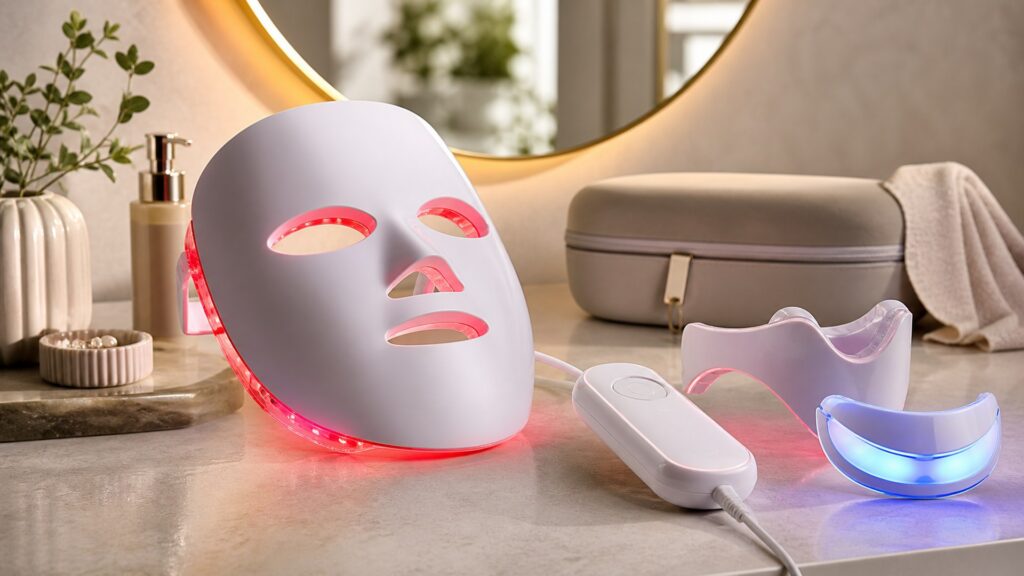
Buying framework
Define the device features and attachments routine before comparing products
Use the setting, frequency, and skin priorities to narrow led face masks logically.
Start with the use case: Map every feature to wavelength, dose geometry, eye safety, fit, adherence, or maintenance.
Rank the practical tradeoffs: Perform an inactive fit test for pressure, LED distance, light gaps, controls, and removal.
Check instructions early: Exclude modes or accessories without clear numeric specifications or a supported goal.
Use profiles
Match led face masks to the person and pace
Three shopper profiles expose different priorities for device features and attachments.
Routine-focused buyer: A contour-sensitive user needs even spacing without rigid nose pressure.
Performance-focused buyer: An eye-sensitive user should prioritize labeled shields and minimal leakage.
Occasional or flexible user: A long-course user benefits from durable straps and controls that stay consistent.
Specifications
Read the specifications through a device features and attachments lens
Translate technical language into visible routine benefits.
Handling lens
Compare geometry and eye protection with the mask inactive.
Ownership lens
Require independent specifications for every selectable channel.
Wavelength Labeling: Rigid frames preserve LED position while fitting face shapes differently.
Face Coverage: Flexible shells follow curves but can change LED angle and spacing.
Session Timer: Near-infrared light is not visible, making documentation especially important.
Fit And Comfort: Controller cables add weight and snag points during seated use.
Charging Runtime: Cordless packs improve movement while adding battery heat and aging.
Common mistakes
Avoid shortcuts that undermine device features and attachments
A good purchase can still disappoint when selection or use is based on the wrong assumption.
Buying from one metric: Do not equate invisible near-infrared with stronger or deeper benefit automatically.
Skipping compatibility checks: Avoid overtightening straps to force complete facial contact.
Ignoring post-use care: Do not buy app-only controls without durable manual operation.
Decision guidance
Choose the simplest option that covers the real need
Use these decision rules to finish a shortlist for device features and attachments.
Choose the basic format when: Choose credible mode specifications, repeatable fit, eye safety, and simple controls.
Choose the flexible format when: Select rigid or flexible format according to facial geometry and pressure tolerance.
Pause before upgrading when: Reject accessories that complicate cleaning or make dose position inconsistent.
Ownership & compatibility
Plan for clean, repeatable ownership
The best value remains convenient after the first few uses.
Consumables and replacements: Inspect straps, padding, hinges, controllers, and eye pieces for wear.
Cleaning and storage: Retain offline settings and schedule information.
Routine compatibility: Replace damaged fit components before another course session.
FAQ
LED Face Masks Buying Guide for Device Features and Attachments FAQ
Practical answers about choosing and owning led face masks for device features and attachments.
What matters most when choosing led face masks for device features and attachments?
Is the most expensive option better for device features and attachments?
How should I compare two similar led face masks options?
Bottom line
Buy for repeatable device features and attachments results
A focused shortlist is easier to own and use well.
Prioritize fit: Value mask features by geometry, eye safety, and documented light.
Verify the limits: Choose shell flexibility according to repeatable facial spacing.
Count ownership costs: Keep core operation independent of fragile app access.
Reading Shortcuts
Jump to the key led face masks decisions.
Decision Reminders
Keep these checks beside your shortlist.
- Check wavelength labeling: Follow labeled session times and eye-safety directions.
- Check face coverage: Check photosensitizing medication and condition warnings before use.
- Check session timer: Stop if heat, pain, headache, or persistent irritation develops.
Glossary Snippets
Plain-language led face masks terms.
When to Use a Top 10 Review
Use a ranked list to identify a manageable set of strong candidates.
- You are still exploring: A ranked list can reveal the main formats and price tiers.
- You want a shortlist: Start broad, then confirm fit with this buying guide.
Have finalists? Use a Comparison.
When to Use a Comparison
Use a direct comparison when only a few candidates remain.
- Features are close: Side-by-side details clarify meaningful differences.
- Prices overlap: Compare ownership value, not only purchase price.
Still exploring? See the Top 10.