
LED Face Masks Buying Guide for Skin Sensitivity Levels
Sensitive skin may react to an LED mask through light exposure, trapped heat, strap pressure, silicone contact, cleaning residue, or products applied beforehand. These causes require different solutions and should not be grouped under a generic purge or adjustment period.
Screen photosensitivity separately from contact sensitivity. One conservative labeled session on calm skin can test fit and response only when medication, eye, seizure, and skin warnings have been cleared.
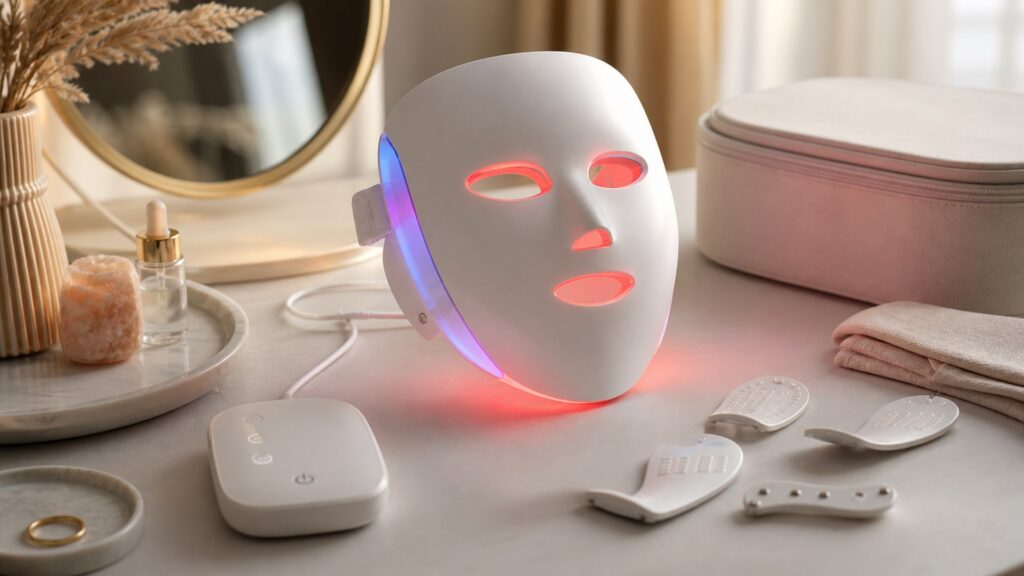
Buying framework
Define the skin sensitivity levels routine before comparing products
Use the setting, frequency, and skin priorities to narrow led face masks logically.
Start with the use case: Identify photosensitivity, dermatitis, migraine or seizure triggers, eye conditions, and medication.
Rank the practical tradeoffs: Fit the clean inactive mask to locate pressure and contact points.
Check instructions early: Use one labeled conservative mode with familiar skin care and delayed monitoring.
Use profiles
Match led face masks to the person and pace
Three shopper profiles expose different priorities for skin sensitivity levels.
Routine-focused buyer: A contact-reactive user may prefer a noncontact panel to a face-worn shell.
Performance-focused buyer: A heat-sensitive user needs ventilation and a tolerable labeled session.
Occasional or flexible user: A photosensitive user should obtain professional advice rather than test lower modes.
Specifications
Read the specifications through a skin sensitivity levels lens
Translate technical language into visible routine benefits.
Handling lens
Map reaction shape against straps, contact edges, and illuminated area.
Ownership lens
Review skin and eye response after cooling and next morning.
Wavelength Labeling: Rigid edges create pressure patterns around temples, nose, and cheeks.
Face Coverage: Flexible silicone traps heat and cleanser residue against skin.
Session Timer: Straps can cause friction or localized dermatitis.
Fit And Comfort: Flicker and brightness may trigger headache or visual discomfort.
Charging Runtime: Eye shields create their own pressure and cleaning requirements.
Common mistakes
Avoid shortcuts that undermine skin sensitivity levels
A good purchase can still disappoint when selection or use is based on the wrong assumption.
Buying from one metric: Do not call a strap-shaped reaction evidence of skin purging.
Skipping compatibility checks: Avoid new active serums beneath the first mask session.
Ignoring post-use care: Do not rely on a low setting to resolve medication photosensitivity.
Decision guidance
Choose the simplest option that covers the real need
Use these decision rules to finish a shortlist for skin sensitivity levels.
Choose the basic format when: Choose a noncontact format when mask pressure or material is the problem.
Choose the flexible format when: Use one conservative session only after contraindications are cleared.
Pause before upgrading when: Discontinue use and request appropriate care for visual symptoms, major headache, blistering heat injury, facial swelling, or an expanding eruption.
Ownership & compatibility
Plan for clean, repeatable ownership
The best value remains convenient after the first few uses.
Consumables and replacements: Log mode, fit points, products, heat, and reaction pattern.
Cleaning and storage: Remove approved cleaning residue and dry contact surfaces fully.
Routine compatibility: Wait for complete recovery before any further light or active exposure.
FAQ
LED Face Masks Buying Guide for Skin Sensitivity Levels FAQ
Practical answers about choosing and owning led face masks for skin sensitivity levels.
What matters most when choosing led face masks for skin sensitivity levels?
Is the most expensive option better for skin sensitivity levels?
How should I compare two similar led face masks options?
Bottom line
Buy for repeatable skin sensitivity levels results
A focused shortlist is easier to own and use well.
Prioritize fit: Separate light sensitivity from heat, pressure, and material contact.
Verify the limits: Map reaction geometry against the physical mask.
Count ownership costs: Use conservative light only after systemic contraindications are cleared.
Reading Shortcuts
Jump to the key led face masks decisions.
Decision Reminders
Keep these checks beside your shortlist.
- Check wavelength labeling: Follow labeled session times and eye-safety directions.
- Check face coverage: Check photosensitizing medication and condition warnings before use.
- Check session timer: Stop if heat, pain, headache, or persistent irritation develops.
Glossary Snippets
Plain-language led face masks terms.
When to Use a Top 10 Review
Use a ranked list to identify a manageable set of strong candidates.
- You are still exploring: A ranked list can reveal the main formats and price tiers.
- You want a shortlist: Start broad, then confirm fit with this buying guide.
Have finalists? Use a Comparison.
When to Use a Comparison
Use a direct comparison when only a few candidates remain.
- Features are close: Side-by-side details clarify meaningful differences.
- Prices overlap: Compare ownership value, not only purchase price.
Still exploring? See the Top 10.