
LED Handheld Devices Buying Guide for At-Home Treatment Goals
An at-home LED handheld is best evaluated against one defined cosmetic goal, not a general promise of better skin. Results depend on the light specification, eligible user, repeated placement, complete course, accompanying routine, and whether the concern is appropriate for self-care.
Write down the target change and a realistic review date before shopping. This separates a convenient adjunct for a supported use from a gadget expected to diagnose disease, erase scars, or replace medication and professional treatment.
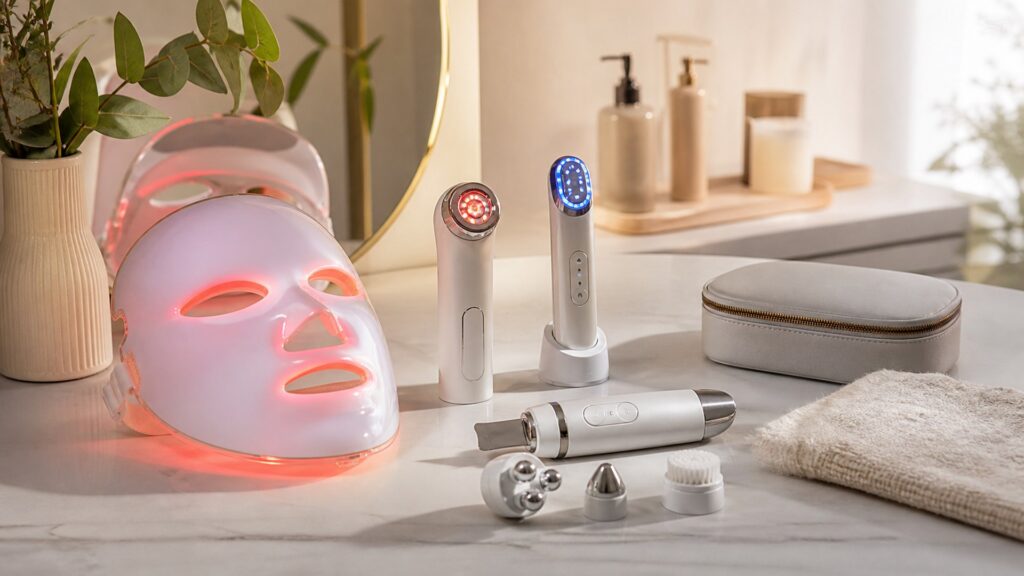
Buying framework
Define the at-home treatment goals routine before comparing products
Use the setting, frequency, and skin priorities to narrow led handheld devices logically.
Start with the use case: Translate the goal into one observable outcome and a fixed comparison method.
Rank the practical tradeoffs: Match that outcome to documented wavelength, protocol, eligibility, and evidence.
Check instructions early: Price the complete course, maintenance, skin care, and escalation plan.
Use profiles
Match led handheld devices to the person and pace
Three shopper profiles expose different priorities for at-home treatment goals.
Routine-focused buyer: A localized-goal user can photograph one consistent treatment boundary.
Performance-focused buyer: A maintenance-focused user needs a protocol that fits the existing routine.
Occasional or flexible user: A persistent-condition user needs assessment rather than stronger consumer claims.
Specifications
Read the specifications through a at-home treatment goals lens
Translate technical language into visible routine benefits.
Handling lens
Use standardized lighting and distance for baseline and review photographs.
Ownership lens
Track symptoms and products so a changing routine does not imitate device benefit.
Wavelength Labeling: Named wavelengths are more informative than color labels alone.
Treatment Window: A defined per-placement time supports reproducible exposure.
Session Timer: Course length reveals the adherence required before evaluation.
Grip And Controls: Treatment footprint determines whether the goal is practical with a handheld.
Charging Runtime: Contraindication and eye instructions define who should not proceed casually.
Common mistakes
Avoid shortcuts that undermine at-home treatment goals
A good purchase can still disappoint when selection or use is based on the wrong assumption.
Buying from one metric: Do not treat broad wellness language as evidence for a specific outcome.
Skipping compatibility checks: Avoid changing skin care and light protocol simultaneously.
Ignoring post-use care: Do not continue indefinitely when the planned review shows no useful change.
Decision guidance
Choose the simplest option that covers the real need
Use these decision rules to finish a shortlist for at-home treatment goals.
Choose the basic format when: Buy only when the stated goal matches a documented home protocol.
Choose the flexible format when: Choose another approach when coverage burden makes adherence unlikely.
Pause before upgrading when: Seek qualified care for persistent, painful, scarring, or suspicious conditions.
Ownership & compatibility
Plan for clean, repeatable ownership
The best value remains convenient after the first few uses.
Consumables and replacements: Keep dates, placements, settings, products, reactions, and photographs together.
Cleaning and storage: Reassess value at the preset course endpoint instead of after every session.
Routine compatibility: Separate maintenance cost from the initial purchase price.
FAQ
LED Handheld Devices Buying Guide for At-Home Treatment Goals FAQ
Practical answers about choosing and owning led handheld devices for at-home treatment goals.
What matters most when choosing led handheld devices for at-home treatment goals?
Is the most expensive option better for at-home treatment goals?
How should I compare two similar led handheld devices options?
Bottom line
Buy for repeatable at-home treatment goals results
A focused shortlist is easier to own and use well.
Prioritize fit: Buy for one supported outcome rather than a vague transformation.
Verify the limits: Set the review date before the first exposure.
Count ownership costs: Let persistent or complex concerns trigger assessment, not more modes.
Reading Shortcuts
Jump to the key led handheld devices decisions.
Decision Reminders
Keep these checks beside your shortlist.
- Check wavelength labeling: Follow labeled session times and eye-safety directions.
- Check treatment window: Check photosensitizing medication and condition warnings before use.
- Check session timer: Keep the device positioned exactly as its instructions specify.
Glossary Snippets
Plain-language led handheld devices terms.
When to Use a Top 10 Review
Use a ranked list to identify a manageable set of strong candidates.
- You are still exploring: A ranked list can reveal the main formats and price tiers.
- You want a shortlist: Start broad, then confirm fit with this buying guide.
Have finalists? Use a Comparison.
When to Use a Comparison
Use a direct comparison when only a few candidates remain.
- Features are close: Side-by-side details clarify meaningful differences.
- Prices overlap: Compare ownership value, not only purchase price.
Still exploring? See the Top 10.