
Magnetic Rowers Buying Guide: How to Choose the Right One
Choose a magnetic rower by deciding what you want to adjust and which equipment you are willing to look after. Start with two requirements: your preferred resistance system and the controls you expect to use. Then compare complete machines against those requirements, rather than collecting attractive features from different models.
Buying framework
Set two requirements first
Use these questions to rule out a poor match early.
Resistance system: Must your rower avoid a water tank, or are you willing to maintain one?
Control access: Where do you want to make resistance changes? Treat that preference as a requirement when comparing candidates.
Your priorities
Match the purchase to its users
These imagined households use the same purchase differently. Their schedules and shared habits can change which inconvenience matters.
A rower that stays ready: Imagine using short, unpredictable gaps in the day and wanting to leave the equipment ready between them. Preparation you would happily do before a planned weekend session may be unwelcome in those brief openings.
A shared rower: Imagine two regular users: one wants to change settings from the console, while the other prefers reaching a dial. Either person’s favorite control could be the other’s recurring annoyance, so the household has a compromise to make.
Specifications
Compare three separate choices
Read each example as a complete arrangement, with its own concession.
Brake
Identify what creates the load.
Controls and supply
Identify the input and its equipment requirements.
Where changes happen: Sunny SF-RW5515 V7.9 suits buyers wanting a manual tension dial who accept changing load there. Japanese Oxford6 provides console +/− selection for buyers requiring it.
Whether to accept water: The 5515 diagram shows a tank-free magnetic flywheel: choose it to avoid filling, forgoing water resistance. Sunny SF-RW522017BLK is a water-primary/magnetic hybrid. Choose it for added magnetic load over water, accepting initial filling; the offer supplies a hose and funnel, not prefilled water.
How electronics receive power: Global Spirit CRW800+ offers wireless handle resistance commands and self-generation. Buyers prioritizing that supply accept an air/magnetic hybrid and must provide two C batteries, which are not included. Japanese Oxford6 requires corded power for its magnetic-only electronic selection. These examples do not make air resistance a requirement for self-generation.
Common mistake
Look beyond the knob
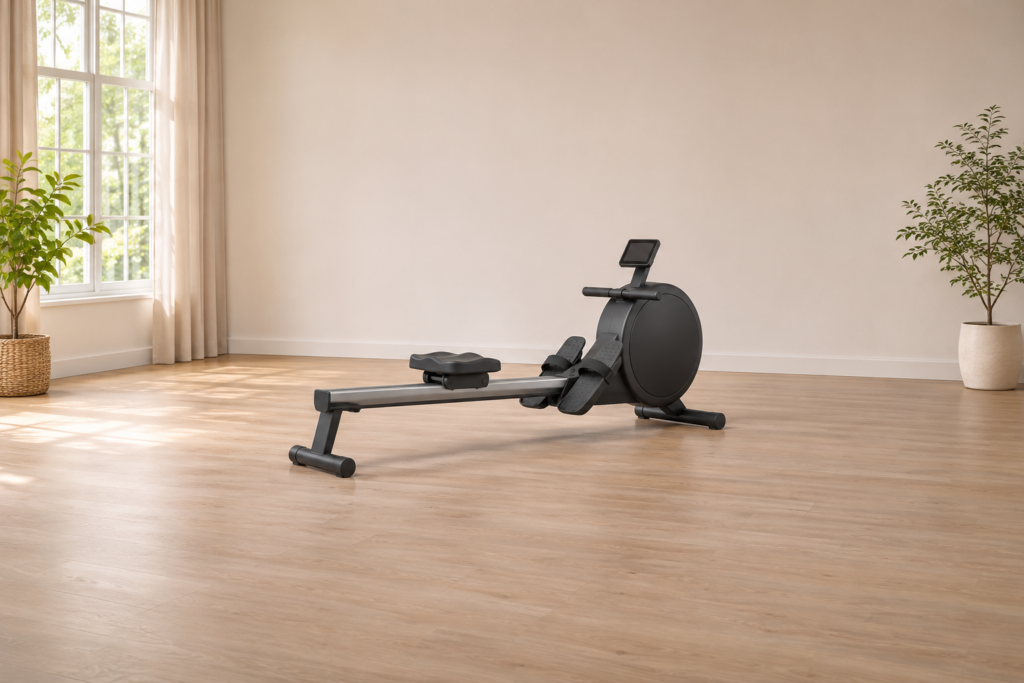
A photograph should prompt a closer look at the control description.
Shape is insufficient: Oxford6 also uses a rotary input: knob shape cannot establish manual resistance control.
Decision guidance
Apply both requirements together
A partial match should leave your shortlist.
Worked example: Require tank-free magnetic resistance plus console +/−: Japanese Oxford6 illustrates that combination. The 5515 fails the console requirement despite avoiding a tank. This is an architecture example, not advice to import Japanese equipment.
Ownership
Allow for continuing care
Include the recurring task in your purchase decision.
Water treatment: The SF-RW522017BLK V1.2 manual calls for a purification tablet every six months or as needed; replace the water if cloudiness remains. Never use pool chlorine or chlorine bleach.
FAQ
Three details before ordering
Keep these answers attached to the specified model and edition.
What identifies replacement parts?
Are monitor batteries supplied?
Does the cited voltage apply elsewhere?
Final choice
Let control access settle a close choice
Use this tie-breaker after comparing the complete arrangements.
Research note: This guide uses manufacturer manuals, equipment diagrams and product specifications from Sunny, Horizon and Spirit. It is desk research, without hands-on testing or measured comparisons of resistance, sound or usability. Examples describe specific editions rather than a market ranking.
Adjustment convenience: When manual adjustment already suits your habits, console selection needs a practical benefit to justify its power provision. Prefer the change only when reaching that different control would improve your intended use.
Reading shortcuts
Go directly to your next decision.
Keep your shortlist focused
Use a short written record while shopping.
- Record the edition: Write the model revision and intended market alongside each candidate.
- Keep the tradeoff: Note what you are willing to give up beside the feature you want.
One useful term
Read this phrase in its specific product context.
Lists
Use lists to begin a shortlist.
- Explore candidates: Gather models to assess against your two requirements.
Already have finalists? Open comparisons .
Compare
Use comparisons once your finalists are named.
- Resolve a tradeoff: Put the complete candidates beside each other before choosing.
Still gathering candidates? Start with lists .