
Makeup Sponges Buying Guide for Hair Detangling
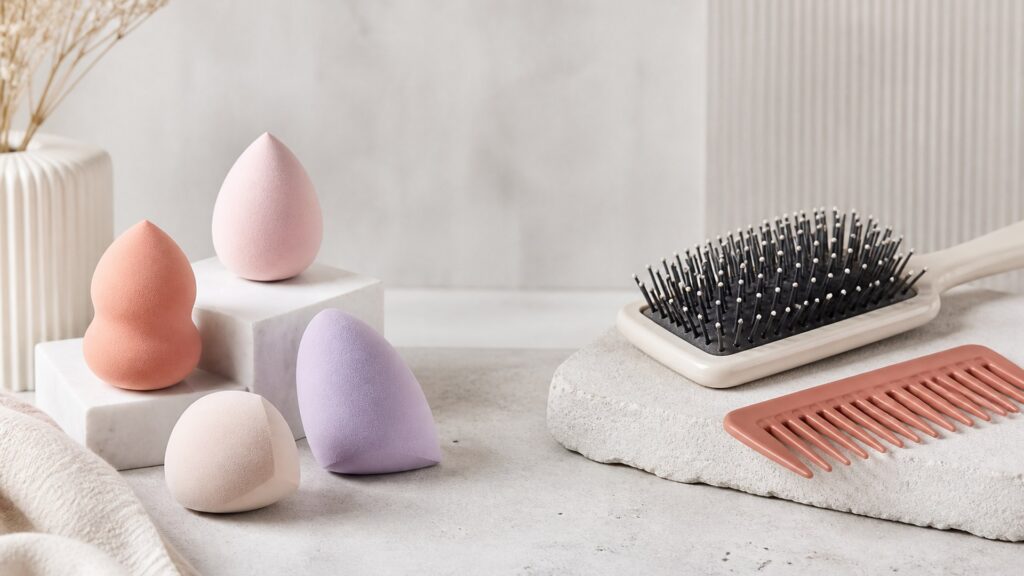
Makeup sponges do not separate hair knots, provide tooth spacing, or release strands under tension. Using one for detangling would soil the foam without accomplishing the task.
Treat the title as a taxonomy check, not a product recommendation. A wide-tooth comb, flexible detangling brush, fingers, conditioner, and patient sectioning are plausible tools; cosmetic foam is not.
Buying framework
A usable test for the hair-detangling request
Start by rejecting the mismatch. Identify whether the hair is wet or dry, its curl pattern, strand fragility, and the type of knot before comparing purpose-built detangling tools.
Name the hair state: Wet curls, dry straight hair, extensions, and fragile strands require different spacing, flexibility, and technique; none of those needs is met by cosmetic foam.
Reduce force first: Work in sections from the ends upward, add appropriate slip when needed, and stop pulling when resistance rises rather than pressing harder.
Choose real teeth or bristles: Look for smooth wide teeth or flexible pins that release under tension. A makeup sponge supplies neither separation nor controlled strand passage.
Use profiles
Who benefits from this makeup sponge
Every buyer in this scenario needs a hair tool, although the appropriate format changes with texture, mobility, and styling habits.
Curl-focused routine: Wide spacing and generous slip help preserve curl groupings while sections are separated gradually.
Fragile or processed hair: Flexible teeth, small sections, and low tension matter more than speed or an aggressive claim.
Portable grooming kit: A covered travel comb can protect neighboring items; a damp makeup sponge would instead introduce residue and moisture.
Specifications
Details that matter in the hair-care area
Useful detangling specifications describe tooth spacing, tip finish, flex, handle control, and suitability for wet or dry hair—not foam density or makeup-blending shape.
What one section reveals
A small test section shows whether the teeth enter cleanly, release knots progressively, and leave fewer broken strands.
What cleanup reveals
A detangling tool should release shed hair and rinse clean without inaccessible residue traps.
Spacing: Wider gaps allow larger curl groups and conditioned strands to pass with less crowding.
Finish: Inspect molded seams and tips for roughness that could scrape the scalp or catch individual fibers.
Flex and leverage: The tool should yield before painful force builds while the handle keeps the wrist in a controlled position.
Common mistakes
Shortcuts that undermine the no-sponge decision
The central mistake is treating every beauty accessory as interchangeable because it appears in the same retail department.
Using foam as a hair tool: Sponge pores can collect product and loose hair but cannot guide strands through spaced channels.
Forcing a knot: Speed and pressure increase breakage risk; reset the section, add slip when appropriate, and begin below the snag.
Ignoring tool damage: Bent pins, chipped teeth, or rough seams can turn an otherwise suitable detangler into a source of catching.
Decision guidance
Spend according to the hair-detangling request
Do not buy a makeup sponge for hair detangling. Redirect the decision toward a comb or brush whose geometry matches the hair and technique.
Choose a wide-tooth comb: Consider one for conditioned curls or wet sections when generous spacing and easy rinsing are priorities.
Choose a flexible brush: Consider one when yielding rows and a secure handle suit the preferred sectioning method.
Choose neither immediately: Pause when scalp pain, sudden shedding, matting, or breakage suggests a problem that ordinary grooming equipment cannot resolve.
Ownership & compatibility
Keep the makeup sponge ready for its next use
Hair tools accumulate oil, shed strands, and styling residue. Keep them separate from makeup applicators and clean them according to their materials.
Remove shed hair: Clear trapped strands regularly so tooth or pin movement remains visible and residue cannot build underneath.
Wash and dry: Follow material guidance, rinse away product, and let the detangler dry fully before returning it to an enclosed kit.
Keep categories separate: Store makeup sponges with clean cosmetic applicators, never as substitutes for combs or brushes.
FAQ
Questions about the no-sponge decision
The answers below keep a mismatched product title from becoming unsafe shopping advice.
Can a makeup sponge detangle hair?
What should replace a sponge for detangling?
How should detangling tools be maintained?
Bottom line
Finish the no-sponge decision with a rehearsal
The honest conclusion is simple: keep the sponge in the makeup routine and select a separate, suitable implement for hair.
Reject the false match: A shared beauty taxonomy does not give cosmetic foam the mechanical features required for knot removal.
Test one hair section: Evaluate a real detangler gently on a small section before adopting it across the full head.
Protect both tool groups: Store clean makeup applicators away from combs and brushes that carry hair, oils, or styling residue.
Reading Shortcuts
Move to the part of the makeup sponges decision you need.
Decision Reminders
Keep recognizing that a makeup sponge has no legitimate hair-detangling function at the center of the no-sponge decision shortlist.
- Fit: Dimensions and misuse avoidance match the real setting.
- Hygiene: Contaminated-foam disposal and drying have a workable path.
- Purpose: The makeup sponge serves the named job rather than an adjacent claim.
Glossary Snippets
Terms useful when comparing makeup sponges.
When a Top 10 List Helps
Use rankings to discover plausible makeup sponges formats, then screen them for this hair-detangling request.
- The format is undecided: A broad list can reveal shapes and price levels worth investigating.
- You need a shortlist: Rankings reduce the field but do not replace fit checks.
Already have finalists? Open the comparison section.
When a Direct Comparison Helps
Compare finalists after their suitability for recognizing that a makeup sponge has no legitimate hair-detangling function is established.
- Two candidates remain: Side-by-side details expose meaningful differences in use and upkeep.
- An upgrade is uncertain: A comparison shows whether the added cost addresses the original constraint.
Still exploring? Start with the Top 10 section.