
Mountain Bikes Buying Guide: How to Choose the Right One
A mountain bike purchase often begins with a ride you want to do differently. Before a more elaborate model wins your attention, decide what prompted the change and what you are prepared to own. This guide explains three equipment choices through documented complete builds, so an appealing feature does not substitute for your actual requirement.
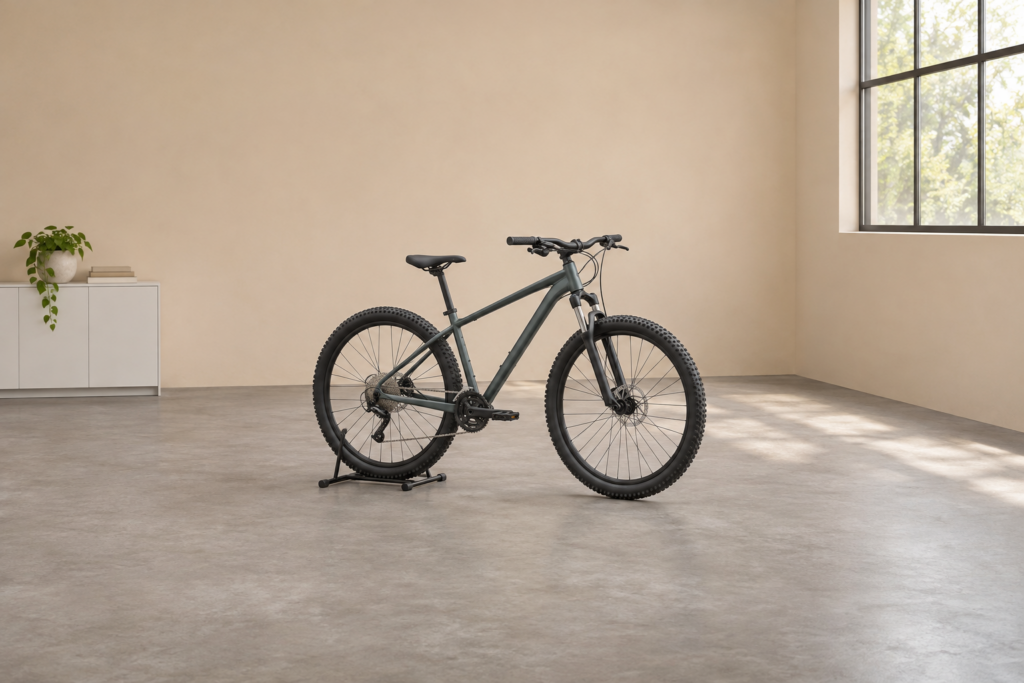
Set the brief
Begin with the ride behind the purchase
Name the unresolved problem before choosing the equipment answer.
A repeated reason: Think of a familiar ride that keeps prompting the same wish for a change. Describe that wish plainly, rather than starting with the most elaborate bicycle you can find.
A firm requirement: Decide which equipment choice you are already committed to and which remains open. That keeps an attractive secondary feature from quietly replacing the original buying purpose.
Buying situations
Replacing one limitation or joining a regular ride
The starting point can be a familiar bicycle or an established plan.
An owner changing one thing: Suppose you like much of your existing mountain bike but want the replacement to resolve one specific limitation. Preserve what already works in your brief; a new purchase need not become a reason to change every preference at once.
A buyer joining a recurring outing: If you and a friend are choosing separate bicycles for regular rides together, agree which requirements are shared and which belong to each order. A common outing need not produce identical shopping briefs; keep an individual's optional preference from becoming a condition imposed on both purchases.
Construction and operation
Three choices in the complete build
Treat each comparison as a separate equipment decision.
Frame and wheel construction
Distinguish the assembly you are buying from the feature that first caught your eye.
Supplied saddle-height operation
Compare the pictured or specified mechanism with the operation you actually intend to use.
Front-only or front-and-rear suspension: Trek distinguishes a hardtail, with suspension at the front only, from full suspension at both ends. Choose a hardtail if omitting the rear-shock assembly matters, accepting no rear suspension. Trek describes rear suspension as helping the back wheel follow the ground, with added shock hardware, weight and movement. Choose that mechanism when you require it and accept the extra assembly. The US 2027 Giant Talon 1 is explicitly a hardtail; the US 2026 Stance supplies a suspension fork and Fox Rhythm rear shock.
An offered 27.5-inch or 29-inch build: The US 2027 Talon 2 offers size S with either 27.5-inch or 29-inch wheels. This is a choice between listed complete builds, not permission for a later wheel swap. As general design guidance, Trek describes 29-inch wheels as smoothing obstacles and carrying momentum, while 27.5-inch wheels are more nimble. Favor the former tendency if obstacle rolling is your priority, accepting the smaller-wheel response forgone; favor the latter if that response matters more. These are manufacturer explanations, not measured handling results for the Talons.
Conventional or remote saddle-height adjustment: The Talon 1 lists a Sport SP217 post, and its Dusty Blue manufacturer photograph shows a continuous, non-telescoping shaft. That observation applies to the illustrated configuration. Choose that arrangement if you want to retain a set-height post, accepting clamp release and re-clamping for height changes. Stance instead lists a remote Contact Switch AT dropper. Its MY24 family manual describes lever-controlled lowering under saddle weight and raising with weight removed, followed by releasing the lever. Choose the remote mechanism if that operation is your priority, accepting its actuator and cable. Stop before adjusting: the manual warns against changing height while moving. Its older dimensions and service intervals are not specifications for the current Stance.
Reading the specification
Separate model data from a technology card
Even one product page can contain descriptions with different scopes.
The two FlexPoint figures: The Stance page gives 130mm rear travel in its model specification but 120mm in a generic FlexPoint technology card. Use the model-specific figure when identifying this build. The card is not a second model specification, and the discrepancy does not explain itself.
Apply the requirements
Require both features on one bicycle
A matching wheel diameter answers only half of this brief.
29-inch wheels plus rear suspension: The documented Stance size M combines 29-inch wheels with its front-and-rear suspension. It meets both requirements. Talon 1 size M also has 29-inch wheels, but its hardtail construction leaves the rear-suspension requirement unmet. Choosing the Stance therefore accepts the added rear shock and hardware, rather than treating them as a cost-free extra.
Routine upkeep
Keep chain care in the ownership plan
A separate continuing duty remains after the equipment decision.
Chain care: Giant's V13.1 manual calls for cleaning the bike and lightly lubricating chain rollers with bicycle chain lubricant after long or hard rides, water or grit exposure, or at least every 100 miles. Wipe excess with a lint-free cloth; lubricant choice and frequency depend on climate and dealer guidance.
Other useful answers
Three additional ownership details
These questions address separate facts beyond the main comparisons.
Are the Talon 1 rotors equal in diameter?
Should the first checkup wait for trouble?
Does warranty duration promise a component lifespan?
Resolve the conflict
Give the recurring ride the deciding vote
An appealing exception need not define your everyday purchase.
Research note: This guide draws on manufacturer build pages, manuals and general design explanations, without riding tests. The named Giant examples retain their US model years; specifications can change. The seatpost photograph supports only its pictured configuration, and the dated component manual is used only for its stated mechanism and warning.
The weekly plan versus the imagined trip: Suppose one candidate answers the reason for your weekly ride purchase, while another attracts you mainly because of a possible one-off trip. Unless that trip becomes a firm commitment, choose around the recurring plan. Let the speculative outing yield instead of asking the new bicycle to serve a different purpose before you have even bought it.
Read the decision you need
Jump from your starting question to the relevant explanation.
Keep the purchase grounded
Two prompts connect the offer to your actual plan.
- Regular ride: Give the outing you already intend to repeat a clear place in the brief.
- Actual offer: Choose the variant being offered rather than an imagined future version of it.
A construction term
One short definition to help read the alternatives.
Explore mountain-bike lists
Find candidates for the purchase you have in mind.
- Browse the options: Build a short candidate set around your chosen purpose.
Use comparisons to examine alternatives once the deciding question is clear.