
Nail Care Products Buying Guide for Beginners
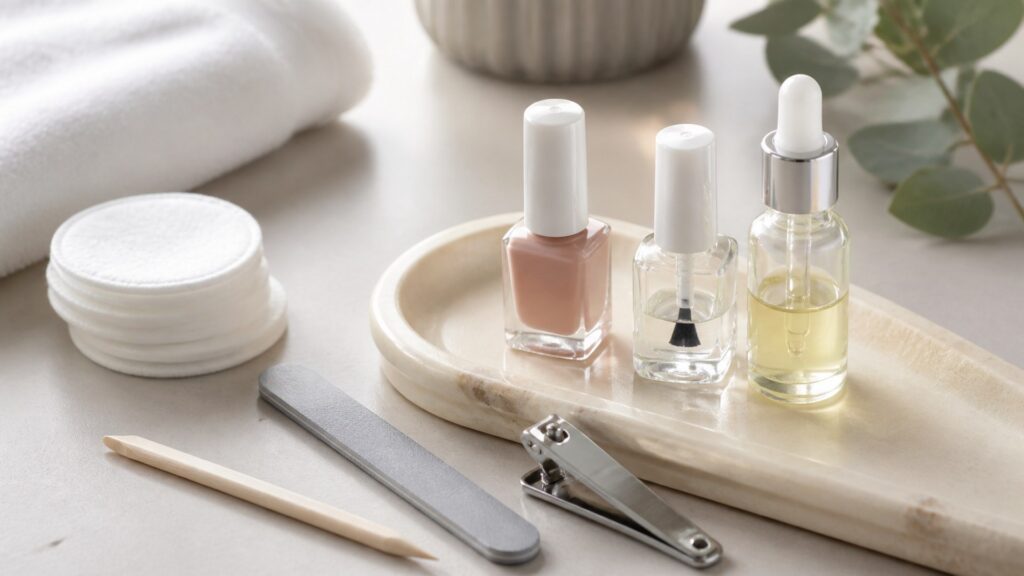
A first nail-care kit does not need every implement in a manicure case. It needs a few tools whose purpose is obvious and whose action is easy to see: a stable clipper for shortening, a fine file for shaping, optional moisturizer for the cuticle line, and simple polish products only if painting is part of the goal. Learning becomes easier when each step produces one recognizable change.
The most beginner-friendly choices favor control over speed. Jaw width, abrasive fineness, pusher material, brush proportion, and remover dispensing all affect the margin for error. This guide builds a short sequence around those details, explains when an item can be skipped, and marks the point where a cosmetic purchase is not the appropriate response.
Buying framework
Learn the sequence before expanding the kit
A beginner kit should make cause and effect easy to see. Give each purchase one job, practice that job, and add complexity only after the basic movement feels predictable.
Trim only what needs shortening: Choose a clipper whose jaw fits the nail and whose lever feels stable. Small, controlled cuts are easier to place than one forceful cut across the entire free edge.
Shape with a forgiving abrasive: A glass file or fine, even emery surface removes length gradually, giving a learner time to notice shape and stop before over-filing.
Treat the cuticle line gently: For basic tidying, a wooden stick or soft-tipped pusher offers more feedback than a sharp metal implement. Oil can soften the appearance of dry skin without turning trimming into a required step.
Separate color from protection: Base coat, color lacquer, and top coat do different cosmetic jobs. Beginners can start with clear coat or a sheer color before deciding whether all three layers earn space in the routine.
Plan removal at the time of purchase: Conventional lacquer needs a compatible remover, pads, ventilation, and time for cleanup. A beautiful finish is a poor beginner choice if its removal process discourages regular, gentle practice.
Who this is for
Start with the first skill you want to learn
Not every beginner needs polish, and not every first kit needs cuticle tools. Match the starting set to the result you expect to repeat during the next few weeks.
The shape-only beginner: If the goal is simply neat length and smoother edges, buy one comfortable clipper and one fine file. Skip coatings until trimming and shaping feel controlled.
The clear-manicure learner: A fine file, cuticle oil, clear base or top coat, and remover cover the core tasks. A transparent finish makes brush placement and drying behavior easier to observe.
The first-time color wearer: Look for a lacquer brush proportionate to your nail width and a formula that levels without requiring thick coats. Keep a small cleanup brush or pointed cotton swab nearby.
The travel-kit beginner: Favor capped, compact tools and leak-resistant dispensers, but do not choose miniature handles that reduce control. A protective sleeve matters for a glass file.
The cautious tool user: Start without nippers or sharp metal pushers. A fine file, orangewood stick, and controlled oil applicator allow visible grooming while keeping the technique easy to stop and reassess.
What to pay attention to
Details that make basic tools easier to control
The useful specifications are not the number of pieces or decorative case. They are the dimensions and surfaces that determine where a tool contacts the nail and how easily a mistake can be corrected.
Control at the nail
Compare how clearly you can see the working edge, regulate pressure, and stop the action.
Sequence and cleanup
Consider coat timing, correction, removal, tool cleaning, and protected storage before adding a step.
Clipper jaw width and curve: A jaw wider than the area you can see encourages one large cut; a moderate opening supports short cuts. The curve should broadly suit the edge you intend to maintain.
File surface and edge finish: Fine, consistent abrasion gives slower feedback, while a rough exposed edge can scrape surrounding skin. Glass files are washable but need protection from drops.
Pusher tip material: Wood and soft elastomer tips flex or wear before a sharpened metal edge does, which can be more forgiving while learning pressure and angle.
Lacquer brush width: A very broad brush may flood narrow nail plates; a very slim brush takes more strokes and can leave bands. Choose the width that covers most of your nail in two or three deliberate passes.
Dry-to-touch versus full set time: A surface can feel dry while remaining easy to dent. Label directions and thin coats are more useful to a beginner than an unsupported quick-dry promise.
Remover opening and pad control: A reducer opening or pump limits spills better than a wide bottle neck. The goal is enough remover to wet the pad without soaking fingers or the work surface.
Avoid these traps
Beginner purchases that make learning harder
Most early frustration comes from too much force, too many products, or a finish that demands advanced cleanup. The better correction is usually a simpler tool or a smaller action.
Buying a large manicure case first: Sets often include several implements whose purpose is unclear to a new user. Build around trimming, shaping, optional moisturizing, and optional polish instead.
Choosing a coarse file for speed: Rapid abrasion shortens the margin for correction and can leave a ragged edge when pressure is uneven. A fine surface makes shape changes easier to judge.
Treating nippers as essential: Cuticle nippers invite beginners to remove more tissue than intended. Routine cosmetic tidying can begin with oil and gentle pushing of loose material, without cutting living skin.
Applying one thick coat: A heavy layer can pool at the sides and remain dent-prone below the surface. Two thin coats are easier to place, dry, and remove than one overloaded pass.
Skipping the removal plan: Buying long-wear color without remover, pads, or cleanup time turns the end of the manicure into improvisation. Choose the finish and its removal method together.
Decision guidance
Choose the smallest useful starter set
Use the result you want next—not an imagined future salon routine—to decide what belongs in the cart. Each path below supports a complete first task.
If you only want shorter, smoother nails: Choose a comfortable clipper and a protected fine file. That two-tool set is enough to practice controlled shortening and final shaping.
If dry-looking edges are the concern: Add a small cuticle-oil pen or narrow dropper to the shaping tools. Controlled dispensing makes it easier to apply a small amount and avoid a slippery workspace.
If you want a low-stakes first finish: Try a clear or sheer conventional lacquer with its remover. Minor gaps and streaks are less visible while you learn brush loading and thin coats.
If opaque color is the goal: Add base coat, color, top coat, remover, and a precise cleanup aid. Choose a brush that suits your nail width rather than assuming a larger brush is faster.
If a nail or nearby skin is painful or changing unexpectedly: Do not buy sharper tools or stronger cosmetic formulas to investigate it. Pause the manicure and seek qualified assessment when symptoms are persistent, worsening, or concerning.
Ownership & compatibility
Keep a starter kit clean and predictable
A small kit is easier to maintain because every item is visible and used. Care focuses on preventing residue, moisture, damaged edges, and thickened formulas from changing familiar handling.
Clean tools without leaving them damp: Remove visible debris after use, follow the material's cleaning directions, and dry metal pieces completely before closing the case.
Protect working surfaces: Sleeve a glass file and keep clipper jaws from knocking against loose tools. Retire implements that become rusty, chipped, bent, or rough.
Close liquids immediately: Wipe lacquer bottle necks as needed and tighten caps promptly. Store polish and remover upright, away from prolonged heat and direct sunlight, following label directions.
Keep personal-contact tools personal: Do not casually share clippers, files, pushers, or used applicators. Separate storage also makes it easier to notice wear and keep the learning routine consistent.
FAQ
First-kit questions beginners often ask
These answers cover scope, terminology, and practical choices that remain after the basic shopping list is clear.
How many products does a beginner nail-care kit need?
Is a glass file easier for a beginner than an emery board?
Do beginners need a cuticle nipper?
Should I buy base coat or top coat first?
What nail-file grit should a beginner choose?
How can I avoid flooding polish around the cuticle?
Is quick-dry polish always easier to use?
Can nail tools be shared with family members?
When should I stop a home nail-care session?
Bottom line
Master a few controlled actions first
A useful beginner kit is defined by what it teaches: short clipper cuts, gradual filing, gentle cuticle-line tidying, and thin polish coats. Choose tools that leave room to stop and correct, then expand only when a new step has a clear purpose.
Begin with one complete task: Trimming and shaping can be a complete routine; polish is optional.
Favor visible control: Fine abrasives, stable grips, and proportionate brushes make technique easier to learn.
Add complexity deliberately: A new bottle or implement should solve a separate job you are ready to practice.
Reading Shortcuts
Go directly to the decision you need to make.
Decision Reminders
Keep the purchase tied to actual nail-care tasks.
- Start small: One tool should have one clear job.
- Use less force: Gradual changes are easier to correct.
- Keep coats thin: Thin lacquer is easier to place and dry.
- Plan removal: Buy color and compatible remover together.
- Protect tools: Clean, dry, and store working edges.
- Know the limit: Painful or unexplained changes are not shopping problems.
Glossary Snippets
Useful language found on nail-care products.
When to Use a Top 10 Review
Use a ranked list after deciding which product role and format you need.
- Product role settled: You know whether you need a clipper, file, moisturizer, or coating.
- Handling preference settled: You know the control and format you can use comfortably.
- Routine length settled: You know how many steps you will repeat.
- Shortlist needed: You are ready to compare products serving the same job.
Already down to 2–3 options? A Comparison is usually the faster next step.
When to Use a Comparison
Compare finalists when small differences in application, removal, or upkeep will decide the purchase.
- Applicators differ: Brush, opening, or grip changes control.
- Formulas differ: Finish, drying, or removal changes the routine.
- Tools differ: Abrasive and edge design change how material is removed.
- Upkeep differs: Cleaning, storage, and replacement are not equivalent.
Still exploring? Start with a Top 10 to build a shortlist first.