
Nail Tools Buying Guide for Hair Detangling
Nail tools do not detangle hair. Clippers and nippers cut, files abrade, and pushers or pointed cleaners can snag strands and injure the scalp. None provides the spaced teeth, flexible bristles, or broad controlled contact required for safe knot removal.
Choose a wide-tooth comb or purpose-built detangling brush matched to curl pattern, strand condition, density, and wet- or dry-use guidance. Keep manicure implements closed in their own case, well away from hair tools and the detangling area.
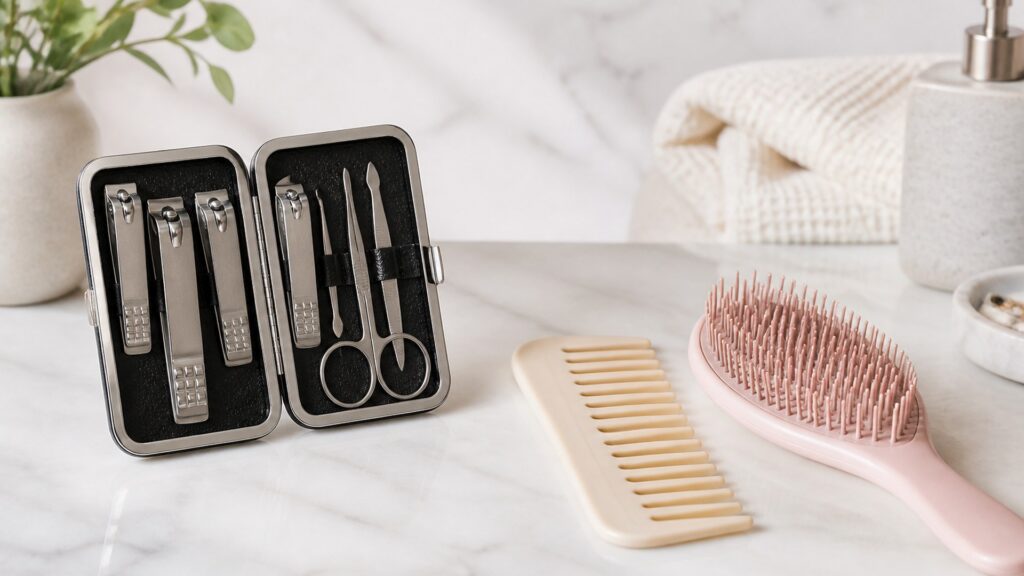
Category boundary
Replace the wrong tool before comparing features
The first decision is not which nail implement to try; it is which genuine detangler suits the hair.
Identify the knot pattern: Note whether tangles concentrate at dry ends, shed-hair buildup, curls, protective styles, or post-wash sections. This guides comb spacing and bristle flexibility.
Choose a hair mechanism: Wide teeth separate larger sections; flexible detangling bristles can yield around resistance. Hard manicure edges offer neither controlled pathway.
Remove nail tools entirely: Do not experiment with files, pushers, clippers, scissors, or nippers near tangled strands, scalp, ears, neck, or fingers holding a section.
Correct detanglers
Match the hair tool to strand behavior
Texture, fragility, density, and routine stage matter more than a generic multipurpose claim.
The curl-preserving user: Look for generous tooth spacing or flexible bristle rows that move through conditioned sections without forcing curls into a narrow rigid channel.
The fragile-hair user: Favor smooth seams, rounded tips, low pulling force, and small-section control. Stop when resistance increases instead of applying more pressure.
The dry-hair groomer: Choose a tool explicitly suitable for dry use and the desired finish. Some curl patterns are better detangled with slip during a wet routine.
Hair-tool evidence
Inspect teeth, bristles, seams, and grip
Relevant specifications describe how a detangler meets strands and responds to resistance.
What one section reveals
A small conditioned section shows snagging, required force, scalp movement, curl disruption, and whether shed strands release from the tool cleanly.
What cleanup reveals
Hair trapped deep inside a base or rough joint makes sanitation difficult and may signal construction that will frustrate repeated use.
Spacing and flexibility: Compare tooth gaps or bristle movement with section size and density. Crowded rigid geometry can catch knots and concentrate force.
Surface finishing: Run fingers along seams and tips before use. Rough molding, burrs, and cracked coatings may snag fibers even when the overall shape looks suitable.
Handle control: The grip should remain secure with damp or conditioned hands while allowing low tension and short strokes from the ends upward.
Unsafe shortcuts
Keep manicure edges out of knots
A small sharp implement can turn ordinary tangling into cut hair, scratched skin, or a hand injury.
Cutting through resistance: Do not use nail clippers or nippers to attack a knot. Hidden nearby strands and moving fingers make controlled isolation unreliable.
Picking with a metal tip: Cuticle pushers and nail cleaners can scrape scalp or puncture skin when tension releases suddenly. Use fingers and a legitimate detangler instead.
Filing caught strands: Abrasive files fray and weaken hair rather than separating it. They also collect residue and are not designed for scalp-area sanitation.
Buying decision
Choose a comb or detangling brush
The right purchase creates gradual strand separation with smooth, controllable contact.
Choose a wide-tooth comb: This simple option suits many conditioned, wet detangling routines when teeth are smooth, rounded, and spaced for the section size.
Choose a flexible brush: A purpose-built detangler may help dense sections when bristles yield rather than concentrating force and the maker supports the intended wet or dry use.
Reject the mismatch: No nail-tool material, price, case, or fine point converts manicure equipment into a safe hair-detangling device.
Tool separation
Store hair and nail equipment apart
Separate categories prevent accidental grabs and keep hair residue away from manicure implements.
Give detanglers a hair station: Store clean combs and brushes where they can dry fully and remain easy to identify during wash-day or morning grooming.
Close manicure tools: Keep blades, abrasive files, and metal points secured inside fitted nail-tool storage, beyond children’s reach and outside the hair area.
Inspect the real detangler: Replace cracked teeth, rough seams, loosened bristle beds, or damaged coatings that begin catching strands or resisting proper cleaning.
FAQ
Nail tools and hair detangling
These answers reject the category mismatch and direct shoppers toward real detangling equipment.
Can nail tools be used to detangle hair?
What should I buy for tangled hair instead?
How should I test a hair detangler safely?
Final boundary
Let nail tools remain nail tools
Safe detangling depends on gradual separation, smooth geometry, and controlled tension—not manicure blades or abrasive surfaces.
Redirect the budget: Spend on a legitimate comb, detangling brush, and suitable conditioning routine rather than a nail-kit workaround.
Protect scalp and strands: Remove every cutting, pointed, or abrasive manicure implement from the detangling surface before hair handling begins.
Maintain separate storage: Clean and dry hair tools in their assigned area while nail equipment remains closed, protected, and reserved for nails.
Reading Shortcuts
Move directly to the hair detangling decision stage you need.
Decision Reminders
Keep the evidence for hair detangling visible while comparing.
- Role: The nail tool serves the named task.
- Proof: The trial observes clean cuts, controlled filing, comfortable leverage, and intact surrounding skin.
- Care: Remove filings, disinfect compatible surfaces, and dry metal hinges before storage.
Glossary Snippets
Useful language for comparing nail tools.
When a Top 10 List Helps
Use rankings to discover credible nail tools, then screen them for hair detangling.
- The format is undecided: A broad list reveals plausible forms and price levels.
- A shortlist is needed: Rankings narrow discovery but do not replace fit testing.
Have finalists already? Open the comparison section.
When a Direct Comparison Helps
Compare finalists after establishing their suitability for hair detangling.
- Two candidates remain: Side-by-side evidence exposes meaningful tradeoffs.
- An upgrade is uncertain: Compare whether added cost corrects the original weakness.
Still exploring? Start with the Top 10 section.