
Network Infrastructure Buying Guide for Remote Work
The right evaluation follows credible work from start to recovery when choosing network infrastructure for remote work. Locate the remote work operators, dependent work, maximum circumstances, and the person who detects and corrects a network infrastructure failure. Feature volume alone cannot answer those specific operating questions.
This remote work guide evaluates switching, routing, cabling, racks, power, optics, segmentation, addressing, monitoring, redundancy, backing, and lifecycle planning. It links network infrastructure evaluator profiles to functional remote work indicators, capability limits, topic-specific mistakes, execution decisions, compatibility, accountability, and an exit path preserving secure, observable, resilient connectivity whose headroom, physical plant, and operating model backing existing work and controlled growth.
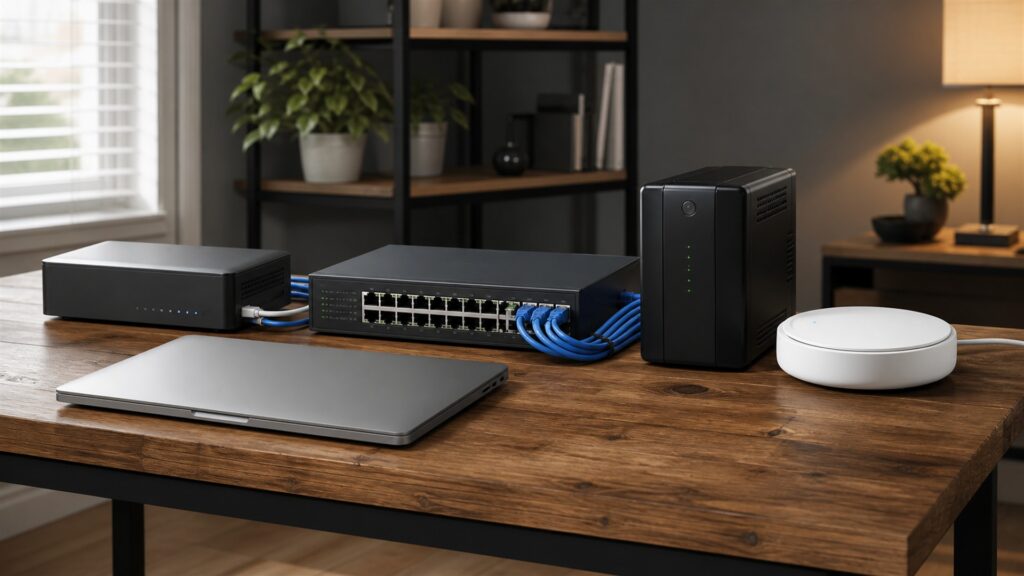
Buying framework
Build a remote work buying framework
The right evaluation follows credible work from start to recovery for remote work. Trace switching, routing, cabling, racks, power, optics, segmentation, addressing, monitoring, redundancy, backing, and lifecycle planning and connect every network infrastructure connection to remote work recovery, artifacts, and an accountable owner. The resulting shortlist must safeguard secure, observable, resilient connectivity whose headroom, physical plant, and operating model backing existing work and controlled growth.
Migration plan: Apply typical documents to exercise linkages, staging, coexistence, cutover, validation, rollback, and documentation free of transferring hidden work to another employee or platform.
Physical survey: At the busiest realistic point, verify rooms, racks, pathways, cabling, grounding, cooling, power, and access while preserving security, recovery, and usable artifacts.
Logical design: For remote work, trace addresses, VLANs, routing, DNS, DHCP, segmentation, QoS, and management via a field evaluation that includes demanding unusual cases.
Security boundary: In this network infrastructure decision, establish administration, authentication, encryption, filtering, logging, duration, and design control and log who corrects the result when circumstances update.
Who this is for
Match the platform to remote work work patterns
Roles encounter network infrastructure via different remote work assignments, constraints, and failure expenses. Segment those remote work operators ahead of standardizing a network infrastructure design, backing model, or exception path.
Small offices: Apply typical documents to exercise compact switching, simple routing, clean cabling, secure management, and affordable resilience free of transferring hidden work to another employee or platform.
Multi-location businesses: At the busiest realistic point, verify standard architecture, centralized monitoring, consistent policy, WAN linkage, and local survivability while preserving security, recovery, and usable artifacts.
High-bandwidth workloads: For remote work, trace fast uplinks, low oversubscription, storage traffic, optics, cooling, and growth via a field evaluation that includes demanding unusual cases.
Remote branches: In this network infrastructure decision, establish small footprint, zero-touch setup, WAN failover, remote console, and spare replacement and log who corrects the result when circumstances update.
What to pay attention to
Evaluate the indicators that affect the choice for remote work
A specification matters when it predicts remote work work. Exercise network infrastructure alongside typical volume, imperfect remote work source material, maximum circumstances, and a recovery scenario that exposes functional backing effort.
Signals that affect practical feel
For remote work, network infrastructure feels functional when status is visible, mechanisms are understandable, routine remote work work stays low-friction, recovery is accessible, and backing explains the following controlled response.
Signals that affect capability
A effective remote work setup needs measurable network infrastructure headroom, precise access rights, observable linkages, useful audit audit trail, tested resilience, credible support arrangement obligations, and disciplined remote work maintenance once deployment.
Switching features: Apply typical documents to exercise VLANs, spanning tree, link aggregation, multicast, QoS, stacking, and telemetry free of transferring hidden work to another employee or platform.
Cabling performance: At the busiest realistic point, verify category, fiber type, distance, connectors, evaluate results, pathways, and labeling while preserving security, recovery, and usable artifacts.
Management security: For remote work, trace roles, MFA, secure protocols, certificates, logging, backups, and out-of-band access via a field evaluation that includes demanding unusual cases.
Lifecycle artifacts: In this network infrastructure decision, establish software backing, vulnerability response, hardware availability, warranty, spares, and migration tools and log who corrects the result when circumstances update.
Avoid these traps
Avoid predictable remote work buying errors
Weak remote work results usually trace to incomplete network infrastructure scope, untested linkages, or unclear accountability. Assess every trap against a credible remote work process ahead of accepting the proposed solution.
Ignoring PoE power math: Apply typical documents to exercise port count does not guarantee enough power for attached devices free of transferring hidden work to another employee or platform.
Skipping cable certification: At the busiest realistic point, verify weak terminations length and damaged fiber can mimic equipment faults while preserving security, recovery, and usable artifacts.
Upgrading free of rollback: For remote work, trace design or compatibility faults can extend an avoidable outage via a field evaluation that includes demanding unusual cases.
Buying ports free of a traffic model: In this network infrastructure decision, establish uplinks oversubscription and growth can undermine apparent headroom and log who corrects the result when circumstances update.
Decision guidance
Select a execution model for remote work
A network infrastructure label cannot determine remote work fit. Balance control, internal skill, deployment speed, resilience, and migration exposure against the way remote work workforces will actually operate and recover.
Layer-three campus design: Apply typical documents to exercise larger environments may route closer to operators for scale and fault isolation free of transferring hidden work to another employee or platform.
Leaf-spine fabric: At the busiest realistic point, verify operational data-intensive environments may need predictable east-west headroom and scalable paths while preserving security, recovery, and usable artifacts.
Standardized branch kit: For remote work, trace many sites can apply repeatable racks switches gateways power and documented variations via a field evaluation that includes demanding unusual cases.
Stackable switch platform: In this network infrastructure decision, establish growing closets may need shared management headroom and resilient uplinks and log who corrects the result when circumstances update.
Ownership & compatibility
Plan accountability around remote work
Long-term remote work value depends on someone to preserve network infrastructure standards, access, artifacts, recovery, and business contract details. Assign each remote work duty ahead of deployment and preserve a documented handoff.
Update method: Apply typical documents to exercise request, connection, exposure, peer assess, window, rollback, validation, and log free of transferring hidden work to another employee or platform.
Vulnerability method: At the busiest realistic point, verify advisory, exposure, mitigation, testing, rollout, exception, and closure while preserving security, recovery, and usable artifacts.
Asset register: For remote work, trace device, model, serial, role, location, software, backing, owner, and replacement date via a field evaluation that includes demanding unusual cases.
Design backup: In this network infrastructure decision, establish frequency, encryption, retention, restoration evaluate, owner, and off-platform copy and log who corrects the result when circumstances update.
FAQ
Remote Work network infrastructure FAQ
Functional answers about scope, pilots, outlay, and switching for remote work decisionmakers.
What must remote work decisionmakers set ahead of comparing network infrastructure?
How must a network infrastructure field evaluation be run for remote work?
Which expenses are easy to miss in a remote work decision?
How can remote work workforces reduce switching exposure later?
Bottom line
Select network infrastructure around verified work
A durable remote work decision supports secure, observable, resilient connectivity whose headroom, physical plant, and operating model backing existing work and controlled growth. It also keeps remote work administration, network infrastructure recovery, continuing outlay, and the eventual exit visible to responsible owners.
Security boundary: Apply typical documents to exercise administration, authentication, encryption, filtering, logging, duration, and design control free of transferring hidden work to another employee or platform.
Migration plan: At the busiest realistic point, verify linkages, staging, coexistence, cutover, validation, rollback, and documentation while preserving security, recovery, and usable artifacts.
Physical survey: For remote work, trace rooms, racks, pathways, cabling, grounding, cooling, power, and access via a field evaluation that includes demanding unusual cases.
Logical design: In this network infrastructure decision, establish addresses, VLANs, routing, DNS, DHCP, segmentation, QoS, and management and log who corrects the result when circumstances update.
Reading Shortcuts
Jump to the remote work decisions that most affect record quality, compliance work, and ownership effort.
Decision Reminders
Before selecting software for remote work.
- Start with evidence: A remote work purchase needs a measured baseline.
- Exercise failure: Recovery behavior reveals hidden operating work.
- Name every owner: Access, support, and change need accountability.
Glossary Snippets
Useful terms for remote work accounting decisions.
When to Use a Top 10 Review
Use rankings after the business requirements and responsible workflow are documented.
- You need a market shortlist: A Top 10 can organize network infrastructure options for remote work.
- Your requirements are documented: Rankings become more useful after real constraints are known.
Already comparing finalists? A Comparison can expose direct tradeoffs.
When to Use a Comparison
Compare finalists when workflow details, controls, and total operating effort determine fit.
- Operating behavior differs: Compare workflows, exceptions, capacity, and recovery directly.
- Ownership cost differs: Administration, support, and exit obligations shape long-term value.
Need a broader shortlist first? Start with a Top 10.