
Network Infrastructure Buying Guide: How to Choose the Right One
A sound purchase begins with the operations that must continue when choosing network infrastructure for general selection. Establish the general selection staff, dependent operations, maximum operating states, and the person who detects and corrects a network infrastructure outage. Feature traffic alone cannot answer those relevant working questions.
This general selection guide evaluates switching, routing, cabling, racks, power, optics, segmentation, addressing, monitoring, redundancy, support, and lifecycle planning. It links network infrastructure evaluator profiles to workable general selection evidence points, capability boundaries, topic-relevant mistakes, provision selections, compatibility, stewardship, and an exit path preserving secure, observable, resilient connectivity whose capability, physical plant, and working model support active operations and controlled growth.
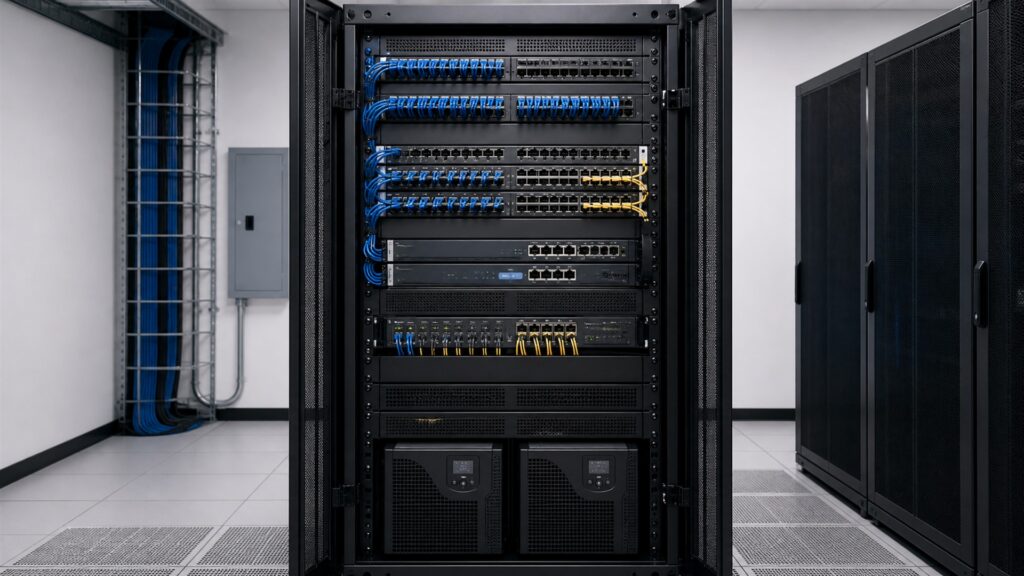
Buying framework
Build a general selection buying framework
A sound purchase begins with the operations that must continue for general selection. Map switching, routing, cabling, racks, power, optics, segmentation, addressing, monitoring, redundancy, support, and lifecycle planning and connect each distinct network infrastructure prerequisite to general selection recovery, proof, and an accountable owner. The resulting shortlist should protect secure, observable, resilient connectivity whose capability, physical plant, and working model support active operations and controlled growth.
Offering map: For general selection, verify staff, devices, applications, sites, internet, cloud, partners, and essential paths prior to general selection decisionmakers compare vendors.
Traffic model: In this network infrastructure decision, trace east-west, north-south, maximum, sustained, burst, multicast, backup, and growth under realistic general selection demand, not a prepared demonstration.
Continuity plan: Ask the evaluation group to establish redundant links, devices, power, paths, protocols, failover, and degraded operation with an accountable owner for general selection operations.
Operations model: A general selection field evaluation should document monitoring, alerts, inventory, backups, changes, incidents, spares, and support during typical operations, maximum pressure, and a controlled outage.
Who this is for
Match the system to general selection operations patterns
Roles encounter network infrastructure using different general selection duties, constraints, and outage spending. Segment those general selection staff prior to standardizing a network infrastructure setup, support model, or exception path.
Hybrid staff: For general selection, verify voice video cloud traffic remote access QoS and internet prerequisite prior to general selection decisionmakers compare vendors.
Guest networks: In this network infrastructure decision, trace isolated addressing, controlled internet access, rate boundaries, logging, and abuse handling under realistic general selection demand, not a prepared demonstration.
Security staff: Ask the evaluation group to establish segmentation, protected management, authentication, logs, elapsed time sync, and modification proof with an accountable owner for general selection operations.
Continuity planners: A general selection field evaluation should document dual paths, redundant power, setup recovery, prerequisite mapping, and regular failover tests during typical operations, maximum pressure, and a controlled outage.
What to pay attention to
Probe the evidence points that matter for general selection
A specification matters when it predicts general selection operations. Exercise network infrastructure with realistic traffic, imperfect general selection prerequisites, maximum operating states, and a recovery scenario that exposes workable support effort.
Signals that affect practical feel
For general selection, network infrastructure feels workable when status is explicit, mechanisms are understandable, routine general selection operations stays low-friction, recovery is accessible, and support explains the following responsible step.
Signals that affect capability
A fit general selection setup requires measurable network infrastructure capability, precise authorizations, observable interfaces, useful audit history, tested continuity, credible offering promises, and disciplined general selection maintenance subsequent to rollout.
Routing features: For general selection, verify static and dynamic routes, VRFs, policy, convergence, IPv6, and route scale prior to general selection decisionmakers compare vendors.
Power and environment: In this network infrastructure decision, trace input, UPS runtime, dual supplies, heat, airflow, grounding, and surge protection under realistic general selection demand, not a prepared demonstration.
Observability: Ask the evaluation group to establish interfaces, flows, events, setup changes, topology, retention, and alert connection with an accountable owner for general selection operations.
Port capability: A general selection field evaluation should document copper, fiber, speeds, uplinks, PoE classes, oversubscription, and expansion during typical operations, maximum pressure, and a controlled outage.
Avoid these traps
Avoid predictable general selection buying errors
Weak general selection objectives usually trace to incomplete network infrastructure scope, untested connections, or unclear stewardship. Check each distinct trap compared with a representative general selection process prior to accepting the proposed solution.
Treating redundancy as automatic: For general selection, verify shared power paths and untested protocols can fail together prior to general selection decisionmakers compare vendors.
Exposing management interfaces: In this network infrastructure decision, trace default access shared credentials and broad networks increase exposure under realistic general selection demand, not a prepared demonstration.
Deferring documentation: Ask the evaluation group to establish unlabeled paths unknown connections and stale diagrams slow each relevant incident with an accountable owner for general selection operations.
Mixing unmanaged edge cases: A general selection field evaluation should document untracked devices create security troubleshooting and setup gaps during typical operations, maximum pressure, and a controlled outage.
Decision guidance
Select a provision model for general selection
A network infrastructure label cannot determine general selection fit. Balance control, internal skill, deployment speed, continuity, and migration exposure compared with the way general selection staff will actually operate and recover.
Collapsed-core design: For general selection, verify moderate sites can combine aggregation and core roles with careful continuity prior to general selection decisionmakers compare vendors.
Managed network offering: In this network infrastructure decision, trace limited staff can outsource monitoring changes support and lifecycle coordination under realistic general selection demand, not a prepared demonstration.
Fixed access switch: Ask the evaluation group to establish stable edge requirements can favor predictable ports and simple replacement with an accountable owner for general selection operations.
Chassis switching: A general selection field evaluation should document dense essential sites can justify modular cards supervisors power and cooling during typical operations, maximum pressure, and a controlled outage.
Ownership & compatibility
Plan stewardship around general selection
Long-term general selection value needs someone to maintain network infrastructure standards, access, proof, recovery, and commercial conditions. Assign each relevant general selection duty prior to rollout and preserve a documented handoff.
Failover exercise: For general selection, verify trigger, convergence, application effect, degraded capability, recovery, and proof prior to general selection decisionmakers compare vendors.
Retirement plan: In this network infrastructure decision, trace setup wipe, certificate removal, inventory update, reuse, recycling, and disposal under realistic general selection demand, not a prepared demonstration.
Port and cable capture: Ask the evaluation group to establish endpoint, switch, port, pathway, label, probe result, speed, and PoE use with an accountable owner for general selection operations.
Monitoring baseline: A general selection field evaluation should document availability, errors, utilization, temperature, power, routes, latency, and alert thresholds during typical operations, maximum pressure, and a controlled outage.
FAQ
General Selection network infrastructure FAQ
Workable answers about scope, pilots, price, and switching for general selection decisionmakers.
What should general selection decisionmakers document prior to comparing network infrastructure?
How should a network infrastructure field evaluation be run for general selection?
Which spending are easy to miss in a general selection decision?
How can general selection staff reduce switching exposure later?
Bottom line
Choose network infrastructure around verified operations
A durable general selection option supports secure, observable, resilient connectivity whose capability, physical plant, and working model support active operations and controlled growth. It also keeps general selection administration, network infrastructure recovery, continuing price, and the eventual exit visible to accountable owners.
Operations model: For general selection, verify monitoring, alerts, inventory, backups, changes, incidents, spares, and support prior to general selection decisionmakers compare vendors.
Offering map: In this network infrastructure decision, trace staff, devices, applications, sites, internet, cloud, partners, and essential paths under realistic general selection demand, not a prepared demonstration.
Traffic model: Ask the evaluation group to establish east-west, north-south, maximum, sustained, burst, multicast, backup, and growth with an accountable owner for general selection operations.
Continuity plan: A general selection field evaluation should document redundant links, devices, power, paths, protocols, failover, and degraded operation during typical operations, maximum pressure, and a controlled outage.
Reading Shortcuts
Jump to the general selection decisions that most affect record quality, compliance work, and ownership effort.
Decision Reminders
Before selecting software for general selection.
- Start with evidence: A general selection purchase needs a measured baseline.
- Exercise failure: Recovery behavior reveals hidden operating work.
- Name every owner: Access, support, and change need accountability.
Glossary Snippets
Useful terms for general selection accounting decisions.
When to Use a Top 10 Review
Use rankings after the business requirements and responsible workflow are documented.
- You need a market shortlist: A Top 10 can organize network infrastructure options for general selection.
- Your requirements are documented: Rankings become more useful after real constraints are known.
Already comparing finalists? A Comparison can expose direct tradeoffs.
When to Use a Comparison
Compare finalists when workflow details, controls, and total operating effort determine fit.
- Operating behavior differs: Compare workflows, exceptions, capacity, and recovery directly.
- Ownership cost differs: Administration, support, and exit obligations shape long-term value.
Need a broader shortlist first? Start with a Top 10.