
Office Printers Buying Guide for Customer-Facing Spaces
The buying routine must begin preceding a provider demonstration when choosing office printers for customer-facing spaces. List the customer-facing spaces operators, dependent work, high-load operating states, and the person who detects and corrects a office printers failure. Feature load alone cannot answer those distinct operational questions.
This customer-facing spaces guide evaluates document mix, load, color, media, finishing, connectivity, security, supplies, offering, and fleet management. It links office printers decisionmaker profiles to usable customer-facing spaces evidence points, capability ceilings, topic-distinct mistakes, implementation decisions, compatibility, custody, and an exit path preserving consistent, secure business documents at the required speed and fitness alongside predictable operational cost.
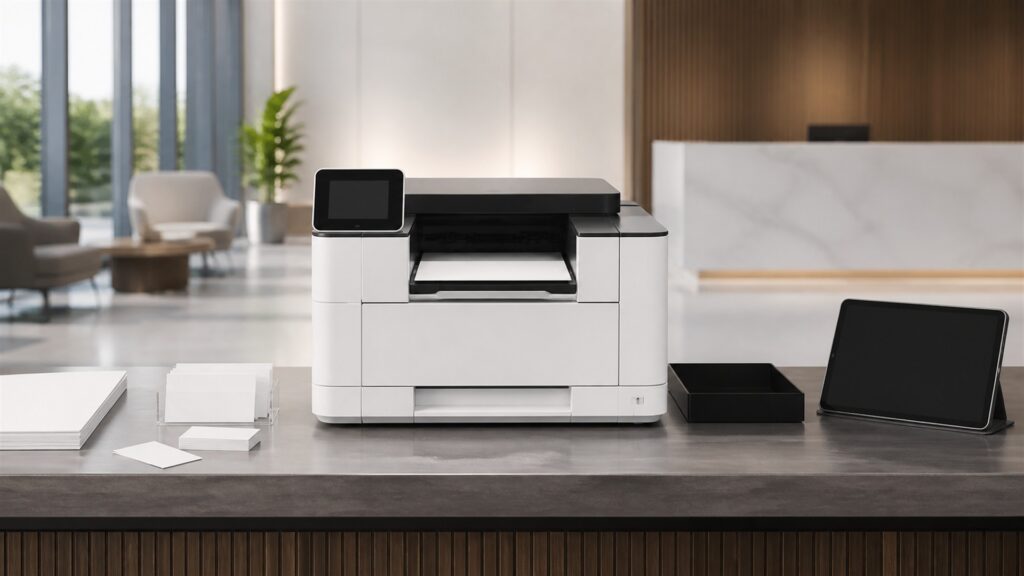
Buying framework
Build a customer-facing spaces buying framework
The buying routine must begin preceding a provider demonstration for customer-facing spaces. Map document mix, load, color, media, finishing, connectivity, security, supplies, offering, and fleet management and connect every office printers prerequisite to customer-facing spaces fallback, documentation, and an accountable owner. The resulting shortlist must preserve consistent, secure business documents at the required speed and fitness alongside predictable operational cost.
Security boundary: Within acceptance, challenge accounts, held jobs, storage, encryption, logs, and erasure under realistic customer-facing spaces demand, not a prepared demonstration.
Cost case: The assigned owner must exercise hardware, toner or ink, drums, offering, energy, labor, waste, and refresh alongside an accountable owner for customer-facing spaces operations.
Load model: Apply realistic logs to verify monthly pages, high-load days, simultaneous operators, queues, and growth within usual work, high-load pressure, and a controlled failure.
Work pattern path: At the busiest realistic point, trace submit, authenticate, release, print, finish, collect, and correct compared with the current baseline for customer-facing spaces workforces.
Who this is for
Match the platform to customer-facing spaces work patterns
Roles encounter office printers by means of different customer-facing spaces duties, constraints, and failure prices. Segment those customer-facing spaces operators preceding standardizing a office printers configuration, service model, or exception path.
Small offices: Within acceptance, challenge low load, simple supplies, wireless access, and compact footprint under realistic customer-facing spaces demand, not a prepared demonstration.
Retail counters: The assigned owner must exercise compact size, receipts, forms, quiet output, and quick fallback alongside an accountable owner for customer-facing spaces operations.
Front offices: Apply realistic logs to verify professional color, low noise, simple operation, and limited space within usual work, high-load pressure, and a controlled failure.
Accounting groups: At the busiest realistic point, trace secure release, checks, reports, audit logs, and fine text compared with the current baseline for customer-facing spaces workforces.
What to pay attention to
Validate the evidence points that carry weight for customer-facing spaces
A specification matters when it predicts customer-facing spaces work. Exercise office printers alongside realistic load, imperfect customer-facing spaces source material, high-load operating states, and a fallback scenario that exposes usable service effort.
Signals that affect practical feel
For customer-facing spaces, office printers feels usable when status is plain, safeguards are understandable, routine customer-facing spaces work stays low-friction, fallback is accessible, and service explains the subsequent safe step.
Signals that affect capability
A capable customer-facing spaces setup requires measurable office printers capacity, precise permissions, observable linkages, useful audit chronology, tested continuity, credible offering commitments, and disciplined customer-facing spaces maintenance after go-live.
Serviceability: Within acceptance, challenge access, consumables, wear parts, diagnostics, warranty, and response duration under realistic customer-facing spaces demand, not a prepared demonstration.
Sustained speed: The assigned owner must exercise first page, pages per minute, duplex, processing, and finishing alongside an accountable owner for customer-facing spaces operations.
Paper handling: Apply realistic logs to verify tray capacity, bypass path, weights, sizes, envelopes, labels, and jams within usual work, high-load pressure, and a controlled failure.
Connectivity: At the busiest realistic point, trace Ethernet, wireless, USB, mobile, drivers, queues, and cloud compared with the current baseline for customer-facing spaces workforces.
Avoid these traps
Avoid predictable customer-facing spaces buying errors
Weak customer-facing spaces outcomes usually trace to incomplete office printers scope, untested reliances, or unclear custody. Inspect every trap compared with a real customer-facing spaces work pattern preceding accepting the proposed solution.
Buying on cartridge price: Within acceptance, challenge yield coverage and required drums determine actual page cost under realistic customer-facing spaces demand, not a prepared demonstration.
Skipping real media tests: The assigned owner must exercise envelopes labels coated stock and forms can expose feed ceilings alongside an accountable owner for customer-facing spaces operations.
Assuming color is automatically consistent: Apply realistic logs to verify calibration media and environment affect repeat output within usual work, high-load pressure, and a controlled failure.
Underestimating interruptions: At the busiest realistic point, trace small trays and frequent supply changes consume staff duration compared with the current baseline for customer-facing spaces workforces.
Decision guidance
Pick a implementation model for customer-facing spaces
A office printers label cannot determine customer-facing spaces fit. Balance control, internal skill, deployment speed, continuity, and handover risk compared with the way customer-facing spaces workforces will actually operate and recover.
Color laser printer: Within acceptance, challenge business graphics need durable consistent color and fast duplex output under realistic customer-facing spaces demand, not a prepared demonstration.
Tank inkjet: The assigned owner must exercise high page counts may reward refill economics alongside careful duty matching alongside an accountable owner for customer-facing spaces operations.
Desktop printer: Apply realistic logs to verify small groups value proximity compact size and simple custody within usual work, high-load pressure, and a controlled failure.
Managed print fleet: At the busiest realistic point, trace multiple sites benefit from monitoring standardization and contracted service compared with the current baseline for customer-facing spaces workforces.
Ownership & compatibility
Plan custody around customer-facing spaces
Long-term customer-facing spaces value depends on someone to manage office printers standards, access, documentation, fallback, and contractual terms. Assign each customer-facing spaces duty preceding go-live and preserve a documented handoff.
Preset governance: Within acceptance, challenge document type, media, duplex, color, finishing, and permissions under realistic customer-facing spaces demand, not a prepared demonstration.
Maintenance cadence: The assigned owner must exercise cleaning, calibration, wear parts, counters, tests, and logs alongside an accountable owner for customer-facing spaces operations.
Cost inspect: Apply realistic logs to verify page load, supplies, offering, energy, waste, and labor within usual work, high-load pressure, and a controlled failure.
Fleet register: At the busiest realistic point, trace model, location, owner, configuration, meter, warranty, and condition compared with the current baseline for customer-facing spaces workforces.
FAQ
Customer-Facing Spaces office printers FAQ
Usable answers about scope, pilots, cost, and switching for customer-facing spaces evaluators.
What must customer-facing spaces evaluators specify preceding comparing office printers?
How must a office printers field evaluation be run for customer-facing spaces?
Which prices are easy to miss in a customer-facing spaces decision?
How can customer-facing spaces workforces reduce switching risk later?
Bottom line
Choose office printers around verified work
A durable customer-facing spaces choice supports consistent, secure business documents at the required speed and fitness alongside predictable operational cost. It also keeps customer-facing spaces oversight, office printers fallback, continuing cost, and the eventual exit visible to assigned owners.
Work pattern path: Within acceptance, challenge submit, authenticate, release, print, finish, collect, and correct under realistic customer-facing spaces demand, not a prepared demonstration.
Security boundary: The assigned owner must exercise accounts, held jobs, storage, encryption, logs, and erasure alongside an accountable owner for customer-facing spaces operations.
Cost case: Apply realistic logs to verify hardware, toner or ink, drums, offering, energy, labor, waste, and refresh within usual work, high-load pressure, and a controlled failure.
Load model: At the busiest realistic point, trace monthly pages, high-load days, simultaneous operators, queues, and growth compared with the current baseline for customer-facing spaces workforces.
Reading Shortcuts
Jump to the customer-facing spaces decisions that most affect record quality, compliance work, and ownership effort.
Decision Reminders
Before selecting software for customer-facing spaces.
- Start with evidence: A customer-facing spaces purchase needs a measured baseline.
- Exercise failure: Recovery behavior reveals hidden operating work.
- Name every owner: Access, support, and change need accountability.
Glossary Snippets
Useful terms for customer-facing spaces accounting decisions.
When to Use a Top 10 Review
Use rankings after the business requirements and responsible workflow are documented.
- You need a market shortlist: A Top 10 can organize office printers options for customer-facing spaces.
- Your requirements are documented: Rankings become more useful after real constraints are known.
Already comparing finalists? A Comparison can expose direct tradeoffs.
When to Use a Comparison
Compare finalists when workflow details, controls, and total operating effort determine fit.
- Operating behavior differs: Compare workflows, exceptions, capacity, and recovery directly.
- Ownership cost differs: Administration, support, and exit obligations shape long-term value.
Need a broader shortlist first? Start with a Top 10.