
Oral Care Products Buying Guide: How to Choose the Right One
An oral-care shelf combines products that do not perform the same job. A toothbrush cleans exposed tooth surfaces, toothpaste supplies ingredients named on its label, and floss or another interdental cleaner reaches spaces a brush head cannot. Mouthrinse is optional and should enter the routine for a stated purpose—not as a shortcut around those mechanical steps.
Start by finding a soft-bristle brush you can position comfortably, then a fluoride toothpaste with clear directions. Choose the between-teeth tool by actual access and hand control. Only after those choices are workable should you compare therapeutic rinses, cosmetic mouthwashes, timers, pressure sensors, or powered accessories. This order keeps the set complete without making it needlessly crowded.
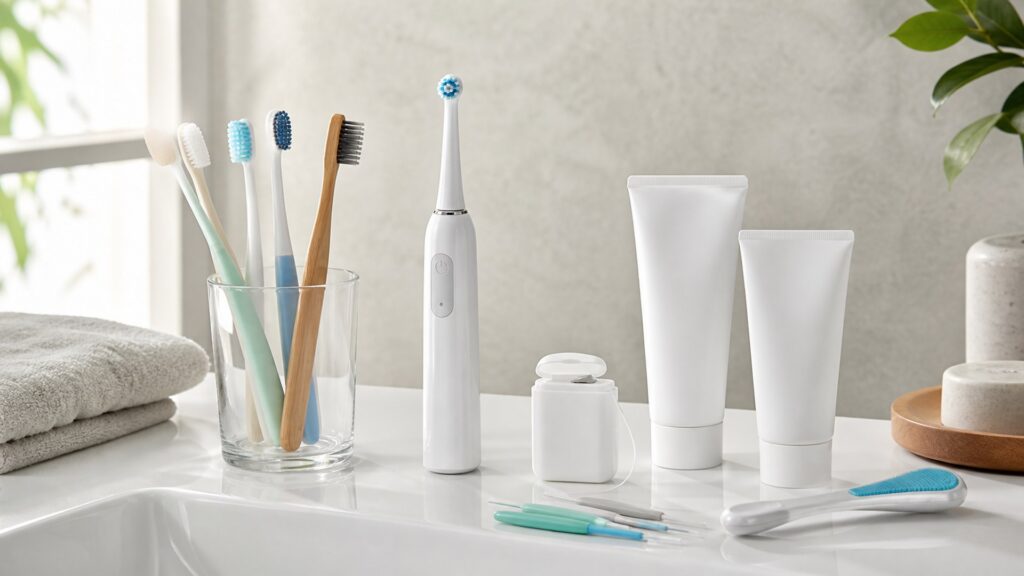
Buying framework
Give every product one oral-care job
A useful set covers different surfaces and purposes. Decide what must happen in the mouth before deciding how many packages belong at the sink.
Begin with reachable brushing: Choose a soft-bristle head that can be guided along outer, inner, and chewing surfaces, including the back teeth. A large head or awkward handle is a poor trade even when the brush advertises more cleaning features.
Treat toothpaste as a labeled formula: For everyday cavity-protection shopping, look for fluoride identified on the package and read the age, amount, and use directions. Flavor, foam, and whitening language answer different preferences or purposes.
Solve the between-teeth route separately: A brush head does not determine what passes through tight contacts or around bridges and wires. Compare floss, holders, interdental brushes, and water flossers by the access problem each can physically navigate.
Use feedback to fix a behavior gap: A powered brush's two-minute timer or pressure sensor matters when duration or force is inconsistent. Powered motion alone is not a reason to replace a manual brush that is comfortable and used effectively.
Make rinse earn its place: Separate therapeutic mouthrinses, which carry labeled active ingredients and purposes, from cosmetic mouthwashes intended mainly for temporary freshening. Neither category should be purchased as a replacement for brushing and interdental cleaning.
Who this is for
Match the format to hands, spaces, and hardware
The useful distinction is not beginner versus expert. It is what you can reach, manipulate, and repeat at the sink.
The uncomplicated manual-brush user: You can reach all tooth surfaces with a compact soft-bristle head and control pressure without electronic prompts. Spend attention on handle grip and head reach; powered features may add little to an already consistent brushing habit.
The feedback-seeking brusher: You tend to hurry or press harder than intended. A powered model with a visible or tactile timer and pressure alert offers relevant guidance, provided its replacement heads remain easy to buy.
The tight-contact cleaner: Floss must pass through close contacts without shredding and still curve around each tooth. Waxed floss, tape, or a holder can change handling, so select by passage and control rather than a claim that one filament suits everyone.
The appliance or wider-space cleaner: Braces, bridges, or open spaces may make threaders, correctly sized interdental brushes, or a directed water stream easier to position. The route around hardware matters more than choosing the most elaborate device.
The limited-dexterity user: Loose floss knots and small handles can be the main obstacle. A larger powered-brush grip, floss holder, interdental handle, or water flosser may reduce manipulation, but counter space, filling, cleaning, and tip replacement still count.
What to pay attention to
Read design and labels as instructions for use
Specifications matter when they alter where a product reaches, how it is controlled, or what role its formula is labeled to perform. Translate features into those consequences before comparing price.
Contact and access
Examine brush-head size, bristle softness, filament or brush diameter, tip angle, and the route around teeth or appliances.
Guidance, labeling, and upkeep
Examine timers, pressure alerts, active ingredients, dosage directions, compatible replacements, reservoirs, and cleaning requirements.
Bristle softness and head dimensions: Look for soft labeling and a head compact enough for your back teeth and inner surfaces. Extra bristle height patterns matter less if the head cannot be placed precisely.
Handle shape and powered controls: A nonslip grip can help wet-hand control. On powered brushes, locate the pressure alert and timer behavior; a feature buried in an app is different from feedback delivered while brushing.
Floss construction: Round filament, flat tape, wax, and holders change passage, grip, and fraying between contacts. Packaging terms cannot predict every mouth, so avoid bulk purchases until the format proves manageable.
Interdental brush diameter: These brushes are sized, and a larger diameter is not an upgrade. The working brush should enter the intended space without being forced; appliances or varied gaps may require more than one access approach.
Water-flosser controls and reservoir: Pressure adjustment affects control, while reservoir capacity affects refilling and counter footprint. Also check whether tips are replaceable and whether the reservoir and internal path can be cleaned according to instructions.
Toothpaste active label: Confirm fluoride on the active-ingredient panel or the product's accepted labeling, then read directions and warnings. Whitening, sensitivity, tartar, and flavor claims should not obscure the formula's intended everyday role.
Mouthrinse purpose and directions: Therapeutic products identify an active ingredient and specific claim; cosmetic products focus on temporary breath freshening. Compare age limits, measured dose, contact directions, alcohol labeling when relevant, and any timing instructions on the package.
Avoid these traps
Five shortcuts that leave the routine incomplete
Most mismatches come from confusing force with effectiveness or asking one format to do another product's job. Correct the role assignment before adding more items.
Equating hard bristles with better cleaning: Bristle stiffness is not a power setting. Choose a soft-bristle brush that reaches comfortably and focus on controllable placement; persistent concerns about technique belong in a dental conversation, not a search for harsher bristles.
Substituting mouthrinse for contact cleaning: A rinse moves through the mouth but does not duplicate brushing tooth surfaces or guiding a cleaner between teeth. Add one only after its separate labeled purpose is clear.
Buying one interdental format in bulk: A year's supply is wasteful if tape catches, a brush diameter is wrong, or the holder cannot approach an appliance. Trial the geometry and handling before committing to quantity.
Choosing toothpaste by whitening language alone: Whitening is not the entire everyday buying decision. First identify fluoride labeling and directions, then assess whether any additional stated purpose is relevant and tolerable for the intended user.
Ignoring a powered system's replacement market: A discounted handle can become expensive or unusable when compatible heads are scarce. Price the correct heads and check local availability before treating the starter package as the full cost.
Decision guidance
Build the smallest set that covers every route
Use these branches to combine products, not rank them on one universal scale. Each branch begins with a physical access or use condition.
If a manual brush reaches comfortably: Choose a soft-bristle manual brush with a manageable head and grip, plus appropriately labeled fluoride toothpaste. Keep it simple unless timing, pressure, or dexterity creates a recurring obstacle.
If duration or pressure is inconsistent: Consider a powered brush that reports those behaviors during use. Confirm head size, grip, charger footprint, and replacement-head supply; do not buy solely for mode count or app dashboards.
If contacts are tight: Start with floss or tape that passes without repeated shredding and can wrap against the tooth surface. A holder is reasonable when finger control prevents consistent positioning.
If appliances or wider spaces block the route: Compare an interdental brush sized for the accessible space, a threader, or a water flosser with a controllable tip. Dental guidance can help identify an appropriate method around individual hardware.
If you want a mouthrinse: Name the goal before shopping. Choose therapeutic versus cosmetic from the label, then follow dose, timing, and age directions; skip rinse when it merely duplicates a fresh-flavor preference already satisfied by toothpaste.
If symptoms drive the purchase: Persistent pain, swelling, bleeding, sores, sensitivity, or unexplained changes should not be self-diagnosed in a shopping aisle. Ask a dentist or other qualified clinician what needs evaluation before selecting a specialized product.
Ownership & compatibility
Keep the working parts clean and replaceable
The ongoing burden differs sharply between a manual brush and a powered or water-based device. Account for drying, wear, consumables, and personal use before committing.
Rinse, position, and air-dry: Rinse the toothbrush after use and store it so it can air-dry rather than remain sealed while wet. Follow maker cleaning directions for handles, chargers, and any removable parts.
Watch working surfaces for wear: Replace a brush or head when bristles become frayed or worn and follow manufacturer or dental guidance. Inspect floss holders and interdental brushes for damage rather than continuing with a distorted working end.
Budget proprietary consumables: Powered heads and water-flosser tips can lock the routine to one fitting. Verify exact compatibility, replacement intervals in the instructions, and ongoing price before buying the base device.
Clean reservoirs and keep tools personal: Empty and maintain water-flosser reservoirs and paths as directed so residue does not become part of daily use. Do not share toothbrush heads or used interdental tools, and store formulas according to their labels.
FAQ
Questions that arise after the shortlist
These answers clarify common format and label decisions without turning product selection into diagnosis.
Is a powered toothbrush always better than a manual one?
What should I look for on a toothpaste label?
How do floss and interdental brushes differ?
When does a water flosser make sense?
Does mouthrinse replace brushing or flossing?
What does the ADA Seal tell me?
Should everyone choose alcohol-free mouthrinse?
Can family members share oral-care tools?
When should I ask a dentist before buying something specialized?
Bottom line
Cover surfaces, spaces, and labeled formula roles
A complete oral-care set is usually smaller than the retail aisle suggests. Establish reachable soft-bristle brushing and clearly labeled fluoride toothpaste, solve interdental access, then add device feedback or rinse only for a defined gap.
Reach every brush surface: Let soft bristles, head size, grip, and real mouth access determine manual or powered format.
Read the formula's job: Use active ingredients, stated purpose, directions, and warnings—not flavor or front-label spectacle—as the toothpaste and rinse filter.
Choose an interdental route: Match floss, a holder, a sized brush, or a water stream to the spaces, appliances, and hand control involved.
Accept only useful complexity: Timers, sensors, chargers, reservoirs, and proprietary tips belong only when their benefit justifies the upkeep they add.
Reading Shortcuts
Go to the choice that defines your set.
Routine Reminders
Keep each purchase tied to a job.
- Brush: Soft bristles and a head that reaches.
- Paste: Fluoride labeling and clear directions.
- Between teeth: A format the space and hands permit.
- Rinse: A stated supplementary purpose.
- Replacements: Obtainable heads and tips.
Glossary Snippets
Terms used on the oral-care shelf.
When to Use a Top 10 Review
Use a roundup after identifying the exact oral-care format you need.
- Brush format is known: Compare head access and usable feedback.
- Interdental route is known: Compare handling and replacement supply.
- Rinse role is known: Compare active labels and directions.
Have finalists? Use a Comparison.
When to Use a Comparison
Use a head-to-head only within products serving the same oral-care job.
- Heads differ: Compare reach, softness, and replacement cost.
- Devices differ: Compare feedback, reservoir, and cleaning burden.
- Labels differ: Compare active purpose and use directions.
Still exploring? Start with a Top 10.