
Pore Vacuum Devices Buying Guide for At-Home Treatment Goals
At-home pore vacuuming can temporarily remove surface oil and some loosened pore material, yet the device cannot stop sebum production, permanently tighten pores, or cure comedonal acne. Dark nose dots may also be normal sebaceous filaments that refill naturally.
Set a modest goal before buying: occasional visible cleanup on a small suitable area without bruising. If the desired result requires strong suction, repeated passes, or frequent sessions, topical prevention or professional evaluation is the more realistic route.
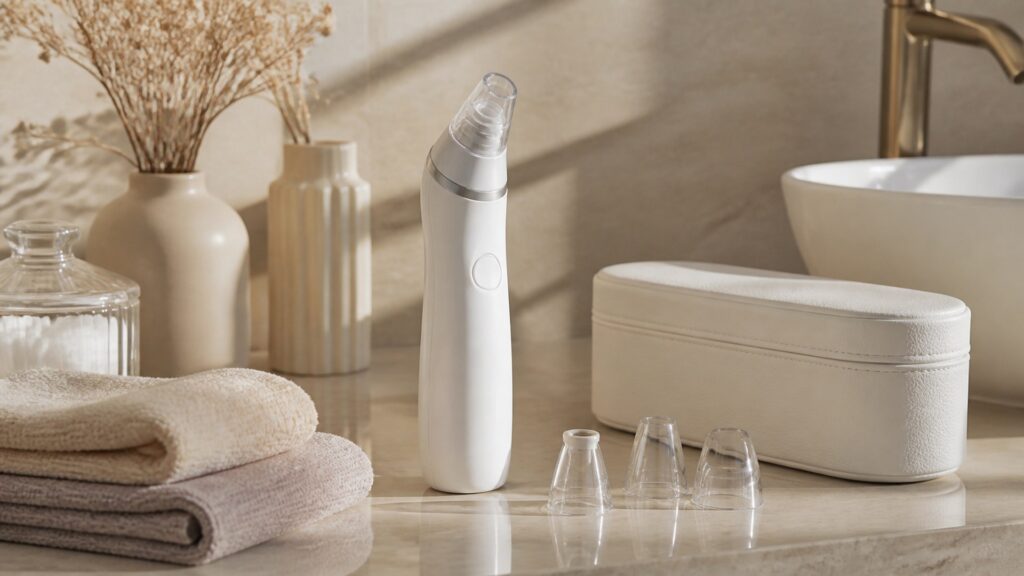
Buying framework
Define the at-home treatment goals routine before comparing products
Use the setting, frequency, and skin priorities to narrow pore vacuum devices logically.
Start with the use case: Define the target and distinguish blackheads from inflamed acne and normal filaments.
Rank the practical tradeoffs: Choose an observable outcome at normal distance after redness has resolved.
Check instructions early: Compare home suction with consistent acne care and deciding not to extract.
Use profiles
Match pore vacuum devices to the person and pace
Three shopper profiles expose different priorities for at-home treatment goals.
Routine-focused buyer: An appearance-focused user should allow recovery before judging a close-up result.
Performance-focused buyer: A recurrence-focused user needs a routine that reduces clogs rather than empties them.
Occasional or flexible user: A camera user must avoid daily treatment of normally visible pore contents.
Specifications
Read the specifications through a at-home treatment goals lens
Translate technical language into visible routine benefits.
Handling lens
Judge the area in ordinary light after twenty-four hours.
Ownership lens
Include bruising and recurrence in the definition of treatment success.
Suction Range: Vacuum removes accessible material but leaves the pore’s future behavior unchanged.
Tip Attachments: Transparent chambers make extraction volume look like the primary outcome.
Display And Controls: Large tips treat broad zones but can create extensive redness.
Charging Runtime: Small tips isolate pores while concentrating tissue stress.
Cleaning Method: Preparation rituals can add irritation without improving long-term results.
Common mistakes
Avoid shortcuts that undermine at-home treatment goals
A good purchase can still disappoint when selection or use is based on the wrong assumption.
Buying from one metric: Do not expect permanent pore shrinkage from repeated vacuuming.
Skipping compatibility checks: Avoid treating sebaceous filaments every time they refill.
Ignoring post-use care: Do not first-use a vacuum just before an important event.
Decision guidance
Choose the simplest option that covers the real need
Use these decision rules to finish a shortlist for at-home treatment goals.
Choose the basic format when: Choose prevention-focused skin care for persistent widespread congestion.
Choose the flexible format when: Use rare low-suction sessions only for limited suitable targets.
Pause before upgrading when: Seek dermatologic care for painful acne, scarring, inflammation, or diagnostic uncertainty.
Ownership & compatibility
Plan for clean, repeatable ownership
The best value remains convenient after the first few uses.
Consumables and replacements: Take matched photographs before, after recovery, and at recurrence.
Cleaning and storage: Clean and dry the full suction path after every trial.
Routine compatibility: Stop if the routine becomes driven by magnified inspection rather than visible need.
FAQ
Pore Vacuum Devices Buying Guide for At-Home Treatment Goals FAQ
Practical answers about choosing and owning pore vacuum devices for at-home treatment goals.
What matters most when choosing pore vacuum devices for at-home treatment goals?
Is the most expensive option better for at-home treatment goals?
How should I compare two similar pore vacuum devices options?
Bottom line
Buy for repeatable at-home treatment goals results
A focused shortlist is easier to own and use well.
Prioritize fit: Define success after recovery and at normal viewing distance.
Verify the limits: Separate temporary emptying from prevention of future clogs.
Count ownership costs: Avoid buying power to pursue normal pore refill.
Reading Shortcuts
Jump to the key pore vacuum devices decisions.
Decision Reminders
Keep these checks beside your shortlist.
- Check suction range: Begin with the lowest setting and keep the tip moving.
- Check tip attachments: Do not use on broken, inflamed, infected, or highly irritated skin.
- Check display and controls: Stop if bruising, pain, or persistent irritation develops.
Glossary Snippets
Plain-language pore vacuum devices terms.
When to Use a Top 10 Review
Use a ranked list to identify a manageable set of strong candidates.
- You are still exploring: A ranked list can reveal the main formats and price tiers.
- You want a shortlist: Start broad, then confirm fit with this buying guide.
Have finalists? Use a Comparison.
When to Use a Comparison
Use a direct comparison when only a few candidates remain.
- Features are close: Side-by-side details clarify meaningful differences.
- Prices overlap: Compare ownership value, not only purchase price.
Still exploring? See the Top 10.