
Pore Vacuum Devices Buying Guide: How to Choose the Right One
Pore vacuums create a seal that lifts skin into a tip while pulling surface oil and some pore contents. They can leave temporary visual clearing, but strong or stationary suction may cause bruising, petechiae, broken capillaries, inflammation, and barrier injury.
Choose for safe release and low-range control rather than extraction force. A vacuum does not prevent blackheads, shrink pores permanently, or replace acne treatment, and it should never be used over inflamed lesions, wounds, or fragile reactive skin.
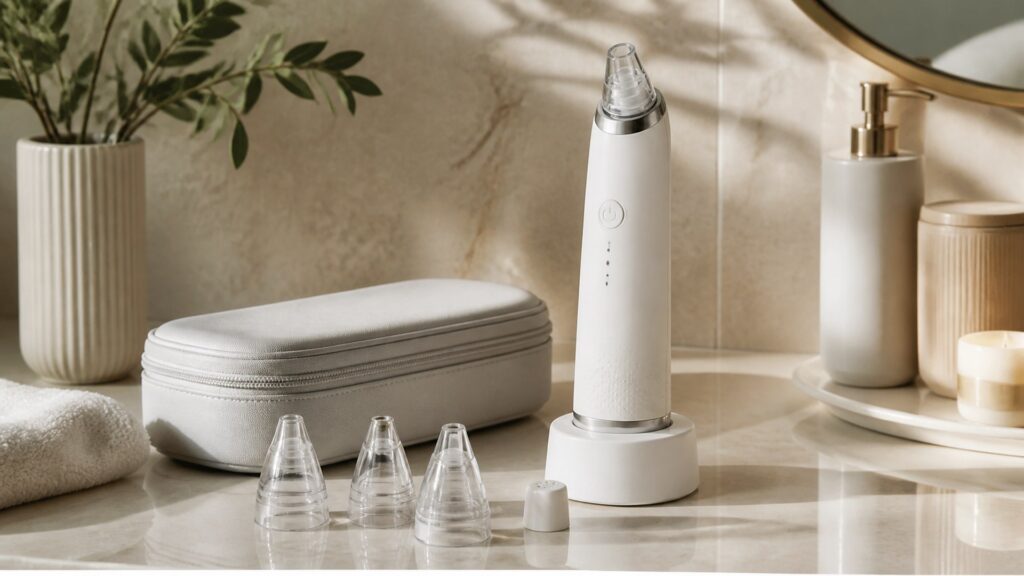
Buying framework
Define the right one routine before comparing products
Use the setting, frequency, and skin priorities to narrow pore vacuum devices logically.
Start with the use case: Confirm that limited visible congestion—not inflamed acne or normal pore structure—is the target.
Rank the practical tradeoffs: Compare minimum suction, tip diameter, seal release, grip, timer, and cleanability.
Check instructions early: Set movement speed, pass count, area limit, and stop conditions before treatment.
Use profiles
Match pore vacuum devices to the person and pace
Three shopper profiles expose different priorities for right one.
Routine-focused buyer: A cautious occasional user needs a broad gentle tip and instant pressure release.
Performance-focused buyer: An easy-bruising user should avoid vacuum extraction entirely.
Occasional or flexible user: A recurrence-focused buyer should prioritize topical acne care over stronger suction.
Specifications
Read the specifications through a right one lens
Translate technical language into visible routine benefits.
Handling lens
Compare how quickly suction breaks when the tip is tilted.
Ownership lens
Inspect the skin hours later for delayed bruising rather than rating collected debris.
Suction Range: Tip diameter and seal quality change local pressure at the same motor setting.
Tip Attachments: Narrow openings concentrate suction and mark skin more easily.
Display And Controls: Transparent tips show debris while distracting from skin color changes.
Charging Runtime: Continuous movement reduces dwell but demands stable hand speed.
Cleaning Method: Filters and internal channels determine whether oil can be removed hygienically.
Common mistakes
Avoid shortcuts that undermine right one
A good purchase can still disappoint when selection or use is based on the wrong assumption.
Buying from one metric: Do not hold a sealed tip stationary over one pore.
Skipping compatibility checks: Avoid use on rosacea-prone, bruised, inflamed, wounded, or recently treated skin.
Ignoring post-use care: Do not increase power because the chamber looks empty.
Decision guidance
Choose the simplest option that covers the real need
Use these decision rules to finish a shortlist for right one.
Choose the basic format when: Choose the lowest stable suction with broad tip and immediate release.
Choose the flexible format when: Use preventive topical care when congestion is widespread or recurring.
Pause before upgrading when: Seek professional guidance for painful acne, scarring, persistent redness, or uncertain lesions.
Ownership & compatibility
Plan for clean, repeatable ownership
The best value remains convenient after the first few uses.
Consumables and replacements: Clean tips, chambers, filters, and seals immediately after use.
Cleaning and storage: Allow every washable part to dry before reassembly.
Routine compatibility: Log setting, tip, passes, marks, and recurrence before another session.
FAQ
Pore Vacuum Devices Buying Guide: How to Choose the Right One FAQ
Practical answers about choosing and owning pore vacuum devices for right one.
What matters most when choosing pore vacuum devices for right one?
Is the most expensive option better for right one?
How should I compare two similar pore vacuum devices options?
Bottom line
Buy for repeatable right one results
A focused shortlist is easier to own and use well.
Prioritize fit: Choose vacuum control for temporary limited clearing.
Verify the limits: Treat stationary seal and narrow tips as concentrated exposure.
Count ownership costs: Judge skin response after hours, not debris during use.
Reading Shortcuts
Jump to the key pore vacuum devices decisions.
Decision Reminders
Keep these checks beside your shortlist.
- Check suction range: Begin with the lowest setting and keep the tip moving.
- Check tip attachments: Do not use on broken, inflamed, infected, or highly irritated skin.
- Check display and controls: Stop if bruising, pain, or persistent irritation develops.
Glossary Snippets
Plain-language pore vacuum devices terms.
When to Use a Top 10 Review
Use a ranked list to identify a manageable set of strong candidates.
- You are still exploring: A ranked list can reveal the main formats and price tiers.
- You want a shortlist: Start broad, then confirm fit with this buying guide.
Have finalists? Use a Comparison.
When to Use a Comparison
Use a direct comparison when only a few candidates remain.
- Features are close: Side-by-side details clarify meaningful differences.
- Prices overlap: Compare ownership value, not only purchase price.
Still exploring? See the Top 10.