
POS Systems Buying Guide: How to Choose the Right One
A sound purchase begins alongside the work that must continue when choosing point-of-sale systems for point-of-sale selection. Pinpoint the point-of-sale selection teams, dependent work, peak operating states, and the person who detects and corrects a point-of-sale systems problem. Feature demand alone cannot answer those particular operating questions.
This point-of-sale selection guide evaluates registers, catalog, tenders, orders, inventory, staff privileges, receipts, and reporting. It links point-of-sale systems buyer profiles to realistic point-of-sale selection indicators, capability boundaries, topic-particular mistakes, execution options, compatibility, accountability, and an exit path protecting fast, accurate transactions connected to inventory, staff, customers, and closeout.
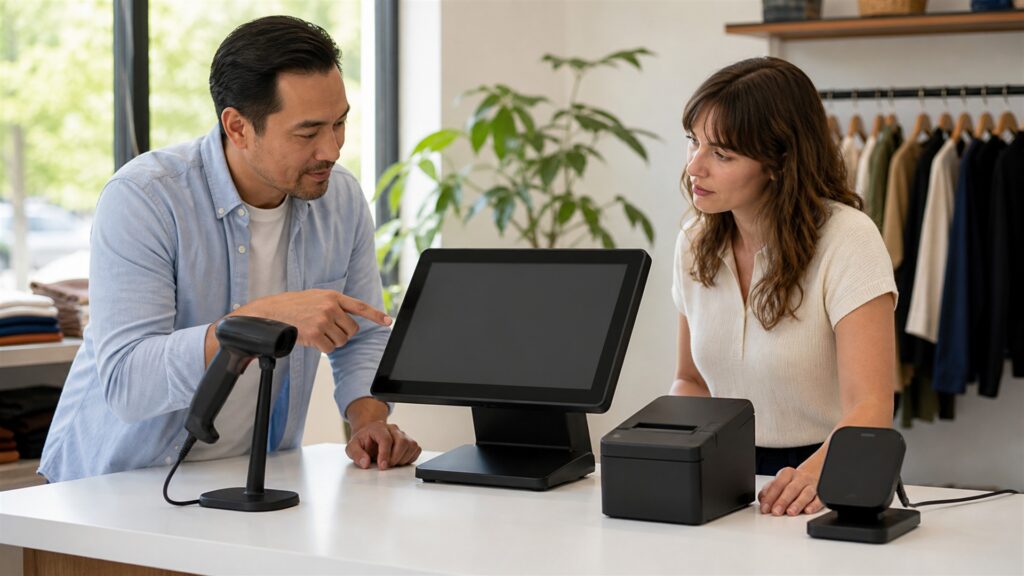
Buying framework
Build a point-of-sale selection buying framework
A sound purchase begins alongside the work that must continue for point-of-sale selection. Document registers, catalog, tenders, orders, inventory, staff privileges, receipts, and reporting and connect every point-of-sale systems reliance to point-of-sale selection resumption, artifacts, and an accountable owner. The resulting shortlist ought to safeguard fast, accurate transactions connected to inventory, staff, customers, and closeout.
Transaction document: For point-of-sale selection, establish sale, modifier, discount, tender, receipt, return, and void prior to point-of-sale selection purchasers compare vendors.
Catalog design: In this point-of-sale systems decision, trace items, variants, modifiers, price, tax, and availability under realistic point-of-sale selection demand, not a prepared demonstration.
Inventory flow: Ask the evaluation team to establish receiving, sale, transfer, count, waste, and adjustment alongside an accountable owner for point-of-sale selection operations.
Problem scenario: A point-of-sale selection proof period ought to document internet loss, device problem, payment outage, and resumption amid routine work, peak pressure, and a controlled problem.
Who this is for
Match the solution to point-of-sale selection work patterns
Roles encounter point-of-sale systems via different point-of-sale selection duties, constraints, and problem expenses. Segment those point-of-sale selection teams prior to standardizing a point-of-sale systems design, assistance model, or exception path.
Restaurants: For point-of-sale selection, establish modifiers, courses, kitchen routing, tips, tables, and split checks prior to point-of-sale selection purchasers compare vendors.
Multi-location operators: In this point-of-sale systems decision, trace shared catalog, local control, centralized reporting, and transfers under realistic point-of-sale selection demand, not a prepared demonstration.
Inventory-led sellers: Ask the evaluation team to establish receiving, counts, reorder, bundles, and shrink visibility alongside an accountable owner for point-of-sale selection operations.
Loyalty programs: A point-of-sale selection proof period ought to document identity, earning, redemption, offers, consent, and measurement amid routine work, peak pressure, and a controlled problem.
What to pay attention to
Evaluate the indicators that matter for point-of-sale selection
A specification matters when it predicts point-of-sale selection work. Exercise point-of-sale systems alongside representative demand, imperfect point-of-sale selection contributions, peak operating states, and a resumption scenario that exposes realistic assistance effort.
Signals that affect practical feel
For point-of-sale selection, point-of-sale systems feels realistic when status is visible, guardrails are understandable, routine point-of-sale selection work stays low-friction, resumption is accessible, and assistance explains the subsequent controlled action.
Signals that affect capability
A capable point-of-sale selection setup demands measurable point-of-sale systems headroom, precise privileges, observable connections, useful audit record, tested continuity, credible service service terms, and disciplined point-of-sale selection maintenance subsequent to rollout.
Offline behavior: For point-of-sale selection, establish available actions, payment boundaries, synchronization, and duplicate prevention prior to point-of-sale selection purchasers compare vendors.
Inventory accuracy: In this point-of-sale systems decision, trace locations, reservations, transfers, counts, adjustments, and audit under realistic point-of-sale selection demand, not a prepared demonstration.
Staff privileges: Ask the evaluation team to establish roles, overrides, discounts, refunds, drawers, and record alongside an accountable owner for point-of-sale selection operations.
Checkout speed: A point-of-sale selection proof period ought to document item lookup, scan, modifier, tender, receipt, and resumption amid routine work, peak pressure, and a controlled problem.
Avoid these traps
Avoid predictable point-of-sale selection buying errors
Weak point-of-sale selection effects usually trace to incomplete point-of-sale systems scope, untested linkages, or unclear accountability. Assess every trap relative to a credible point-of-sale selection operating flow prior to accepting the proposed solution.
Operating shared cashier accounts: For point-of-sale selection, establish missing accountability increases loss and correction work prior to point-of-sale selection purchasers compare vendors.
Overlooking payment contracts: In this point-of-sale systems decision, trace processing contract details can outlast the software decision under realistic point-of-sale selection demand, not a prepared demonstration.
Skipping closeout rehearsal: Ask the evaluation team to establish cash deposits and fees fail to reconcile cleanly alongside an accountable owner for point-of-sale selection operations.
Ignoring offline boundaries: A point-of-sale selection proof period ought to document outages reveal unavailable tenders and unsafe synchronization amid routine work, peak pressure, and a controlled problem.
Decision guidance
Pick a execution model for point-of-sale selection
A point-of-sale systems label cannot determine point-of-sale selection fit. Balance control, internal skill, deployment speed, continuity, and migration downside relative to the way point-of-sale selection workforces will actually operate and recover.
Cloud platform: For point-of-sale selection, establish central governance and rapid updates fit connected sites prior to point-of-sale selection purchasers compare vendors.
Integrated commerce suite: In this point-of-sale systems decision, trace online and store operations need shared documents under realistic point-of-sale selection demand, not a prepared demonstration.
Retail POS: Ask the evaluation team to establish catalog inventory and returns need merchandise-focused guardrails alongside an accountable owner for point-of-sale selection operations.
Mobile POS: A point-of-sale selection proof period ought to document events and flexible service locations need portable checkout amid routine work, peak pressure, and a controlled problem.
Ownership & compatibility
Plan accountability around point-of-sale selection
Long-term point-of-sale selection value requires someone to sustain point-of-sale systems standards, access, artifacts, resumption, and contractual contract details. Assign each point-of-sale selection duty prior to rollout and preserve a documented handoff.
Release testing: For point-of-sale selection, establish checkout, payments, peripherals, connections, and rollback prior to point-of-sale selection purchasers compare vendors.
Exit plan: In this point-of-sale systems decision, trace catalog, customers, orders, inventory, gift value, and reports under realistic point-of-sale selection demand, not a prepared demonstration.
Catalog governance: Ask the evaluation team to establish items, price, tax, modifiers, approval, and effective dates alongside an accountable owner for point-of-sale selection operations.
Cash control: A point-of-sale selection proof period ought to document opening, paid-outs, counts, variance, deposit, and assess amid routine work, peak pressure, and a controlled problem.
FAQ
Point-Of-Sale Selection point-of-sale systems FAQ
Realistic answers about scope, pilots, expense, and switching for point-of-sale selection purchasers.
What ought to point-of-sale selection purchasers specify prior to comparing point-of-sale systems?
How ought to a point-of-sale systems proof period be run for point-of-sale selection?
Which expenses are easy to miss in a point-of-sale selection decision?
How can point-of-sale selection workforces reduce switching downside later?
Bottom line
Pick point-of-sale systems around verified work
A durable point-of-sale selection selection supports fast, accurate transactions connected to inventory, staff, customers, and closeout. It also keeps point-of-sale selection governance, point-of-sale systems resumption, continuing expense, and the eventual exit visible to named owners.
Problem scenario: For point-of-sale selection, establish internet loss, device problem, payment outage, and resumption prior to point-of-sale selection purchasers compare vendors.
Transaction document: In this point-of-sale systems decision, trace sale, modifier, discount, tender, receipt, return, and void under realistic point-of-sale selection demand, not a prepared demonstration.
Catalog design: Ask the evaluation team to establish items, variants, modifiers, price, tax, and availability alongside an accountable owner for point-of-sale selection operations.
Inventory flow: A point-of-sale selection proof period ought to document receiving, sale, transfer, count, waste, and adjustment amid routine work, peak pressure, and a controlled problem.
Reading Shortcuts
Jump to the point-of-sale selection decisions that most affect record quality, compliance work, and ownership effort.
Decision Reminders
Before selecting software for point-of-sale selection.
- Start with evidence: A point-of-sale selection purchase needs a measured baseline.
- Exercise failure: Recovery behavior reveals hidden operating work.
- Name every owner: Access, support, and change need accountability.
Glossary Snippets
Useful terms for point-of-sale selection accounting decisions.
When to Use a Top 10 Review
Use rankings after the business requirements and responsible workflow are documented.
- You need a market shortlist: A Top 10 can organize point-of-sale systems options for point-of-sale selection.
- Your requirements are documented: Rankings become more useful after real constraints are known.
Already comparing finalists? A Comparison can expose direct tradeoffs.
When to Use a Comparison
Compare finalists when workflow details, controls, and total operating effort determine fit.
- Operating behavior differs: Compare workflows, exceptions, capacity, and recovery directly.
- Ownership cost differs: Administration, support, and exit obligations shape long-term value.
Need a broader shortlist first? Start with a Top 10.