
Recovery & Muscle Therapy Products Buying Guide for Sore Muscles
A sore-muscle buying guide should not turn every ache into a device decision. Ordinary post-activity tightness is different from sharp pain, swelling, weakness, numbness, bruising, fever, or symptoms after a fall. Start by deciding whether the user is shopping for temporary comfort within product directions or needs a clinician's evaluation.
Once that boundary is clear, compare the tool by how calmly it can be used: low pressure, visible skin, clear timing, clean contact surfaces, compatible parts, and easy stopping. Rollers, balls, massage devices, compression systems, temperature packs, and electrical stimulators all carry different warnings. Read the exact label, avoid vague treatment promises, and retire anything that cannot be cleaned, controlled, or supported.
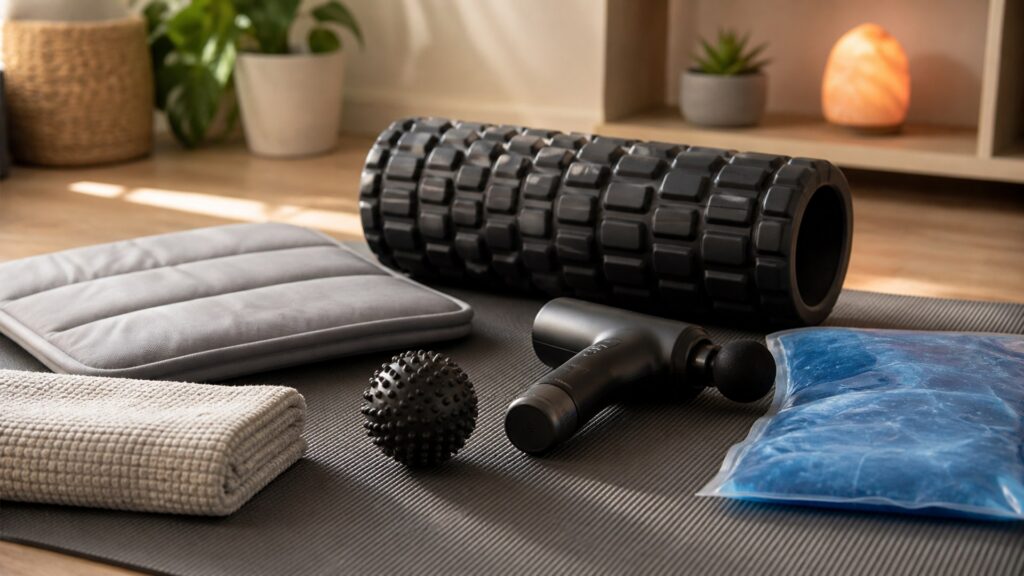
Buying framework
Define what sore muscles means here
The purchase starts with symptom boundaries, not product strength, because ordinary comfort support and treatment decisions are different categories.
Describe the soreness pattern: Note when soreness began, what activity preceded it, which area is involved, whether both sides feel similar, and whether ordinary movement is changing. Unclear or concerning patterns should not be self-managed by shopping.
Screen for red flags: Seek qualified guidance for severe, sharp, worsening, or unexplained pain; swelling; numbness; weakness; skin changes; fever; chest symptoms; or signs after trauma. Product selection waits behind safety.
State the comfort goal: Use a bounded goal such as relaxing a tight-feeling area, applying directed temperature, or using gentle pressure briefly. Avoid claims that the product heals tissue or treats an unknown condition.
Choose a monitored position: The user should be able to see or feel the contact area, adjust pressure, maintain balance, and remove the product quickly. Hidden contact is risky when sensation is altered.
Prepare the care cycle: Before first use, know how the surface is cleaned, how wet or adhesive parts dry, which items are replaced, and where the manual and warnings will remain accessible.
Who this is for
Match products to soreness situations
Delayed soreness, desk stiffness, sport sessions, shared households, and chronic symptoms require different buying boundaries.
Post-workout sore user: Favor simple, low-force contact and short, instructed use. Do not buy a stronger product to override soreness that follows a sudden change in workload or technique.
General stiffness user: Check whether posture, work setup, sleep, or activity pattern explains the discomfort. A comfort tool should be easy to use gently without turning routine stiffness into a medical claim.
Occasional sport participant: Look for portable, cleanable products that do not require complicated setup after events. Confirm temperature, pressure, and body-location limits before use away from home.
Shared-family buyer: Choose materials that can be cleaned or assigned per person. Keep adhesive pads, fabric wraps, and sleeves separated, labeled, or replaced when instructions require single-user handling.
Person with ongoing symptoms: Persistent, recurring, or worsening soreness deserves professional input. Product marketing should not replace diagnosis, rehabilitation planning, medication advice, or decisions about returning to activity.
What to pay attention to
Compare controls, contact, and documentation
Useful soreness products make their limits obvious before the user applies force, temperature, compression, vibration, or current.
Pressure adjustability: Manual tools should permit very light contact through shape, size, grip, or body position. Powered tools should have a clearly indicated low setting and predictable adjustment steps.
Body-location instructions: Check where the product may and may not be used. Avoid vague diagrams, missing warnings, or instructions that leave the user guessing near joints, bruises, nerves, or fragile skin.
Temperature boundaries: Heat and cold products need explicit barriers, exposure times, preparation methods, storage directions, and skin checks. Leakage, uneven cooling, or overheating should remove a product from consideration.
Compression and fit: Sleeves, wraps, and boots must fit measured body areas without numbness, pinching, or circulation concerns. Powered compression needs pressure display, cycle control, and a fast release.
Electrical-device detail: Confirm intended use, electrode placement, pad compatibility, lead condition, current control, contraindications, and official FDA device status where relevant. Do not equate registration with approval or effectiveness.
Cleaning accessibility: Every body-contact part must be reachable by the approved cleaning method. Porous foam, fabric, adhesive gel, straps, seams, and creases all need a hygiene plan.
Consumables and service: Identify pads, covers, sleeves, gels, batteries, chargers, seals, storage bags, and warranty support. A low purchase price can hide recurring parts or a short service path.
Avoid these traps
Avoid turning soreness into a product claim
Bad choices overstate what gear can do, skip warnings, or rely on painful sensations as evidence.
Assuming stronger means better: More force, cold, heat, pressure, or current can be inappropriate. A good product lets the user start gently and stop before soreness becomes pain.
Treating medical words casually: Claims about therapy, treatment, circulation, rehabilitation, or pain relief need exact labeling and context. Verify the product instead of repeating marketplace language.
Ignoring skin and sensation: Numbness, tingling, unusual redness, burns, irritation, or reduced sensation are stop signs. Do not cover them with a sleeve or continue because time remains on a timer.
Sharing pads or wraps loosely: Body-contact supplies can transfer sweat, skin oils, residue, or adhesive wear. Shared use requires manufacturer-permitted cleaning, drying, separation, or replacement.
Buying without a referral plan: If soreness does not behave like ordinary post-activity discomfort, the next step should be evaluation. The shopping checklist should make that decision easier, not easier to avoid.
Decision guidance
Use a gentle-first trial sequence
Compare products with the same symptom screen, contact rehearsal, lowest setting, stop rule, and service routine.
Write the soreness boundary: Record activity context, body area, symptom concerns, ordinary comfort goal, contraindications reviewed, planned duration, and the specific responses that will end use.
Place before activating: Try fit with no power, no extreme temperature, no tight wrap, and minimal body weight. Confirm the user can monitor skin and remove the product without assistance.
Test only permitted low use: If appropriate, begin with the least forceful allowed option. Reject a product that requires high intensity, hidden contact, or pain tolerance to feel meaningful.
Check after contact: Look for skin changes, swelling, numbness, dizziness, irritation, increased soreness, or device problems. Stop using the product until those responses are understood.
Finish the reset: Clean, dry, inspect, recharge, label, and replace contact parts as directed. Store the manual with the product so warnings are visible next time.
Ownership & compatibility
Keep sore-muscle products hygienic and bounded
The safest product can become unsuitable when contact parts wear out, warnings disappear, or cleaning becomes casual.
Store the manual and model ID: Keep instructions, warnings, serial or model details, regulatory information, warranty, and support contacts together. Recheck them when another person uses the product.
Clean by surface type: Use the approved method for foam, plastic, silicone, fabric, adhesive gel, metal heads, hoses, and cases. Do not soak electronics or apply harsh cleaners unless instructed.
Inspect before each use: Check cracks, tears, leaks, hard spots, frayed cords, loose attachments, fading labels, weak closures, and battery issues. Remove doubtful products from service.
Manage consumables separately: Keep pads, covers, sleeves, barriers, and gels in clean labeled storage. Replace them when adhesion, hygiene, fit, conductivity, or instructions require it.
Reassess when symptoms change: A tool chosen for ordinary soreness may be inappropriate after injury, new medication, altered sensation, pregnancy, surgery, or persistent pain. Use professional guidance when conditions change.
FAQ
Questions about buying for sore muscles
These answers separate ordinary comfort support from medical diagnosis, treatment, and unsupported effectiveness claims.
What is the best product for sore muscles?
Can a recovery product treat muscle pain?
Should soreness feel painful during use?
Are heat packs safe for all soreness?
Can cold packs be used too long?
What should I check on electrical stimulators?
How often should contact parts be replaced?
Can one product be shared by a family?
When should soreness lead to medical advice?
Bottom line
Keep soreness decisions modest and observable
Choose a product only when the soreness pattern is appropriate for self-managed comfort and the tool's limits are clear.
Screen first: Let symptom boundaries decide whether shopping should continue.
Read the exact label: Use intended use, contraindications, timing, and official status instead of marketplace shorthand.
Start gently: Choose tools with low pressure, visible skin, and immediate release.
Service every contact: Clean, dry, inspect, replace, and store parts before the next use.
Reading Shortcuts
Sore-muscle products should pass a symptom screen before feature comparison.
Decision Reminders
Do not let soreness blur medical boundaries.
- Symptoms: Severe, focal, worsening, numb, swollen, or traumatic signs need care.
- Claims: Verify medical or device language for the exact model.
- Contact: Pain, numbness, and skin changes end the session.
- Parts: Hygiene depends on compatible pads, sleeves, covers, and cleaners.
Glossary Snippets
Sore-muscle terms.
When a Top 10 Helps
Use rankings after symptoms, warnings, and ownership are settled.
- Claim filter: Remove products with vague medical language or missing instructions.
- Control filter: Rank only tools that start gently and can be stopped immediately.
A ranking cannot tell whether soreness is safe to self-manage or whether a product treats pain.
When a Comparison Helps
Compare finalists with the same soreness boundary, placement rehearsal, lowest setting, skin check, cleaning method, and parts list.
- Use: Compare pressure, temperature, compression, current, visibility, reach, and release.
- Care: Compare cleaning access, drying time, consumables, storage, warranty, and support.
Choose the product that makes stopping and maintenance easier than pushing harder.