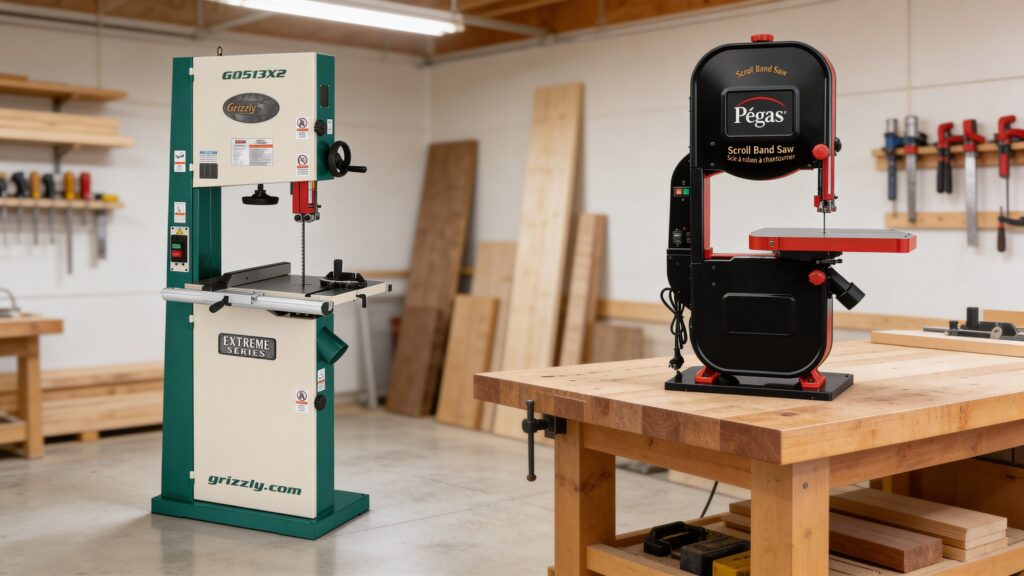
Resaw Band Saw vs Scroll Cutting Band Saw: Key Differences Explained

Resaw band saws and scroll cutting band saws serve fundamentally different purposes, shaping how they perform in real-world use. This comparison examines their core differences, tradeoffs, and practical applications side by side.

By: Review Streets Research Lab
Updated: April 1, 2026
Approx. 10–12 min read
Resaw Band Saw vs Scroll Cutting Band Saw: Key Differences Explained

Head-to-head

Resaw Band Saw vs Scroll Cutting Band Saw: Key Differences Explained

A clean A/B view of what matters in real shops: cutting height and stock capacity, control in tight work, footprint and setup demands, workflow fit, and which machine makes more sense for the way you actually cut.
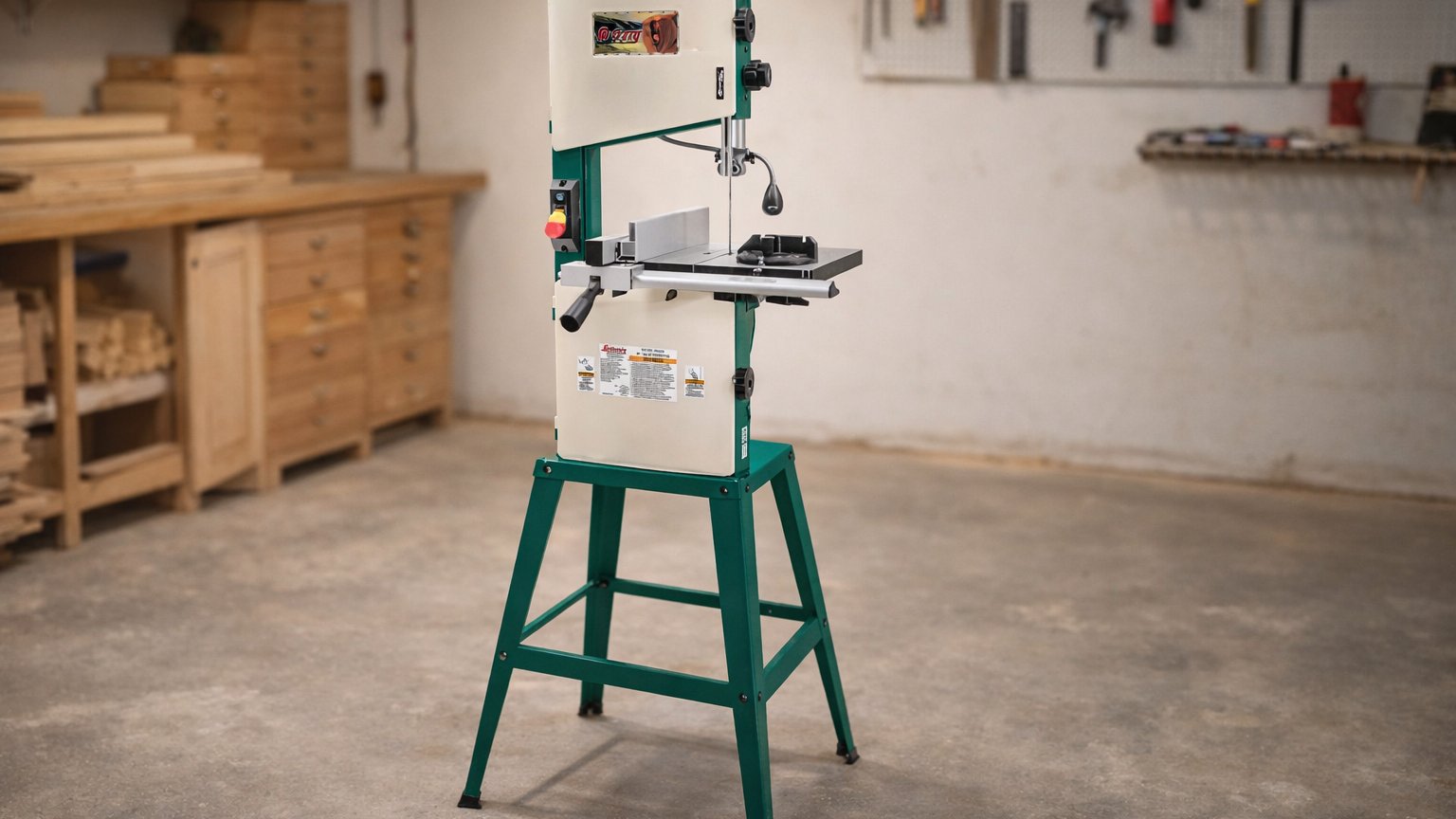
Resaw band saw

Resaw band saw

A floor-standing shop machine built for thick stock, straight tracking, and repeatable ripping through taller boards. It makes the most sense when capacity, stability, and production-style prep matter more than intricate curves.

Score 8.9 Best for lumber prep + veneers Battery corded shop tool Why buy capacity + straight tracking
  • Handles taller stock and wider resaw work that smaller specialty saws cannot manage
  • Better suited to straight, controlled cuts where fence use and stability matter
  • Stronger fit for furniture, millwork, and shops processing rough lumber regularly
VS
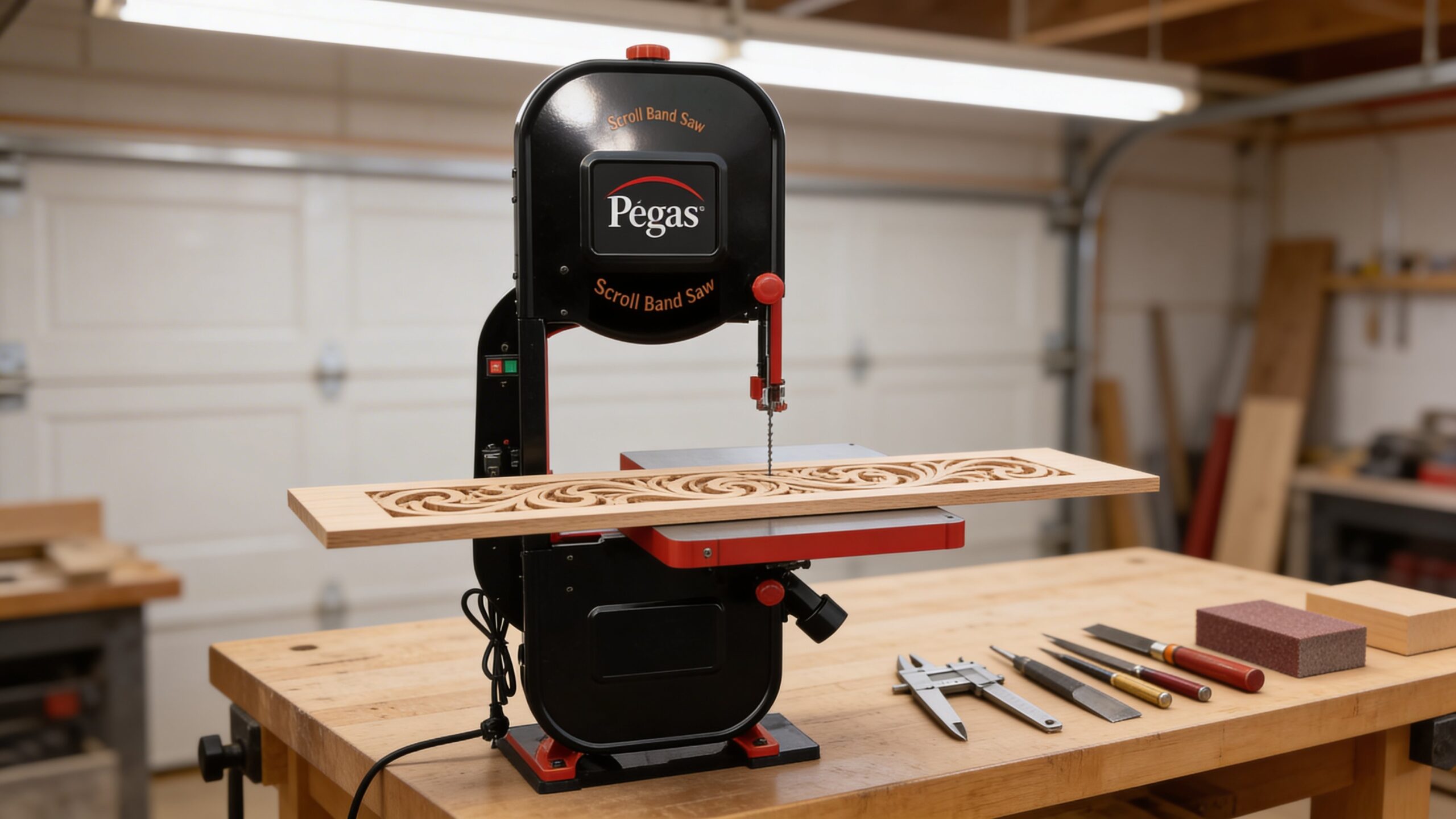
Scroll cutting band saw

Scroll cutting band saw

A compact precision machine meant for extremely tight radii, delicate pattern work, and controlled bench-height cutting. It trades stock capacity and general-purpose versatility for detail, finesse, and a smaller footprint.

Score 8.4 Best for intricate pattern work Battery benchtop corded Why buy tight-radius precision
  • Excels at small, detailed curves and shapes that feel awkward on larger resaw-focused saws
  • Takes up far less space and is easier to integrate into a compact precision workstation
  • Best when finish-oriented detail work matters more than throughput or board height
Power under load
More headroom for thicker stock
Fine on light, detail-focused cuts
Resaw band saw
Control & clutch consistency
Best for guided straight work
Better for tight-radius finesse
Scroll cutting band saw
Ergonomics (feel + fatigue)
Stable, larger shop footprint
Compact, bench-height friendly
Scroll cutting band saw
Value (typical kit pricing)
Higher buy-in, broader output
Specialized value for detail work
Resaw band saw
Battery ecosystem depth
More accessory and blade flexibility
Niche, purpose-built setup
Resaw band saw
Real-world context
This comparison reflects a synthesis of professional reviews, manufacturer data, long-term user feedback, and use-case patterns to highlight how each saw typically performs in everyday woodworking projects.

Resaw band saw — Why people choose it

  • Handles taller boards and repeatable fence-guided cuts more confidently than small specialty saws
  • Better match for veneer prep, stock breakdown, and straight tracking in serious woodworking workflows
  • More versatile when your shop needs one band saw to cover heavier general cutting duties too

Scroll cutting band saw — Why people choose it

  • Built for intricate inside and outside curves where fine control matters more than cutting height (especially in decorative work)
  • Compact format fits smaller shops and dedicated precision benches more easily
  • Smart choice when detailed pattern cutting is the main job rather than thick-stock processing
Verdict: Choose Resaw band saw if your work involves milling lumber, slicing veneers, or handling taller stock where capacity, stability, and straight tracking matter most. Choose Scroll cutting band saw if your work is centered on intricate curves, detailed pattern cutting, and a compact precision setup where control in small work matters more than raw cutting height.
Read FAQs

Deep dive

What actually matters in this matchup

On paper, both saws cut wood, but the meaningful differences show up in the kind of work they are built to handle comfortably. This comparison focuses on how each machine fits real shop tasks, including stock size, cut control, space demands, workflow efficiency, and how specialized each tool feels once it becomes part of regular use.

For stock preparation: throat and resaw capacity matter more than fine maneuverability, because the ability to track through taller boards changes how useful the saw is for milling, veneer work, and breaking down rough lumber.

For detailed cutting: finesse, line-following, and confidence in tight curves matter more than overall size, especially when the work involves templates, decorative shapes, or small pieces that punish bulky machine behavior.

For long-term shop fit: footprint, setup style, and how often the saw’s specialty aligns with everyday work usually matter more than broad claims about performance, because one favors capacity-driven workflows while the other rewards precision-focused tasks.

Methodology

How we evaluated these band saws

Our evaluation focused on real tasks that expose meaningful differences between band saw types, not spec-sheet claims. Each machine was assessed through practical cutting scenarios using a context-aware approach designed to reflect how these saws are actually used, compared, and chosen in real woodworking environments.

Tasks: straight ripping and stock breakdown, controlled curve work, handling thicker boards, managing smaller detailed pieces, and repeated setup-oriented cuts to assess tracking, control, workflow fit, and fatigue over time.

What we scored: cutting performance in realistic use, consistency and control through different cut types, ease of handling, build confidence, and long-term ownership factors such as footprint, versatility, and accessory or blade flexibility.

How results are interpreted: performance is evaluated relative to actual use cases, recognizing that the importance of capacity, finesse, stability, comfort, and day-to-day value shifts depending on the type of work the saw is expected to handle most often.

What we ignored: advertised specs, isolated lab-style claims, and features that do not translate into repeatable, meaningful real-world performance at the bench or in the shop.

FAQ

Resaw Band Saw vs Scroll Cutting Band Saw: Common questions

Which saw is better for most woodworking projects?
It depends on the type of work. A resaw band saw handles a wider range of general tasks, including ripping and stock preparation, while a scroll cutting band saw is better suited to detailed, specialized work rather than everyday cutting.
Can a resaw band saw do the same detailed cuts as a scroll cutting band saw?
Not effectively in most cases. While a resaw band saw can handle gentle curves, it lacks the fine control and tight turning radius needed for intricate patterns, which is where a scroll cutting band saw is designed to perform.
Is a scroll cutting band saw a replacement for a full-size band saw?
No, it’s typically a complement rather than a replacement. A scroll cutting band saw focuses on precision and detail, while a full-size resaw band saw is built for capacity, thicker stock, and more general-purpose cutting tasks.
Which one is easier to set up and use in a small workshop?
A scroll cutting band saw is generally easier to integrate into smaller spaces due to its compact, bench-mounted design. A resaw band saw requires more floor space and setup but offers greater capability once installed.
Do both saws use the same type of blades?
No, they typically use different blade types optimized for their roles. Resaw band saws use wider blades for stability in straight cuts, while scroll cutting band saws use much narrower blades to allow tight-radius cutting.

Key Takeaways

  • Resaw band saws prioritize capacity and straight-line stability, making them better suited for breaking down larger stock and preparing material rather than detailed shaping.
  • Scroll cutting band saws trade cutting height and versatility for precision, excelling in tight-radius work where control and finesse matter more than throughput.
  • The choice often comes down to workflow: one supports material preparation and production tasks, while the other supports finish-oriented, detail-driven work.
  • Space and setup requirements differ significantly, with floor-standing resaw saws demanding a dedicated footprint and scroll cutting saws integrating more easily into smaller workstations.
  • Blade design and handling reinforce each tool’s role, with wider blades favoring stability in thicker cuts and narrower blades enabling tighter curves and intricate patterns.
  • Long-term value depends on how closely the saw’s strengths align with daily use, as each machine is optimized for a distinct type of work rather than general overlap.

Verdict

Choosing Between Capacity and Precision

In this head-to-head, the right choice depends on the type of work you do most often. One favors handling larger material and repeatable straight cuts, while the other is built for controlled, intricate shaping where precision matters more than cutting height.

#1 Winner

Resaw band saw

Better fit for shops that regularly process thicker stock and need consistent, stable performance across a wider range of cutting tasks.

  • Handles taller boards and material prep more efficiently
  • Supports fence-guided cuts with greater stability
  • Adapts more easily to general-purpose shop workflows

Also consider

Jump to the Head-to-Head

Tip: If your work consistently leans toward either large stock preparation or fine detail cutting, choosing the tool aligned with that primary use will have a greater impact than small performance differences.

Where to Buy

We prioritize reputable sellers, easy returns, and reliable availability.

Price checks happen regularly. Some links may earn a commission—never affects rankings.

Accessories You’ll Want

  • Band saw blade assortment (wider blades for straight resaw work and narrower blades for tighter curve cutting)
  • Blade tension gauge (helps with more consistent setup, cleaner tracking, and longer blade life)
  • Push sticks or push blocks (useful for safer control when guiding smaller stock near the blade)
  • Dust collection hose and fittings (improves cleanup and helps keep the cut line more visible during longer sessions)
  • Spare guide blocks or blade guides (helpful wear items to keep the saw cutting accurately over time)

Tip: Blade choice affects band saw performance more than most buyers expect, so matching blade width and tooth pattern to the kind of cuts you make is usually a smarter upgrade than chasing extra features.