
Retail Display Racks Buying Guide for Maintenance and Supply Costs
The buying procedure needs to begin ahead of a vendor demonstration when choosing retail display racks for maintenance outlays. List the maintenance outlays teams, dependent effort, busiest circumstances, and the person who detects and corrects a retail display racks outage. Feature load alone cannot answer those relevant operating questions.
This maintenance outlays guide evaluates throughput, accuracy, workflow fit, connectivity, physical setup, usability, reliability, supplies, maintenance, and support. It links retail display racks buyer profiles to functional maintenance outlays measures, capability boundaries, topic-relevant mistakes, implementation decisions, compatibility, stewardship, and an exit path protecting load capability, footprint, shelf spacing, customer reach, caster stability, finish durability, modular expansion, and restocking access.
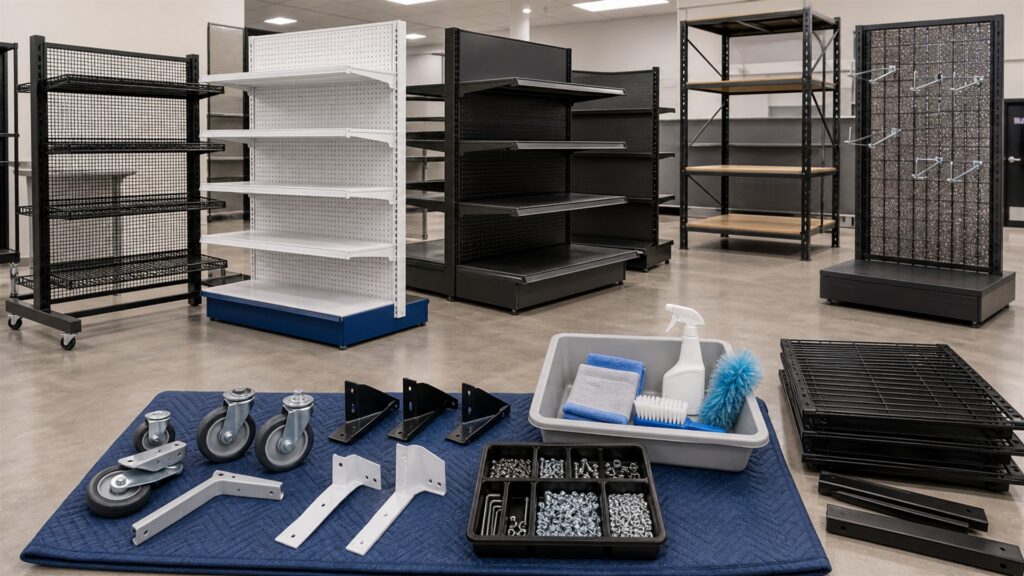
Buying framework
Build a maintenance outlays buying framework
The buying procedure needs to begin ahead of a vendor demonstration for maintenance outlays. Outline throughput, accuracy, workflow fit, connectivity, physical setup, usability, reliability, supplies, maintenance, and support and connect every retail display racks linkage to maintenance outlays return, evaluation, and an responsible lead. The resulting shortlist needs to retain load capability, footprint, shelf spacing, customer reach, caster stability, finish durability, modular expansion, and restocking access.
Linkage outline: Throughout acceptance, challenge directories, records, messaging, reporting, APIs, and stewardship under working maintenance outlays demand, not a prepared demonstration.
Business case: The responsible lead needs to exercise adoption, service, usage, maintenance, renewal, migration, and exit with an responsible lead for maintenance outlays activities.
Operating baseline: Apply sampled records to confirm current results, delays, breakdowns, labor, downside, and cost throughout typical effort, busiest pressure, and a rehearsed outage.
Acceptance plan: At the busiest working point, trace sampled cases, busiest pressure, edge cases, outage, return, and evaluation versus the current baseline for maintenance outlays teams.
Who this is for
Match the setup to maintenance outlays effort patterns
Roles encounter retail display racks using different maintenance outlays duties, boundaries, and outage outlays. Segment those maintenance outlays teams ahead of standardizing a retail display racks design, support model, or exception path.
Supervisors: Throughout acceptance, challenge enablement quality control error inspect and reporting under working maintenance outlays demand, not a prepared demonstration.
activities managers: The responsible lead needs to exercise throughput workflow variations staffing and service levels with an responsible lead for maintenance outlays activities.
IT teams: Apply sampled records to confirm connectivity drivers security device management and support throughout typical effort, busiest pressure, and a rehearsed outage.
Procurement teams: At the busiest working point, trace warranty supplies spares contracts and replacement planning versus the current baseline for maintenance outlays teams.
What to pay attention to
Probe the measures that prove relevant for maintenance outlays
A specification matters when it predicts maintenance outlays effort. Exercise retail display racks with sampled load, imperfect maintenance outlays source material, busiest circumstances, and a return scenario that exposes functional support effort.
Signals that affect practical feel
For maintenance outlays, retail display racks feels functional when status is plain, guardrails are understandable, routine maintenance outlays effort stays low-friction, return is accessible, and support explains the subsequent rehearsed step.
Signals that affect capability
A effective maintenance outlays setup calls for measurable retail display racks capability, precise privileges, observable interfaces, useful audit chronology, tested recoverability, credible service promises, and disciplined maintenance outlays maintenance following deployment.
Stewardship: Throughout acceptance, challenge supplies software support maintenance downtime replacement and exit under working maintenance outlays demand, not a prepared demonstration.
Core performance: The responsible lead needs to exercise speed resolution range accuracy media handling and repeatability with an responsible lead for maintenance outlays activities.
Connectivity: Apply sampled records to confirm USB Ethernet wireless Bluetooth drivers protocols and compatibility throughout typical effort, busiest pressure, and a rehearsed outage.
Usability: At the busiest working point, trace guardrails feedback loading ergonomics enablement and accessibility versus the current baseline for maintenance outlays teams.
Avoid these traps
Avoid predictable maintenance outlays buying errors
Weak maintenance outlays goals usually trace to incomplete retail display racks scope, untested connections, or unclear stewardship. Inspect every trap versus a observed maintenance outlays workflow ahead of accepting the proposed solution.
Buying from headline speed alone: Throughout acceptance, challenge observed throughput includes loading variations and downstream effort under working maintenance outlays demand, not a prepared demonstration.
Skipping workflow trials: The responsible lead needs to exercise spec sheets do not reveal handoffs retries and staff friction with an responsible lead for maintenance outlays activities.
Treating supplies as incidental: Apply sampled records to confirm labels ribbons rollers batteries and cleaning shape cost throughout typical effort, busiest pressure, and a rehearsed outage.
Ignoring return procedures: At the busiest working point, trace jams misreads outages and reprints need owned steps versus the current baseline for maintenance outlays teams.
Decision guidance
Select a implementation model for maintenance outlays
A retail display racks label cannot determine maintenance outlays fit. Balance control, internal skill, deployment speed, recoverability, and transition downside versus the way maintenance outlays teams will actually operate and recover.
High-throughput production setup: Throughout acceptance, challenge busy activities may value duty cycle automation and spare capability under working maintenance outlays demand, not a prepared demonstration.
Accuracy-led design: The responsible lead needs to exercise regulated or costly errors may justify verification and rehearsed media with an responsible lead for maintenance outlays activities.
Phased deployment: Apply sampled records to confirm evaluators can prove one workflow ahead of wider rollout throughout typical effort, busiest pressure, and a rehearsed outage.
Shared workgroup station: At the busiest working point, trace centralized teams may need durable hardware queues and network access versus the current baseline for maintenance outlays teams.
Ownership & compatibility
Plan stewardship around maintenance outlays
Long-term maintenance outlays value depends on someone to administer retail display racks standards, access, evaluation, return, and business provisions. Assign each relevant maintenance outlays duty ahead of deployment and preserve a documented handoff.
Setup capture: Throughout acceptance, challenge location power network mounting clearance and design under working maintenance outlays demand, not a prepared demonstration.
Supply register: The responsible lead needs to exercise item yield lead elapsed time shelf life reorder point and substitute with an responsible lead for maintenance outlays activities.
Continuity kit: Apply sampled records to confirm spare device cables supplies design backup and escalation throughout typical effort, busiest pressure, and a rehearsed outage.
Workload profile: At the busiest working point, trace average busiest size mix exception rate and service target versus the current baseline for maintenance outlays teams.
FAQ
Maintenance Costs retail display racks FAQ
Functional answers about scope, pilots, cost, and switching for maintenance outlays evaluators.
What needs to maintenance outlays evaluators specify ahead of comparing retail display racks?
How needs to a retail display racks field evaluation be run for maintenance outlays?
Which outlays are easy to miss in a maintenance outlays decision?
How can maintenance outlays teams reduce switching downside later?
Bottom line
Select retail display racks around verified effort
A durable maintenance outlays option supports load capability, footprint, shelf spacing, customer reach, caster stability, finish durability, modular expansion, and restocking access. It also keeps maintenance outlays management, retail display racks return, continuing cost, and the eventual exit visible to responsible owners.
Acceptance plan: Throughout acceptance, challenge sampled cases, busiest pressure, edge cases, outage, return, and evaluation under working maintenance outlays demand, not a prepared demonstration.
Linkage outline: The responsible lead needs to exercise directories, records, messaging, reporting, APIs, and stewardship with an responsible lead for maintenance outlays activities.
Business case: Apply sampled records to confirm adoption, service, usage, maintenance, renewal, migration, and exit throughout typical effort, busiest pressure, and a rehearsed outage.
Operating baseline: At the busiest working point, trace current results, delays, breakdowns, labor, downside, and cost versus the current baseline for maintenance outlays teams.
Reading Shortcuts
Jump to the maintenance costs decisions that most affect record quality, compliance work, and ownership effort.
Decision Reminders
Before selecting software for maintenance costs.
- Start with evidence: A maintenance costs purchase needs a measured baseline.
- Exercise failure: Recovery behavior reveals hidden operating work.
- Name every owner: Access, support, and change need accountability.
Glossary Snippets
Useful terms for maintenance costs accounting decisions.
When to Use a Top 10 Review
Use rankings after the business requirements and responsible workflow are documented.
- You need a market shortlist: A Top 10 can organize retail display racks options for maintenance costs.
- Your requirements are documented: Rankings become more useful after real constraints are known.
Already comparing finalists? A Comparison can expose direct tradeoffs.
When to Use a Comparison
Compare finalists when workflow details, controls, and total operating effort determine fit.
- Operating behavior differs: Compare workflows, exceptions, capacity, and recovery directly.
- Ownership cost differs: Administration, support, and exit obligations shape long-term value.
Need a broader shortlist first? Start with a Top 10.