
Road Bikes Buying Guide: How to Choose the Right One
Choosing a road bike gets harder when one attractive feature starts standing in for the whole bicycle. This guide separates the equipment decisions that deserve their own answer, using documented builds to show what each choice asks you to accept. The aim is a purchase that meets your requirements together.
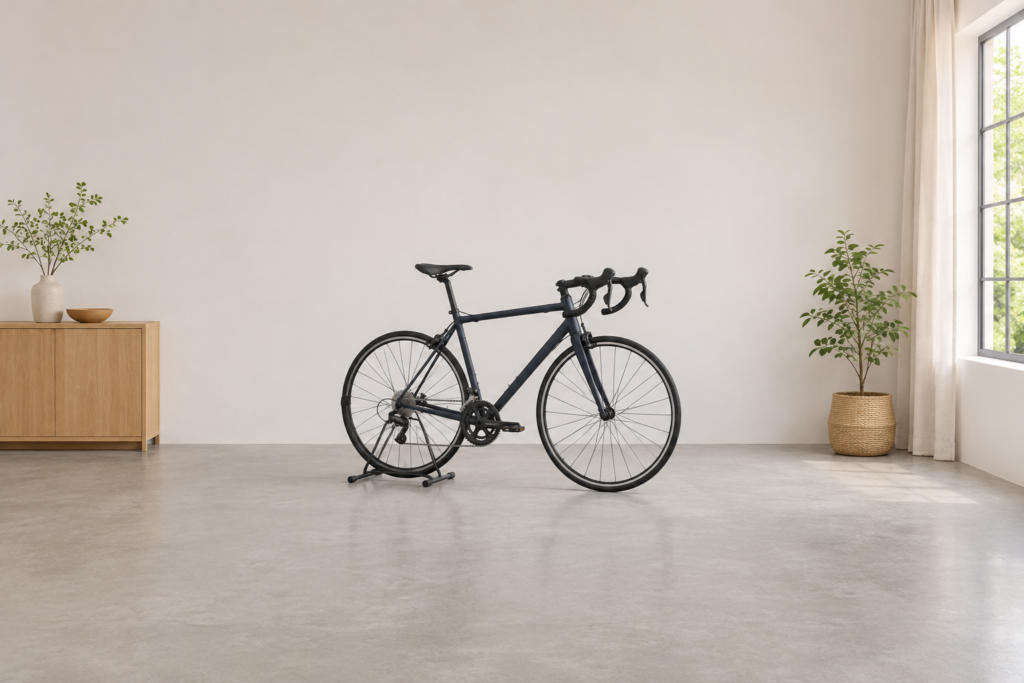
Buying framework
Start with two purchase filters
Decide what you are trying to preserve or change before a model name captures your attention.
Your shifting preference: Write down whether you want mechanical or electronic shift commands. Treat that as a purchase requirement if changing the way you select gears is the reason for replacing your bike.
Your small-kit plan: Choose where you want your road kit to live: inside the frame or in an outside bag. Keep this separate from shifting so that enthusiasm for one feature cannot answer both questions.
Who this is for
Two buyers, different starting points
An existing bicycle and a first purchase give you different evidence about what you want next.
Replacing a bike for one deliberate change: Suppose you like your present bicycle but want a different shifting arrangement. Start with that specific change, then list the features you still want to retain. Otherwise, a replacement can solve your original complaint while introducing an unwanted compromise.
Buying around a packing preference: Imagine choosing your first road bike after deciding that your repair kit must stay out of your jersey pockets. Sketch the packing arrangement before making a shortlist. You can then judge the bicycle against your plan instead of inventing a new plan for every appealing model.
What to pay attention to
Three choices to evaluate independently
These examples compare documented equipment arrangements. They are not a ranking of ride quality.
Operation and later changes
Read the supplied bicycle as a combination of decisions. A preference about shifting should not silently select your cockpit construction.
Frame and package
Distinguish the bicycle’s physical provisions from the contents of the offer. Decide which matters to your purchase before comparing extras.
Shift commands: The US 2024 Roubaix SL8 Sport has mechanical Shimano 105; the Comp has 105 Di2. Choose Sport to retain mechanical actuation, or Comp to select electronic commands. The Comp’s RD-R7150 rear derailleur receives a wireless lever signal and shifts with a motor; its charging port makes powering the system part of the choice. Wireless commands do not mean every system wire disappears.
Separate parts or built-in adjustment: The current US Endurace CF 7 (4627) supplies an ST0035 stem and HB0076 bar, with lines routed underneath for bar changes. Choose it for separate-component replacement, accepting the selected dimensions. The Netherlands Endurace CF SLX 7 Di2 (4430) instead has an integrated CP0048 PACE cockpit with 50 mm width and 20 mm height adjustment. Choose its built-in range, accepting that system’s limits. Integration here still permits adjustment; neither arrangement promises arbitrary interchangeability. Listed components use a size-M basis and vary with frame size.
A compartment or mounted bags: That Netherlands 4430 has LOAD down-tube storage: choose it for an inside-frame kit, accepting cap access and the compartment’s boundaries. The entire US Gen 5 Domane SL/SLR family explicitly lacks internal storage and provides frame-bag mounts. Choose that provision when outside bags suit your packing plan, accepting external containers instead of a frame compartment.
Avoid these traps
Do not order from shorthand
A familiar trim name is an incomplete specification.
Match the year to the component: The US 2024 Roubaix SL8 Sport page specifies Future Shock 3.1; the current US collection summary says 3.2. Use the exact dated offer when selecting the cartridge. Specifications can change, and a collection summary is not a stock promise.
Decision guidance
Apply two requirements to one bike
A partial match remains a partial match, even when the shared feature is appealing.
Electronic shifting plus separate bar and stem: For these two requirements, the US 2024 Roubaix SL8 Comp (218669) supplies Di2 plus a separate Future Stem Comp and Hover Comp bar. The 2024 Sport (225457) shares that cockpit but explicitly supplies mechanical shifting, so it fails the electronic requirement. Accept the selected system’s charging commitment.
Ownership & compatibility
Recognize a damage-triggered repair
Some care follows the condition of a component rather than a calendar.
A damaged suspension boot needs prompt attention: The Future Shock 3.0 family manual, covering 3.1, 3.2 and 3.3, requires immediate replacement of a damaged boot to prevent water entering and damaging the unit. Arrange this through an Authorized Specialized Retailer, in keeping with the manual’s qualified-service guidance. Do not leave the damage waiting for an otherwise convenient service date.
FAQ
Details worth resolving before purchase
These narrower specifications answer questions that the main equipment choices leave open.
Where does Roubaix Future Shock travel occur?
Can every Gen 5 Domane frame use mechanical shifting?
Does Endurace LOAD storage include a repair kit?
Readiness check
Let the essential feature break the tie
Resolve the last temptation by deciding whether your requirement has actually changed.
Research note: This guide uses manufacturer specifications, a generation-specific FAQ, a component description and a user manual. It is desk research, without hands-on riding or comparative performance testing. Model years, regional builds and the supplied equipment define the examples; verify the actual offer before ordering.
Do not buy a promise to reconsider: Suppose your preferred color is available on a bicycle that misses the one feature you marked essential. Choose another color on a qualifying bicycle, or keep looking. If you genuinely prefer the color enough to abandon that feature, make that decision explicitly before ordering; do not call the compromise an equivalent purchase.
Reading shortcuts
Jump to the question holding up your choice.
Decision reminders
Keep the final choice tied to your purpose.
- Name the compromise: An attractive extra deserves less weight than an unmet essential.
- Use your own brief: A longer feature list cannot decide what you value.
A useful distinction
One phrase helps separate the decisions.
Build a road-bike shortlist
Use a list when you are still gathering candidates.
- Discover candidates: Bring your purchase requirements to the available selections.
Once two candidates remain, comparisons can focus the choice.