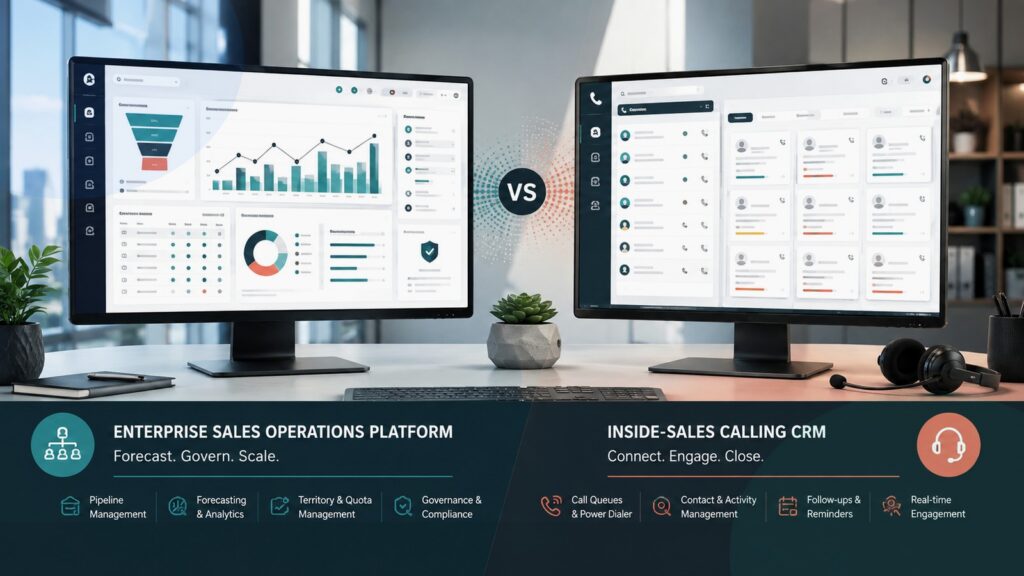
Start this decision by naming the job of the CRM. If it must govern revenue data, Salesforce has the advantage. If it must keep outbound reps calling, emailing, texting, and updating leads quickly, Close deserves a serious demo. That keeps the choice practical.
Operating center: Salesforce Sales Cloud is strongest when the CRM has to support executives, managers, operations, finance, and future connected teams. Close is strongest when the seller workflow centers on calls, email, SMS, fast lead handling, and immediate follow-up. That keeps the choice practical.
Administration reality: Salesforce can become a powerful revenue system, but only when someone owns fields, roles, reports, automations, and data quality. Close asks for less platform design, yet buyers still need clear ownership rules and pipeline discipline. That keeps the choice practical.
Outbound motion: Close makes the most sense when the sales process depends on repeated communication and fast context switching. Salesforce can support outbound work, but its broader value appears when communication data also feeds forecasts, governance, and management review. That keeps the choice practical.
Forecasting needs: Forecasting is the point where Salesforce pulls away. Managers can standardize pipeline inspection, permissions, reporting, and handoffs more deeply. Close can show activity and deal progress well, but it is not built as broadly for enterprise forecast operations. That keeps the choice practical.
Stack planning: A Salesforce purchase often assumes a broader app ecosystem, implementation partner, and long-term revenue architecture. Close is more appealing when the team wants fewer sales tools, faster outreach workflows, and CRM records close to communication history. That keeps the choice practical.
Final choice: Choose Salesforce when CRM must become the governed revenue operating layer for a growing organization. Choose Close when the sales floor needs a focused communication-first CRM that keeps calls, messages, leads, and opportunities moving with less overhead. That keeps the choice practical.