
Scalp Care Buying Guide for Fine Hair
Fine hair describes strand diameter, not scalp type. Fine strands may sit over oily, comfortable, dry-feeling, flaky, or sensitive skin, and the hair may be sparse or dense. The right routine cleans the scalp without unnecessarily coating or roughening fragile fibers.
Track oil return, itching, flakes, bumps, wash frequency, dry shampoo, styling films, root collapse, and breakage separately. A heavy leave-on can flatten hair without helping skin, while harsh repeated cleansing can increase tangling. Painful, spreading, infected-looking, hair-loss-related, or persistent symptoms need professional assessment.
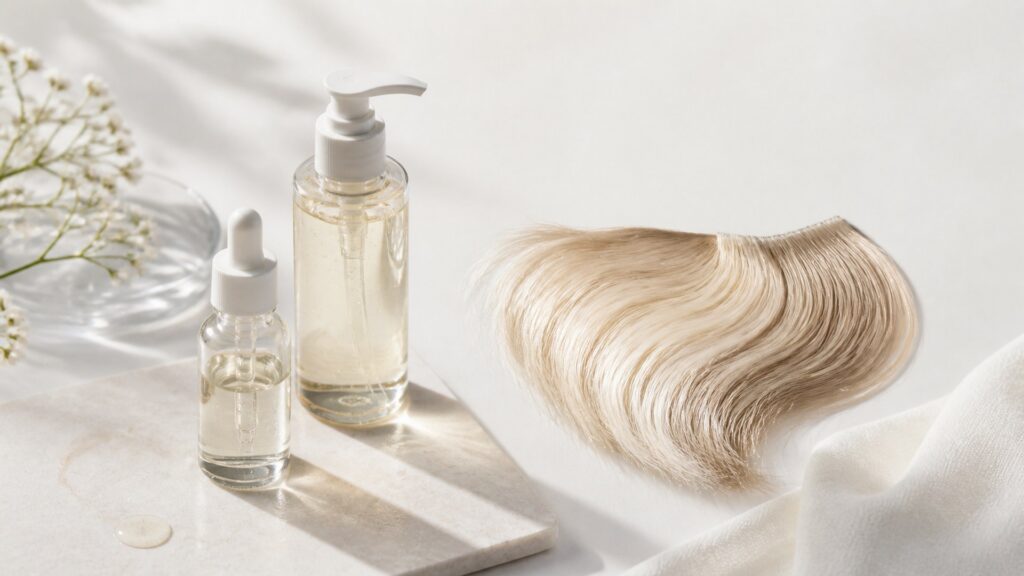
Root baseline
Separate scalp condition from strand diameter
The visible flatness of fine hair can come from oil, residue, product weight, density, or styling. It does not diagnose what the scalp needs.
Time the oil return: Note when roots begin to look or feel oily after washing and whether exercise, hats, weather, or styling products change the pattern.
Track residue sources: Include dry shampoo, texturizing powder, root spray, fibers, oils, conditioner placement, and the cleanliness of brushes or pillowcases.
Map scalp symptoms: Record itch, tightness, flakes, tenderness, bumps, odor, and shedding independently from loss of volume and strand breakage.
Fine-hair profiles
Match cleansing and treatment weight to the routine
Frequent washers, dry-shampoo users, color-treated lengths, and sensitive scalps need different balances of removal, residue control, and fiber protection.
Frequent root washer: Choose predictable cleansing and direct it to skin, allowing rinse water and a light conditioner to handle the lengths as appropriate.
Dry-shampoo user: Plan regular thorough removal rather than layering powder indefinitely; accumulated particles and oil can make roots dull and harder to assess.
Fragile processed hair: Protect bleached or heat-stressed lengths with targeted conditioning while keeping scalp products precisely placed and easy to rinse.
Formula details
Look for accurate dosing and clean washout
Fine hair makes small excesses visible. Packaging, viscosity, film level, fragrance, and rinse behavior can matter as much as the highlighted ingredient.
After-drying evidence
Roots should feel clean and mobile without persistent tightness, residue, increased static, or unnecessary roughness through the lengths.
Next-wash evidence
Observe oil timing, flakes, itch, volume, and product accumulation until the next cleanse rather than judging only immediate lift.
Cleanser fit: Compare actual oil and residue removal, scalp comfort, wash frequency, and color considerations rather than relying on foam or sulfate labels alone.
Leave-on vehicle: A water-light format may distribute with less weight, but it still needs clear scalp directions, conservative dosing, and tolerable fragrance.
Applicator precision: Nozzles and droppers should place a small repeatable amount on partings without flooding nearby strands and creating root collapse.
Common mistakes
Avoid treating flatness with more scalp product
Root volume may improve after residue removal or styling changes. Additional oil, serum, or powder can disguise the pattern and shorten clean-feeling time.
Applying lengths conditioner to roots: Unless scalp use is specified, keep richer conditioning on needy fibers and rinse thoroughly to limit unwanted film near skin.
Extending dry shampoo indefinitely: Powder can absorb oil temporarily but does not replace washing; repeated layers can collect sebum, sweat, lint, and fragrance.
Scrubbing fragile strands: Use fingertips on the scalp rather than rough circular pile-up, stiff tools, or fingernails that can scratch skin and tangle fine hair.
Product choice
Choose cleansing, low-residue support, or professional guidance
The smallest effective routine protects root movement and scalp comfort while making warning signs easier to recognize.
Adjust cleansing first: Review frequency, shampoo amount, placement, rinsing, dry-shampoo layers, and tool cleanliness when oil and buildup dominate.
Add one targeted scalp product: Choose a clearly labeled low-residue formula for the observed concern and follow its dose, timing, and intact-skin directions.
Pause cosmetic experiments: Seek qualified care for pain, pus, open skin, spreading redness, sudden shedding, patchy loss, or symptoms that persist despite careful care.
Precise application
Use small amounts and protect fine fibers
Fine hair can be vulnerable to snagging and repeated manipulation. Sectioning and clean tools reduce both overapplication and mechanical stress.
Part before dosing: Create narrow clean partings and place product on skin once rather than repeatedly dragging the applicator through the same strands.
Wash scalp-contact tools: Clean brushes, combs, clips, nozzle tips, and hats that collect oil, flakes, powder, and styling films; avoid sharing personal contact items.
Handle wet hair gently: Support sections, reduce towel friction, and condition damaged lengths so cleaning the scalp does not create avoidable tangling or breakage.
FAQ
Scalp-care questions for fine hair
These answers connect clean roots and low residue with scalp comfort, fragile-strand handling, and appropriate medical boundaries.
How can I care for my scalp without flattening fine hair?
Does dry shampoo cause scalp buildup on fine hair?
When should scalp symptoms with fine hair be checked professionally?
Bottom line
Keep roots clean without burying them in residue
A strong fine-hair scalp routine removes the actual oil and product load, uses precise low-weight treatment when justified, and protects delicate lengths from rough handling.
Record the full cycle: Track wash day, product amounts, dry shampoo, oil return, scalp sensation, flakes, volume, and breakage until the next cleanse.
Change one variable: Keep styling and conditioning stable enough to tell whether the new scalp step improves comfort without flattening roots.
Escalate warning signs: Stop irritating products and seek appropriate assessment rather than covering painful, spreading, shedding-related, or persistent symptoms with more powder or serum.
Reading Shortcuts
Move directly to the scalp care decision stage you need.
Decision Reminders
Keep the evidence for scalp care visible while comparing.
- Role: The scalp-care product serves the named task.
- Proof: The trial observes comfortable application, manageable residue, observable improvement, and no worsening symptoms.
- Care: Keep the applicator clean, avoid cross-contamination, and follow label frequency limits.
Glossary Snippets
Useful language for comparing scalp-care products.
When a Top 10 List Helps
Use rankings to discover credible scalp-care products, then screen them for scalp care.
- The format is undecided: A broad list reveals plausible forms and price levels.
- A shortlist is needed: Rankings narrow discovery but do not replace fit testing.
Have finalists already? Open the comparison section.
When a Direct Comparison Helps
Compare finalists after establishing their suitability for scalp care.
- Two candidates remain: Side-by-side evidence exposes meaningful tradeoffs.
- An upgrade is uncertain: Compare whether added cost corrects the original weakness.
Still exploring? Start with the Top 10 section.