
Scalp Care Buying Guide for Scalp Care
The title repeats the category, so the useful interpretation is a guide to building a basic scalp-care routine from the ground up. Start with skin comfort and cleanliness, then add a targeted product only when a specific pattern remains.
Scalp care is cosmetic support, not diagnosis. Record oil timing, flakes, itch, tightness, bumps, tenderness, odor, shedding, wash schedule, and styling residue. Severe pain, open or infected-looking skin, spreading redness, patchy hair loss, or persistent change needs professional assessment.
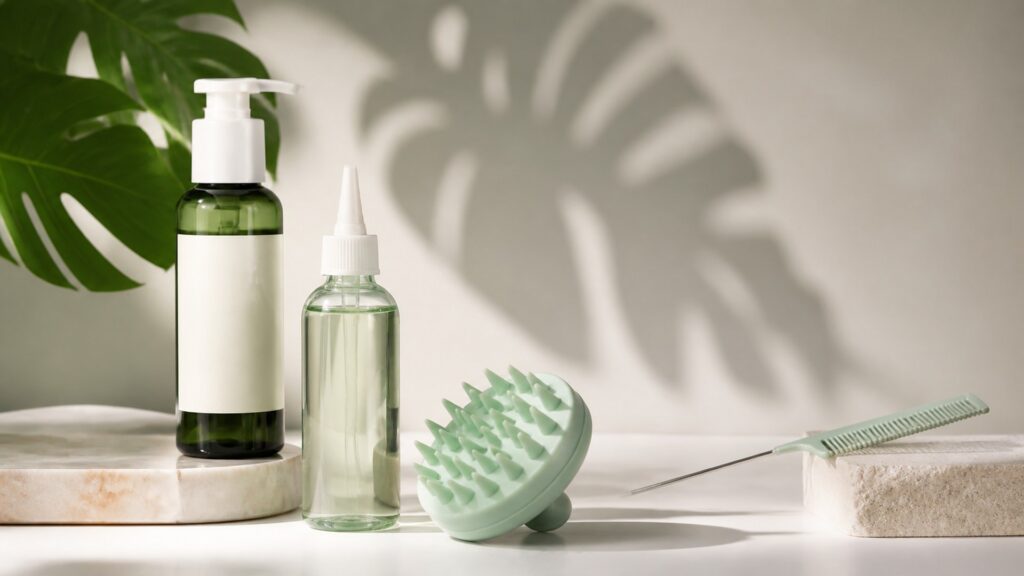
Routine baseline
Build from cleansing rather than treatment clutter
A simple routine makes symptoms easier to interpret. Multiple scrubs, serums, oils, and medicated products can create irritation or residue that resembles the original concern.
Describe the pattern: Note location, appearance, sensation, duration, recent products, chemical services, protective styles, sweating, and how symptoms change after washing.
Audit the current wash: Review frequency, shampoo placement, water temperature, rinsing, dry shampoo, oils, and styling films before assuming another active is required.
Set a stopping boundary: Seek qualified care for pain, pus, bleeding, spreading rash, fever, sudden shedding, patchy loss, or a problem that repeatedly worsens.
Routine profiles
Match access and residue tolerance to real hair habits
Hair texture, density, styling, mobility, sensitivity, and wash frequency influence how a scalp product reaches skin and leaves the routine.
Frequent product user: A routine with waxes, gels, oils, and dry shampoo may need deliberate residue removal before another leave-on layer is added.
Sensitive-skin shopper: Favor transparent directions and avoid known triggers; strong fragrance, essential oils, tingling, and cooling are not evidence of better care.
Protective-style wearer: Choose precise low-residue application and a realistic cleaning pathway that does not trap damp product or encourage scratching beneath the style.
Product details
Read purpose, format, and contact time together
A formula should state what it is for, where it goes, how long it remains, how often it is used, and whether it is rinsed.
First-week evidence
A controlled start reveals immediate burning, difficult rinsing, new bumps, heavy residue, or packaging that cannot dose accurately.
Longer-pattern evidence
Comparable notes and photographs show whether oil, flakes, itch, and comfort improve without increasing dryness, tenderness, or breakage.
Cleansing role: Confirm whether a shampoo is intended for routine oil removal, periodic buildup, scale management, or another clearly described use.
Leave-on role: Check dose, frequency, scalp-skin directions, residue potential, and warnings rather than treating every serum as daily hydration.
Tool construction: Applicators should be washable, smooth, and controllable; sharp tips, stiff edges, and hard-to-clean seams can worsen handling.
Common mistakes
Avoid confusing sensation with effectiveness
A product can feel cold, hot, gritty, or intensely fragranced without matching the scalp’s needs or improving the observed pattern.
Scratching away flakes: Fingernails and aggressive tools can break skin. Loosen debris only with gentle methods and products used within their labeled timing.
Stacking exfoliants: Do not combine acids, scrubs, strong shampoos, and stimulating leave-ons casually; cumulative irritation makes cause and effect difficult to identify.
Oiling every dry-looking flake: Flakes can accompany several conditions and buildup states. Heavy oil may obscure the pattern or be unsuitable for the actual cause.
Routine choice
Choose basic care, one targeted step, or referral
The smallest effective routine is easier to follow, less likely to irritate, and more useful for determining whether a targeted intervention works.
Keep cleansing simple: Adjust frequency, technique, rinsing, and residue sources when the main concern appears tied to inconsistent or overloaded washing.
Add one targeted product: Select a clearly labeled formula for the documented issue and follow its amount, contact time, schedule, and compatibility guidance.
Stop shopping and seek care: Choose professional assessment when warning signs appear, hair loss is involved, or careful correctly used nonprescription care does not help.
Safe handling
Keep scalp-contact items clean and personal
Nozzles, brushes, combs, and jar rims can collect oils, flakes, microbes, and residue. Hygiene matters more when skin is already uncomfortable.
Section for accuracy: Create partings so product reaches the intended skin at the labeled dose rather than disappearing into hair and prompting overapplication.
Clean contact tools: Wash reusable applicators as directed, avoid sharing them, and replace pieces that crack, scratch, or retain visible debris.
Protect the formula: Close lids, keep wet fingers out of jars when possible, wipe nozzles without touching irritated skin, and store within stated conditions.
FAQ
Core scalp-care questions
These answers help create a basic routine while keeping cosmetic shopping separate from diagnosis and medical treatment.
What is a simple scalp-care routine?
Do I need a scalp scrub or serum?
When should scalp care involve a healthcare professional?
Bottom line
Make the routine simpler and the evidence clearer
A strong core routine cleans effectively, avoids unnecessary stimulation, uses targeted products deliberately, and recognizes when symptoms exceed the limits of cosmetic care.
Document the starting point: Record scalp location, appearance, sensation, wash timing, styling residue, recent services, and shedding before introducing a new step.
Change one variable: Keep the rest of the routine stable while following the selected product’s dose, contact time, frequency, and rinse directions.
Escalate instead of stacking: Stop products that worsen symptoms and seek appropriate assessment rather than adding more actives to painful, spreading, or persistent problems.
Reading Shortcuts
Move directly to the scalp care decision stage you need.
Decision Reminders
Keep the evidence for scalp care visible while comparing.
- Role: The scalp-care product serves the named task.
- Proof: The trial observes comfortable application, manageable residue, observable improvement, and no worsening symptoms.
- Care: Keep the applicator clean, avoid cross-contamination, and follow label frequency limits.
Glossary Snippets
Useful language for comparing scalp-care products.
When a Top 10 List Helps
Use rankings to discover credible scalp-care products, then screen them for scalp care.
- The format is undecided: A broad list reveals plausible forms and price levels.
- A shortlist is needed: Rankings narrow discovery but do not replace fit testing.
Have finalists already? Open the comparison section.
When a Direct Comparison Helps
Compare finalists after establishing their suitability for scalp care.
- Two candidates remain: Side-by-side evidence exposes meaningful tradeoffs.
- An upgrade is uncertain: Compare whether added cost corrects the original weakness.
Still exploring? Start with the Top 10 section.