
Scalp Care Buying Guide: How to Choose the Right One
Scalp care is not a single product category. Shampoos, pre-wash exfoliants, medicated formulas, lightweight leave-ons, brushes, and applicator nozzles serve different jobs. Shopping should begin with the observed pattern rather than a promise to detox or rebalance everything.
This guide supports routine cosmetic decisions, not diagnosis. Record flakes, oil, itch, tenderness, bumps, odor, shedding, wash timing, styling products, and recent services. Severe pain, open or infected-looking skin, spreading redness, patchy loss, or persistent symptoms warrant qualified clinical assessment.
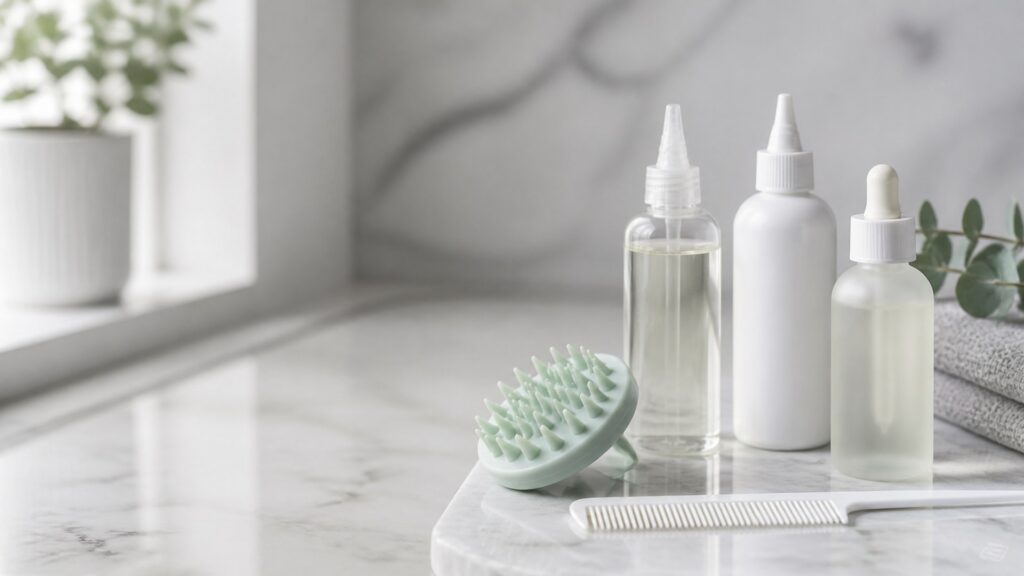
Scalp baseline
Describe the pattern before changing products
Dry-feeling skin, oily adherent scale, styling buildup, and contact irritation can overlap visually. A simple log helps prevent random treatment stacking.
Map location and timing: Note whether symptoms appear at the hairline, crown, behind the ears, under styles, or after specific wash intervals and products.
Separate sensation from appearance: Record itch, burning, tightness, pain, flakes, oil, bumps, and odor independently because one product may improve one measure while worsening another.
Set a medical boundary: Seek care for pus, bleeding, severe tenderness, sudden shedding, patchy loss, expanding inflammation, fever, or a problem that resists careful routine changes.
Routine profiles
Match format to the scalp and hairstyle
Access, wash frequency, hair texture, chemical processing, protective styles, and sensitivity determine whether a promising product can be applied and removed safely.
Buildup-prone user: Consider an appropriate clarifying wash when films from oils, dry shampoo, waxes, or stylers are documented, while protecting vulnerable lengths.
Sensitive-scalp user: Favor short ingredient lists and avoid known personal triggers; fragrance, essential oils, cooling agents, and intense tingling are not proof of effectiveness.
Protective-style wearer: Look for precise low-residue application and a cleansing plan that reaches skin without leaving damp layers trapped beneath the style.
Formula and tool details
Read purpose, active, vehicle, and directions together
An ingredient cannot be evaluated apart from concentration, contact time, rinse requirements, frequency, and whether the format reaches the intended area.
First-use evidence
A small controlled trial reveals immediate burning, difficult rinsing, heavy residue, tangling, or packaging that cannot reach the scalp accurately.
Repeated-use evidence
Consistent notes and photographs show whether comfort, oil, flakes, and buildup improve without increasing dryness, irritation, or hair breakage.
Stated purpose: Confirm whether the product cleanses oil, removes buildup, loosens scale, moisturizes, or addresses another defined cosmetic concern.
Application pathway: Pre-wash liquids, rinse-out shampoos, scrubs, serums, and medicated products have different sequences; do not treat them as interchangeable.
Tool hygiene: Applicators should be easy to clean, comfortable against skin, and designed without sharp seams or aggressive points that encourage scratching.
Common mistakes
Avoid turning scalp care into constant stimulation
Scrubbing harder, extending contact time, and stacking several exfoliating or fragranced products can damage the barrier and obscure the original problem.
Chasing a cooling sensation: Menthol-like freshness and tingling may feel active without proving that the formula matches the concern; persistent burning is a stopping signal.
Using fingernails on scale: Scratching can break skin and increase irritation. Loosen debris only with gentle technique and products used exactly as directed.
Changing everything together: Introduce one main treatment variable so improvement, dryness, oil rebound, or discomfort can be attributed and the routine simplified.
Product choice
Choose routine adjustment, targeted care, or professional assessment
The next step depends on symptom severity, product history, warning signs, and whether a simple cleansing or buildup issue is actually documented.
Adjust the basic routine: Review wash frequency, cleansing technique, water temperature, styling residue, and thorough rinsing before adding multiple treatment products.
Add one targeted formula: Choose a clearly labeled product whose intended use matches the observed pattern, then follow its dose, schedule, and contact-time directions.
Pause self-directed care: Stop experimenting and seek qualified help when symptoms are painful, rapidly changing, associated with hair loss, or repeatedly worsened by over-the-counter options.
Safe use
Apply accurately and keep contact points clean
Nozzles, brush tips, jar rims, and shared tools can collect oil, skin debris, and product. Clean handling protects both formula integrity and irritated areas.
Section for access: Create clean partings and place only the labeled amount on the intended skin instead of saturating hair and compensating with extra product.
Patch test as directed: Follow maker guidance and introduce one product at a time; stop if persistent burning, swelling, hives, or worsening irritation develops.
Avoid sharing applicators: Wipe nozzles without pressing them onto sore skin, wash reusable tools, close containers promptly, and assign personal contact items.
FAQ
Scalp-care buying questions
These answers keep routine shopping separate from diagnosis and clarify when symptoms deserve professional attention.
How do I choose a scalp-care product for flakes?
Are scalp scrubs and exfoliating acids safe to use weekly?
When should I see a professional about my scalp?
Bottom line
Choose the smallest routine that addresses the evidence
Good scalp care has a defined cosmetic purpose, tolerable formula, workable application, and clear boundary beyond which shopping advice should yield to individualized care.
Record before treating: Use consistent photographs and notes on flakes, oil, sensation, washing, styling products, recent services, and shedding.
Trial one change: Keep the rest of the routine stable while following the chosen product’s amount, frequency, contact time, and rinse instructions.
Stop and escalate: Discontinue anything that worsens symptoms and obtain professional assessment when warning signs appear or careful routine care does not help.
Reading Shortcuts
Move directly to the general selection decision stage you need.
Decision Reminders
Keep the evidence for general selection visible while comparing.
- Role: The scalp-care product serves the named task.
- Proof: The trial observes comfortable application, manageable residue, observable improvement, and no worsening symptoms.
- Care: Keep the applicator clean, avoid cross-contamination, and follow label frequency limits.
Glossary Snippets
Useful language for comparing scalp-care products.
When a Top 10 List Helps
Use rankings to discover credible scalp-care products, then screen them for general selection.
- The format is undecided: A broad list reveals plausible forms and price levels.
- A shortlist is needed: Rankings narrow discovery but do not replace fit testing.
Have finalists already? Open the comparison section.
When a Direct Comparison Helps
Compare finalists after establishing their suitability for general selection.
- Two candidates remain: Side-by-side evidence exposes meaningful tradeoffs.
- An upgrade is uncertain: Compare whether added cost corrects the original weakness.
Still exploring? Start with the Top 10 section.