
Scalp Treatments Buying Guide for Hair Type and Texture
Hair type changes how easily a scalp treatment reaches skin, spreads between sections, dries, and leaves visible residue. Start with the scalp concern and label directions, then choose a format and applicator you can place accurately through your density, curl pattern, and style without coating the hair or complicating the next wash.
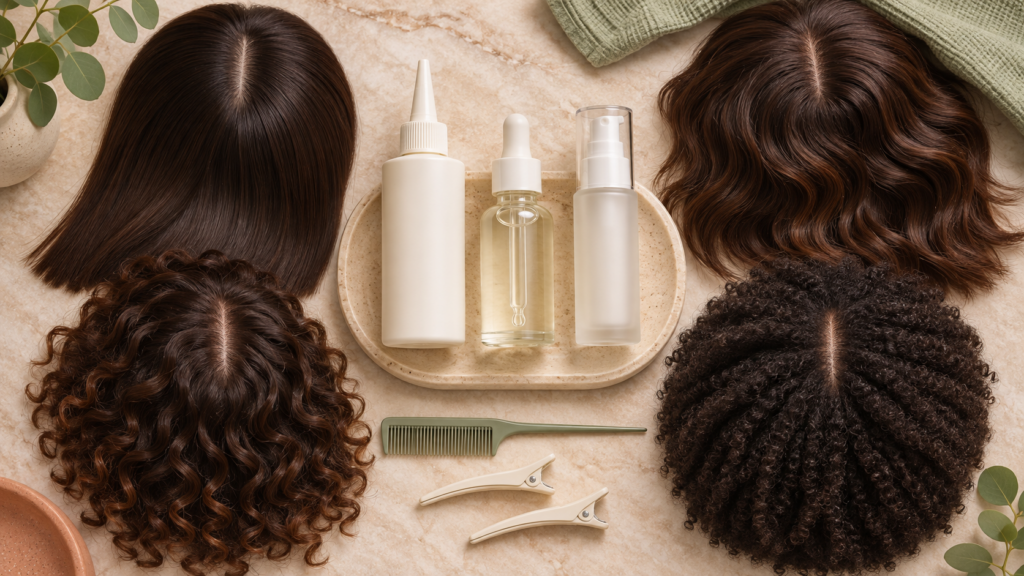
Buying framework
Separate Scalp Need From Hair Texture
Texture affects delivery and cleanup, not the underlying scalp condition. Define the cosmetic job first, then solve the access problem created by the hair.
Name the scalp job: Decide whether the product is meant to loosen visible buildup, support moisture, refresh between washes, or provide label-directed care for flakes. Hair type alone does not identify the right active or treatment frequency.
Map scalp access: Note density, part width, curl shrinkage, protective styling, and whether sections stay open long enough to apply a thin line. A formula that cannot reach skin predictably is difficult to dose.
Protect the finished style: Decide how much root wetting, massage, and drying the style can tolerate. A treatment that requires saturation may be a poor match for a stretched style even if its ingredients seem suitable.
Define acceptable residue: Fine dark roots may reveal oil or powder quickly; dense curls can hide residue while still holding it near the scalp. Judge feel, visibility, and wash-out together.
Keep scalp and lengths separate: Apply scalp-directed products to parted skin unless directions say otherwise. Coating the surrounding hair can flatten straight roots, interrupt waves, or leave curls and coils sticky without improving scalp coverage.
Who this is for
Match Delivery to Hair Type and Texture
Use type and texture as handling information: how many parts you need, how the product travels, and how much manipulation the style allows.
Fine or straight hair: Favor narrow nozzles, light fluids, and small line-by-line doses. Oil and residue show quickly at the root, so start at the low end of the label-directed frequency and assess lift after the hair is fully dry.
Wavy hair: Choose a format that reaches the scalp without soaking the wave pattern. Apply along a few clean parts, then let the roots dry before restyling so dampness is not mistaken for heaviness.
Curly hair: Section before opening the bottle. A pointed nozzle or controlled dropper can place product beneath curls with less rubbing; distribute by moving the applicator, not by flooding one part and massaging widely.
Coily or very dense hair: Prioritize precision and section endurance. Work in smaller zones, keep untreated hair clipped away, and choose a viscosity that leaves the nozzle yet stays where placed instead of disappearing into the surrounding coil mass.
Braids, twists, or protective styles: Use only products whose directions suit the exposed scalp and current style. Check whether residue can be removed without dismantling the style, and avoid using a nozzle that touches multiple scalp areas or collects debris.
What to pay attention to
Read Format, Applicator, and Reset Together
The same ingredient story can behave very differently as a watery tonic, gel, oil, foam, or rinse-off exfoliant. Package control determines whether the formula actually reaches skin.
Access and placement lens
Can the dispenser reach parted scalp through this density and curl pattern without coating the surrounding hair?
Drying and reset lens
Will the amount dry before styling, remain unobtrusive between washes, and wash away on the normal cleansing schedule?
Precision nozzle: A narrow tip can trace parts with little root coating. Look for controlled flow, a cap that stays clean, and enough reach to work through dense hair without scraping skin.
Dropper or pipette: Droppers suit measured spot placement but can release a large pool if held vertically over one area. Count drops and keep the tip from touching scalp or hair.
Foam or mousse: Foam can stay near the part and spread with light pressure, but expansion makes dose estimation less obvious. Check whether it dries cleanly or leaves stiffness at the roots.
Gel or serum texture: A slightly viscous treatment may resist running into the forehead or hair lengths. Confirm that it can pass through the applicator and does not pill with leave-in styling products.
Oil-rich treatment: Oil can reduce a dry feel but may spread beyond the intended zone and shorten time between washes. Compare the full blend, leave-on time, and shampoo burden rather than choosing by one botanical.
Rinse-off or pre-shampoo format: These may fit heavy buildup when the next step is cleansing. Check contact time, sectioning effort, and whether normal shampoo removes both loosened residue and the treatment film.
Avoid these traps
Avoid Texture-Based Scalp Treatment Mistakes
Many failures come from confusing hair appearance with scalp need or from compensating for poor access by using more product.
Choosing an active from curl type alone: Straight, wavy, curly, and coily hair can all coexist with different scalp conditions. Use the product claim, directions, and actual scalp signs; texture determines delivery, not diagnosis.
Pouring more when coverage feels uneven: Extra volume often coats hair while leaving missed scalp zones. Add parts or switch applicators before increasing the dose.
Massaging through tangled or set hair: Aggressive rubbing can disrupt a style and move product off target. Part first, place a thin dose, and use only the pressure and contact time the directions require.
Ignoring root drying time: Wet roots can look flat or alter curl formation. Judge weight and residue only after the scalp and roots are fully dry.
Layering treatment under heavy stylers: Oils, gels, edge products, and dry shampoo can change spread and create residue. Keep the scalp routine simple during a trial so the result is readable.
Treating persistent symptoms cosmetically: Stop and seek appropriate professional care for pain, sores, bleeding, marked redness, sudden or patchy shedding, or symptoms that persist or worsen despite routine changes.
Decision guidance
Choose the Smallest Workable Delivery System
Start from the handling constraint that is most likely to make the treatment fail.
If roots flatten easily: Choose a fast-drying light fluid with a narrow nozzle. Use short lines across several parts rather than a continuous dose around the whole scalp.
If curls close the part quickly: Pre-section with clips and use a nozzle that can follow the exposed line. Treat one zone at a time so placement stays visible.
If coils are very dense: Choose stable, controlled flow and work from back to front in small sections. A thinner formula is not automatically better if it runs away before you can distribute it.
If residue is the main problem: Prefer clear-drying, low-film formats or rinse-off timing. Inspect dark and light roots in natural light and include the next shampoo in the comparison.
If wash days are far apart: Favor a treatment whose frequency and leave-on directions fit the interval. A product that requires repeated wetting or leaves cumulative film may not suit the schedule even if one application feels comfortable.
Ownership & compatibility
Run a Part-by-Part Trial
A controlled trial reveals whether texture changes delivery, style preservation, or cleanup without confusing the result with a new wash routine.
Create a section map: Choose a repeatable number of front, crown, side, and back parts. The map matters more than chasing every visible gap on each application.
Measure the first dose: Count drops, nozzle lines, or foam pumps and record the number of sections. Begin at the low end of label directions.
Check after drying: Assess root lift, curl or wave pattern, tack, visible residue, and whether any zones still feel untreated. Improve sectioning before adding product.
Observe the full interval: Note comfort, flaking, transfer, odor, and how the style behaves until the next planned wash. Do not assume a clean first hour predicts low buildup.
Evaluate the reset: At shampoo, check how readily the treatment and loosened residue rinse away. A useful formula should fit the normal cleansing method without repeated harsh scrubbing.
FAQ
Scalp Treatment Questions by Hair Type and Texture
Quick answers on texture, placement, residue, sectioning, and wash-day fit.
Does hair type determine which scalp treatment I need?
What scalp treatment format is best for fine straight hair?
How do I apply scalp treatment through curly hair?
How do I reach the scalp through dense coily hair?
Will a scalp treatment ruin my waves or curls?
Are scalp oils better for coarse or coily hair?
How many sections should I use for scalp treatment?
How can I tell whether residue is product or flakes?
Can I use scalp treatment with braids or twists?
Readiness check
Choose for Scalp Access, Then Texture Fit
The best match treats the intended scalp need while respecting how the hair opens, dries, holds residue, and resets at the next wash.
Lead with the scalp job: Hair texture does not select the active or diagnose the condition.
Use access as a purchase filter: A controllable nozzle and workable viscosity can matter more than a fashionable ingredient.
Section instead of overdosing: More parts usually improve coverage more safely than more liquid.
Judge the dry root: Check lift, pattern, tack, and visible residue only after full drying.
Include the next wash: A treatment fits when its film and loosened residue leave with the normal cleansing plan.
Texture-Fit Shortcuts
Jump to the choice that changes access, placement, or cleanup.
Six Texture-Fit Checks
Use these before the first full application.
- Need: What scalp job does the label support?
- Access: How many stable parts are required?
- Flow: Will it run, pool, or stay on the line?
- Hair contact: How much root wetting can the style tolerate?
- Dry finish: Is residue visible or tacky after drying?
- Reset: Will normal shampoo remove the film?
Scalp Access Terms
Plain language for texture-aware application.
When a Top 10 List Helps
Use a shortlist after defining the scalp job and access constraint.
- The use is defined: Compare products intended for the same cosmetic scalp need.
- The applicator is visible: Filter for nozzle, dropper, foam, or rinse-off control.
- The style is known: Check wetting, drying, and residue against the current style.
- The wash interval is fixed: Compare frequency and reset burden over the real schedule.
Already have a shortlist? A Comparison can help resolve the remaining tradeoffs.
When a Comparison Helps
Compare finalists on the same section map and wash interval.
- Flow differs: Compare running, pooling, and placement accuracy.
- Drying differs: Compare root wetness, pattern change, and tack.
- Residue differs: Compare visibility and feel on the actual hair color and texture.
- Reset differs: Compare rinse-out with the normal shampoo method.
Still discovering options? Start with a Top 10 to build a relevant shortlist.