
Scalp Treatments Buying Guide: How to Choose the Right One
Scalp treatment is an umbrella term for products that loosen buildup, reduce visible flakes, manage oil, moisturize dry-feeling skin, or support a more comfortable routine. Choose by the problem you can observe, the product format, and the instructions you can follow consistently. A stronger formula is not automatically a better one, especially when exfoliants, medicated actives, fragrance, or leave-on exposure are involved.
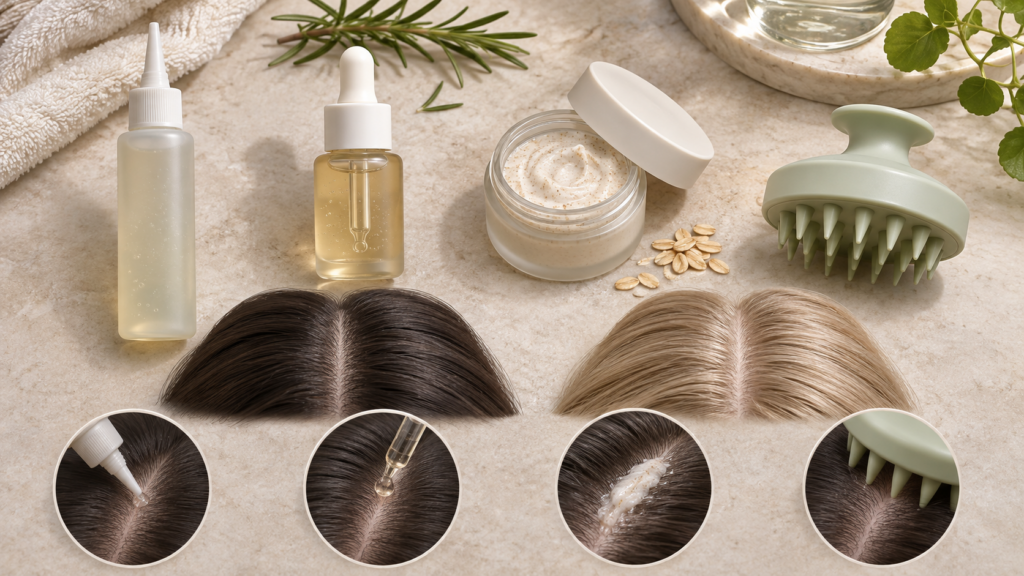
Buying framework
Start With the Scalp Concern
The same flake can come from dry-feeling skin, styling residue, or a recurring scalp condition. Begin with what you see and feel, then choose the least complicated format that addresses it.
Visible loose flakes without much oil: A gentle rinse-off cleanser or moisturizing scalp product may be a sensible first route. Avoid assuming every flake needs aggressive scrubbing.
Greasy scale or recurring dandruff: Look for a dandruff treatment with a clearly named active ingredient and drug-facts directions where applicable. Contact time and frequency matter more than a premium texture.
Heavy styling buildup: Choose a clarifying or pre-shampoo format designed to loosen residue. A scalp scrub is optional; particles and vigorous rubbing can add irritation without improving the cleanse.
Dryness or tightness after washing: Favor mild, fragrance-conscious leave-ons or rinse-offs and review the shampoo and wash frequency that precede the symptom. Adding a rich oil can trap residue and is not a universal fix.
Pain, sores, marked redness, or sudden shedding: Do not treat these as ordinary cosmetic-selection problems. Persistent, worsening, or severe symptoms deserve evaluation by an appropriate clinician.
Who this is for
Match the Format to the Routine
A useful treatment must reach the scalp, stay for the directed time, and rinse or dry without disrupting the rest of the routine.
Frequent washers: A mild rinse-off treatment may be easier to repeat than a concentrated leave-on. Check whether the label limits frequency or asks you to alternate with regular shampoo.
Protective styles or dense hair: Precision nozzles and thin fluids can reach part lines with less manipulation. Confirm whether the product must be rinsed, because incomplete removal can add residue under a style.
Color-treated or chemically processed hair: Check compatibility statements and keep strong clarifiers or exfoliants off fragile lengths. A scalp-focused formula can still migrate during rinsing.
Sensitive or fragrance-reactive users: Short ingredient lists do not guarantee tolerance. Prioritize fragrance-free or low-fragrance options when relevant, follow patch-test directions, and introduce one new treatment at a time.
Infrequent washers with styling-product use: Choose a product whose reset fits the actual wash interval. A leave-on layered over dry shampoo, oils, and stylers may worsen the very coating it is meant to address.
What to pay attention to
Read the Active, Vehicle, and Directions Together
The featured ingredient matters only in the context of concentration, product type, contact time, and use frequency.
Cause-and-active lens
Does the named active and product category fit the observable concern, or is the product relying on vague detox, balance, or growth language?
Exposure-and-routine lens
Can you follow the contact time, frequency, rinse, and styling instructions without stacking conflicting treatments?
Dandruff actives: Products may use actives such as zinc pyrithione where sold, selenium sulfide, ketoconazole, salicylic acid, sulfur, or coal tar depending on market and product. Compare the exact Drug Facts label and follow its warnings.
Chemical exfoliants: Salicylic, glycolic, or other acids can loosen scale and residue. More acids or more frequent use can increase dryness and irritation, so the directed schedule is a ceiling, not a challenge.
Moisturizing leave-ons: Humectants and lightweight conditioning agents may improve a dry or tight feel. Oils can reduce water loss for some users but may feel heavy, interfere with styling, or complicate dandruff-prone routines.
Physical scrubs and brushes: Particles and silicone tips change friction, not the underlying cause. Choose soft contact, low pressure, and a design that can be cleaned and dried completely.
Nozzle, dropper, or spray: A nozzle targets part lines, a dropper measures small amounts, and a spray covers quickly but may reach hair more than skin. Package control affects both effectiveness and waste.
Rinse-off versus leave-on: Rinse-off products depend on even application and contact time. Leave-ons extend exposure and make fragrance, residue, transfer, and compatibility more important.
Avoid these traps
Avoid Common Scalp-Treatment Mistakes
Most bad outcomes come from treating every flake alike, escalating too quickly, or using several active products at once.
Scrubbing harder for a cleaner scalp: Pressure can create tenderness and visible irritation. Let cleanser, active, contact time, and rinsing do the work.
Layering exfoliating products: An acid serum, dandruff shampoo, clarifier, and scrub in one session can compound exposure. Change one treatment at a time unless a clinician directs otherwise.
Applying to hair instead of skin: Section the hair and place the product on part lines. Saturating lengths wastes product and can leave roots limp or coated.
Ignoring contact time: Rinsing immediately may undercut a rinse-off treatment; leaving it longer than directed can increase irritation. Use a timer rather than guessing.
Buying for a hero botanical: Tea tree, rosemary, mint, and other botanicals can be pleasant but do not identify the treatment mechanism. Fragrance and essential oils can also bother sensitive skin.
Treating cosmetic comfort as a cure: A soothing serum can improve feel without resolving persistent dandruff, infection, psoriasis, eczema, or hair-loss causes. Respect the boundary between cosmetic care and diagnosis.
Decision guidance
Use a Concern-Based Buying Route
Choose the route that matches the dominant concern, then compare format, instructions, and tolerance within that route.
For recurring greasy flakes: Start with an appropriately labeled dandruff treatment and an active you can use as directed. Compare contact time, scent, hair feel, and frequency after the active is fixed.
For residue after styling: Choose a clarifying or pre-shampoo treatment before reaching for a scrub. Confirm that it rinses clean on your normal wash day.
For dry-feeling scalp without significant scale: Favor a mild, fragrance-conscious moisturizing treatment and reassess harsh cleansing, hot water, and overlapping actives.
For occasional itch after a new product: Stop the suspected trigger first. Adding another scented or active treatment can obscure the cause; seek care for swelling, hives, blistering, or persistent symptoms.
For hair-growth promises: Treat growth claims cautiously. Cosmetic serums may condition the scalp or reduce breakage around styling, but they should not be assumed to treat medical hair loss.
Ownership & compatibility
Run a Controlled Scalp Trial
A short log helps separate a useful treatment from temporary cooling, fragrance, or the effects of a different wash routine.
Photograph one consistent part line: Use the same lighting and location before each scheduled use. This is more reliable than trying to remember flake level or redness.
Track dose and contact time: Record nozzle lines, drops, or measured amount and use a timer. More product does not substitute for even placement.
Hold the rest of the routine steady: Do not introduce a new shampoo, oil, dry shampoo, and scalp serum together. Stable conditions make irritation and buildup easier to trace.
Check immediate and next-day effects: Note burning, tightness, oil rebound, residue, flakes, scent persistence, and root feel. Stop for significant irritation and follow label warnings.
Clean applicators and close packages: Wash brushes as directed, dry them fully, avoid touching droppers to skin, and discard products that change odor, color, or texture unexpectedly.
FAQ
Scalp Treatment Questions Before You Buy
Quick answers about flakes, exfoliation, oils, dandruff actives, and safe use.
What is the difference between a scalp treatment and dandruff shampoo?
Should I choose a scrub or a chemical exfoliant?
Can scalp oil fix dryness?
How often should I use a scalp treatment?
Do I apply scalp treatment before or after shampoo?
Can I use a scalp treatment on color-treated hair?
Is tingling a sign that a scalp treatment is working?
How can I keep treatment from coating my hair?
When should I stop self-treating my scalp?
Readiness check
Choose the Treatment You Can Use Correctly
The right scalp treatment fits a defined concern, reaches the skin, and has directions that work with the wash schedule. Prefer a clear active or function over vague promises, and increase complexity only when the first controlled trial shows a real need.
Define the concern: Flakes, oil, buildup, dryness, and hair-loss claims require different buying routes.
Match the product category: Clarifier, moisturizer, exfoliant, dandruff treatment, and leave-on serum are not interchangeable.
Control exposure: Dose, part-line placement, contact time, and frequency determine the real treatment experience.
Protect tolerance: Introduce one active product at a time and stop for meaningful irritation.
Know the care boundary: Persistent, severe, or unusual symptoms deserve appropriate professional assessment.
Scalp-Treatment Shortcuts
Jump to the choice that changes the product type.
Six Scalp Checks
Use these before the first application.
- Concern: Flakes, oil, buildup, dryness, or discomfort?
- Category: Cosmetic, clarifying, exfoliating, or medicated?
- Active: What ingredient performs the main job?
- Contact: How long does it stay on?
- Frequency: How often does the label allow?
- Boundary: Which symptoms need professional care?
Useful Scalp Terms
Plain language for product labels and routines.
When a Top 10 List Helps
Use rankings after choosing the treatment route.
- The concern is defined: Do not compare dandruff shampoo with a cosmetic serum.
- The active is fixed: Compare formats using the same treatment mechanism.
- The schedule is realistic: Check contact time and frequency against wash days.
- Tolerance matters: Filter fragrance, acids, and residue before ranking.
Already have a shortlist? A Comparison can help resolve the remaining tradeoffs.
When a Comparison Helps
Compare finalists on the same scalp-use variables.
- Actives differ: Compare purpose, warnings, and labeled directions.
- Formats differ: Compare nozzle, dropper, shampoo, scrub, and rinse.
- Exposure differs: Compare dose, contact time, and weekly frequency.
- Routine fit differs: Compare residue, hair feel, scent, and wash-out.
Still discovering options? Start with a Top 10 to build a relevant shortlist.