
Best Match
ShipRush makes sense for Multichannel sellers that need carrier/service comparison and shipping process automation because 90+ channel integrations; rate/service comparison; process automation; quick onboarding.
ShipRush Review for Multi-Carrier Shipping Software evaluates ShipRush for real-world multi-carrier shipping software use. It compares strengths, limitations, setup demands, value, support, and alternatives so buyers can understand where the product makes sense and where another choice may be stronger.

Quick Summary
ShipRush works best for Multichannel sellers that need carrier service comparison and. Its main advantage is 90 channel integrations rate service comparison process automation, while the key caution is Pricing unclear not WMS-grade duplicate article risk. It is worth shortlisting when capability, cost, setup effort, and support expectations line up.
Pros & Cons
These points highlight buyer-facing advantages and drawbacks, not review-method notes.
Review Snapshot
These details affect cost, setup, daily use, support expectations, and shortlist decisions.
| Detail | ShipRush |
|---|---|
| Product | ShipRush |
| Company | ShipRush |
| Category | Multi-Carrier Shipping Software |
| Product type | Multi-Carrier Shipping Software |
| Primary use | Multichannel sellers that need carrier/service comparison and shipping process automation |
| Pricing | Official public pricing was not captured. Mark exact pricing as Not verified |
| Plans / models | Official plan names/prices not verified |
| Key advantage | 90+ channel integrations; rate/service comparison; process automation; quick onboarding |
| Main caution | Pricing unclear; not WMS-grade; duplicate article risk |
| Support | Support details not deeply verified |
| Review score | 8.0 / 10 |
Performance
This is a research-based review using product documentation, pricing notes, support information, and competitive context; no hands-on benchmark testing was supplied.
ShipRush is strongest when 90+ channel integrations; rate/service comparison; process automation; quick onboarding. That matters most for buyers whose main multi-carrier shipping software requirement depends on that capability, while pricing unclear; not WMS-grade; duplicate article risk remains the main caution
Official public pricing was not captured. Mark exact pricing as Not verified Value is strongest for multichannel sellers that need carrier/service comparison and shipping process automation; buyers should compare plan scope, add-ons, contract terms, support level, and renewal exposure before treating the headline price as total cost
Connect stores, carriers, shipping rules, printers, and label workflows Buyers should confirm required data, integrations, permissions, training, and launch support before rollout
Import orders, compare rates, choose carrier/service, print labels, track shipments, manage exceptions The product is more convincing when routine tasks can stay inside the normal process without repeated manual reconciliation
Not verified Not researched Teams with stricter oversight or compliance needs should verify those controls before purchase
Competes with ShipStation, Shippo, Easyship, ShipWorks, and ShippingEasy A rival may be better when it addresses the main caution more directly
ShipRush should be judged by how well it handles the specific multi-carrier shipping software job a buyer needs after rollout. The strongest case is 90+ channel integrations; rate/service comparison; process automation; quick onboarding, especially when that capability removes manual work, reduces avoidable handoffs, or makes routine decisions easier to repeat.
The main caution is Pricing unclear; not WMS-grade; duplicate article risk. That does not automatically make ShipRush a poor choice, but it does mean buyers should compare the product against alternatives on total cost, support access, implementation effort, reporting depth, and the risk of needing a broader platform later.
Before committing, confirm the operational details that affect ownership: Connect stores, carriers, shipping rules, printers, and label workflows Also compare the pricing model against expected volume, team size, locations, integrations, and support expectations. Official public pricing was not captured. Mark exact pricing as Not verified
In daily use, the product is most useful when the buyer's normal process matches how the system is designed to work. Import orders, compare rates, choose carrier/service, print labels, track shipments, manage exceptions If the team expects heavier customization, deeper automation, or more advanced reporting, a closer comparison with larger competitors is warranted.
The practical decision is whether ShipRush reduces the specific bottleneck that pushed the buyer into the market in the first place. A good match should make routine work easier to repeat, make exceptions easier to spot, and give managers enough confidence that the product will not create a new manual review burden after launch.
Score note: Score should stay conservative until official pricing is confirmed
Product Experience
Import orders, compare rates, choose carrier/service, print labels, track shipments, manage exceptions
Buyer implication: Shopify, Amazon Seller Central, BigCommerce, Walmart, WooCommerce, Adobe Commerce, eBay, NetSuite, and 90+ channels
Setup & Onboarding
The setup question is whether the buyer can configure the product correctly, not just whether sign-up is simple.
Real-World Use
ShipRush makes sense for Multichannel sellers that need carrier/service comparison and shipping process automation because 90+ channel integrations; rate/service comparison; process automation; quick onboarding.
Choose another option if label-only USPS/UPS shippers or warehouses needing WMS-grade fulfillment. The main caution is pricing unclear; not WMS-grade; duplicate article risk.
Value
Strong value for: Strong if official pricing fits a multichannel seller's shipment volume
Weak value for: Label-only USPS/UPS shippers or warehouses needing WMS-grade fulfillment
A practical value check is whether ShipRush reduces enough friction for Multichannel sellers that need carrier/service comparison and shipping process automation to justify its cost and setup effort. If the buyer mainly needs one focused capability, the product can make sense even when a broader competitor has more features.
It becomes a weaker value case for Label-only USPS/UPS shippers or warehouses needing WMS-grade fulfillment. Those buyers should compare contract terms, implementation support, integration limits, reporting needs, and the cost of replacing the product later if the first rollout proves too narrow.
Bottom line: Strong if official pricing fits a multichannel seller's shipment volume The right comparison is not only sticker price; it is the price of getting the needed result without extra manual work, avoidable support delays, or a second tool layered on top.
For a final shortlist, compare ShipRush against at least one lower-cost option and one broader platform. That contrast makes the tradeoff clearer: whether the buyer is paying for useful depth, unnecessary breadth, better support, or simply a product name that feels safer than its actual operating match.
Strong if official pricing fits a multichannel seller's shipment volume
FAQ
Short answers to practical buyer questions about cost, setup, limitations, daily use, and alternatives.
ShipRush is best reviewed as a multi-channel shipping router for ecommerce sellers who need carrier choice without a full warehouse system
90+ channel integrations; rate/service comparison; process automation; quick onboarding
Pricing unclear; not WMS-grade; duplicate article risk
Official public pricing was not captured. Mark exact pricing as Not verified
Connect stores, carriers, shipping rules, printers, and label workflows
Import orders, compare rates, choose carrier/service, print labels, track shipments, manage exceptions
Label-only USPS/UPS shippers or warehouses needing WMS-grade fulfillment
Score should stay conservative until official pricing is confirmed
Alternatives
Compare alternatives when they handle ShipRush's main caution more directly: Pricing unclear; not WMS-grade; duplicate article risk. The best substitute is not just a similar product; it should solve a clearer buyer problem.
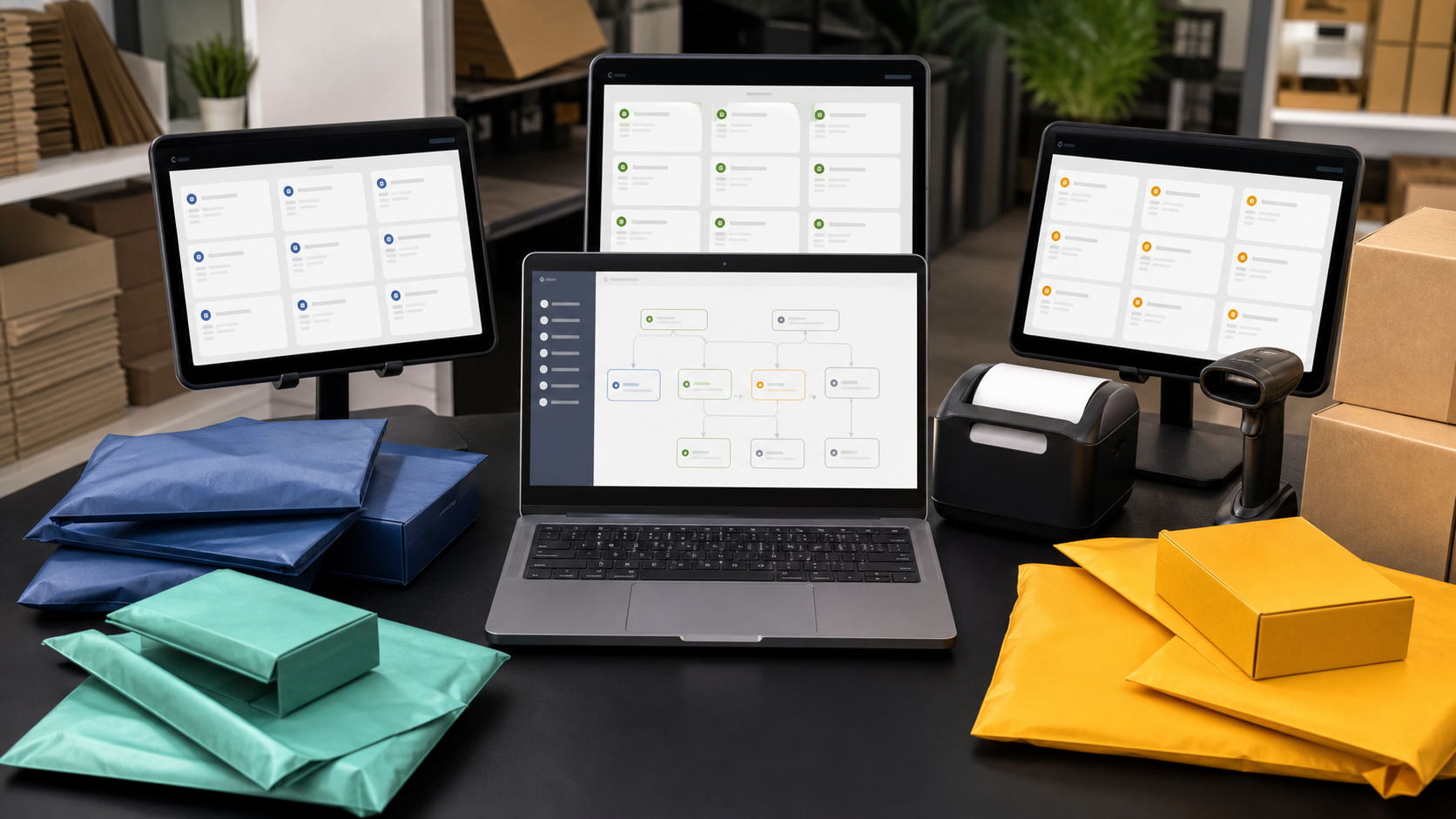
Consider ShipStation if it offers a stronger answer to the tradeoff that makes ShipRush harder to justify. The comparison should focus on pricing clarity, implementation support, integrations, reporting, and whether ShipStation better matches the buyer's real operating model.

Consider Easyship if it offers a stronger answer to the tradeoff that makes ShipRush harder to justify. The comparison should focus on pricing clarity, implementation support, integrations, reporting, and whether Easyship better matches the buyer's real operating model.

Consider Shippo if it offers a stronger answer to the tradeoff that makes ShipRush harder to justify. The comparison should focus on pricing clarity, implementation support, integrations, reporting, and whether Shippo better matches the buyer's real operating model.
Sources
The review uses product documentation, pricing context where available, support resources, and competitive research.
Where to Buy
Pricing note: Official public pricing was not captured. Mark exact pricing as Not verified
Best use: Multichannel sellers that need carrier/service comparison and shipping process automation
Check Current PriceReview Snapshot
Best for: Multichannel sellers that need carrier/service comparison and shipping process automation
Top 10 List
Compare the strongest options in this POS category before deciding whether ShipRush is the right fit.
View the Top 10Compare Models
See how ShipRush stacks up against nearby systems for Multi-carrier decisions seen from a busy end-of-day shipping station., pricing, hardware, and daily workflow.
View ComparisonsTip: Confirm the plan, setup data, integrations, and support path before rollout.
Choose a retailer
Prices checked regularly. We may earn a commission at no cost to you.