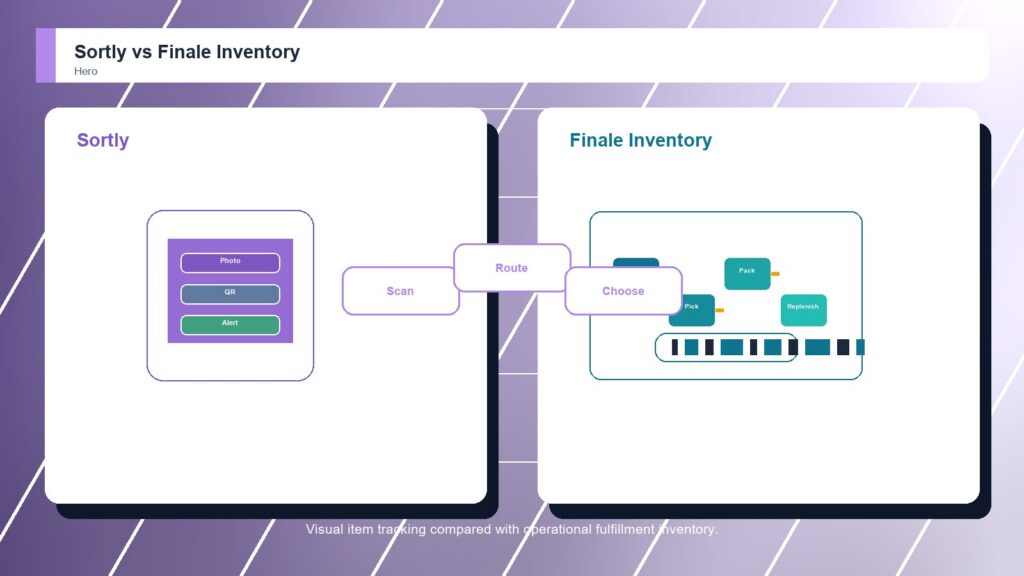
The simplest way to separate these tools is to follow the inventory record downstream. Sortly helps people see and update items. Finale helps teams fulfill orders, replenish stock, manage warehouse movement, and keep channel availability reliable. That keeps the choice practical.
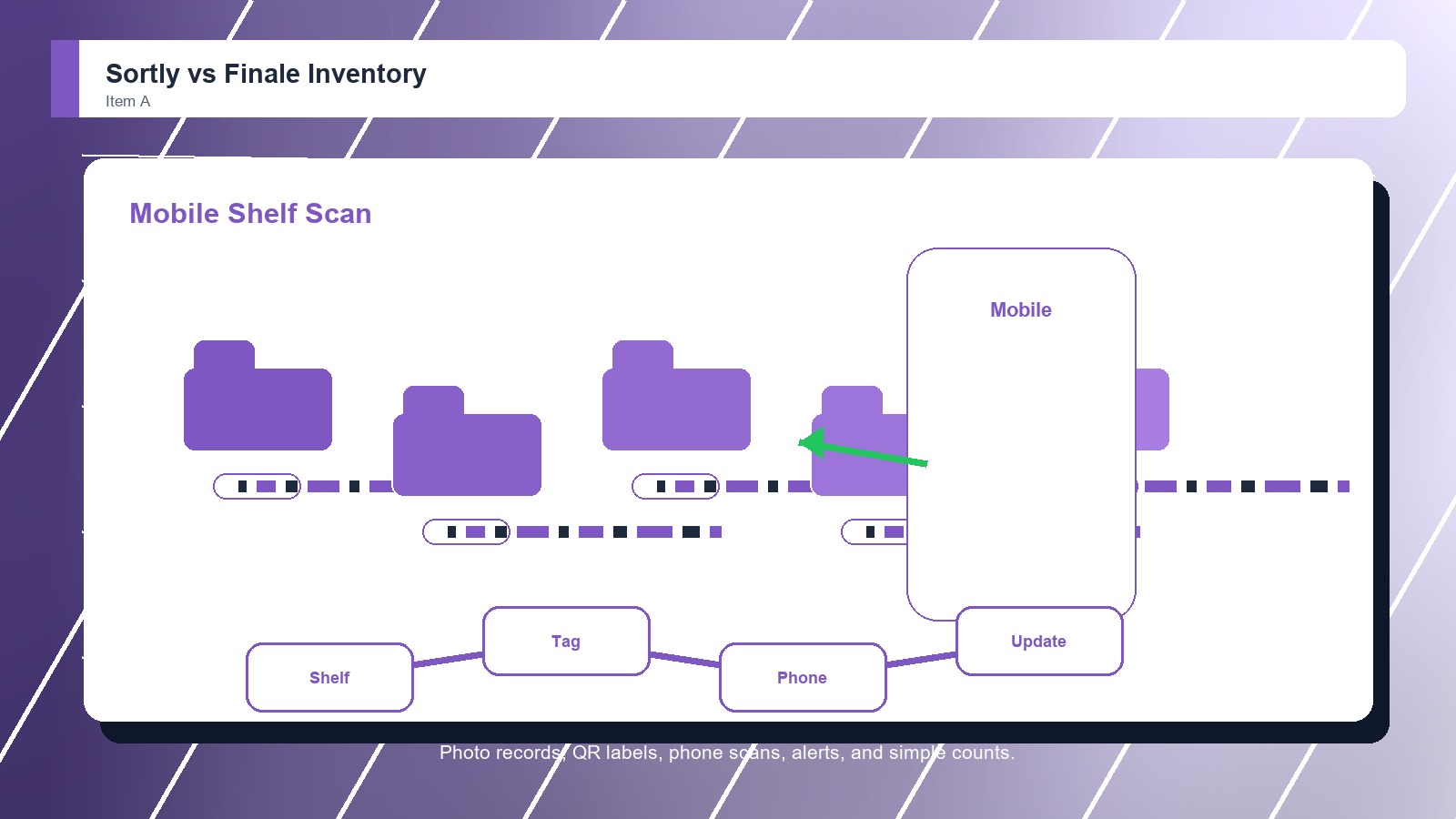
Visual Tracking: Sortly is strongest when inventory needs to become visible quickly. Photos, QR labels, barcode scans, item notes, and alerts give small teams a practical way to update records without implementing a warehouse operations system. That keeps the choice practical. That matters during rollout.
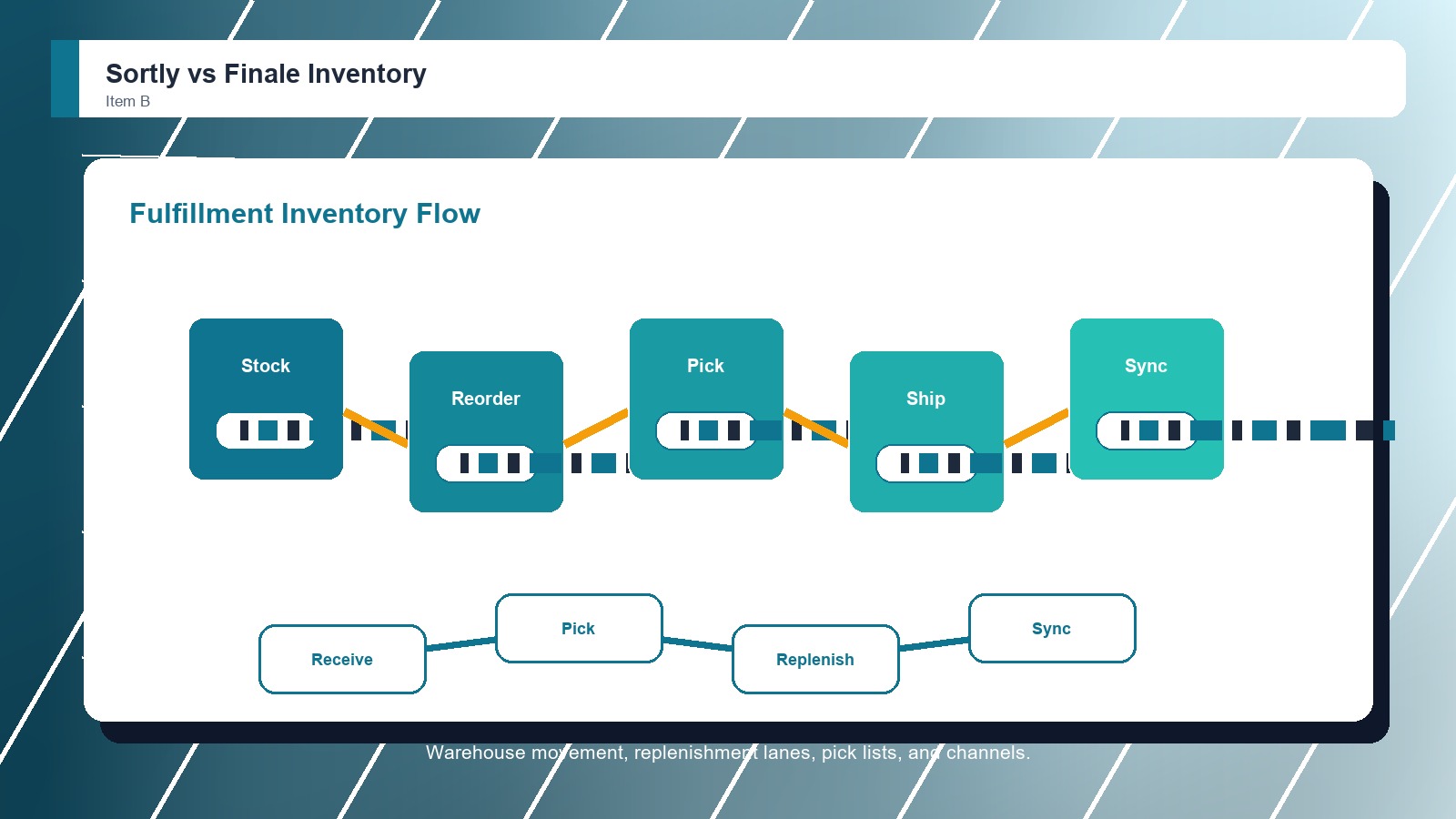
Fulfillment Control: Finale Inventory is stronger when barcode scans support receiving, picking, packing, transfers, replenishment, and ecommerce channel accuracy. It is built for teams that need inventory data to protect order flow and warehouse decisions. That keeps the choice practical. That matters during rollout.
Right Sizing: Buyers should avoid oversizing or undersizing this decision. Sortly can be enough for visual accountability. Finale is the better choice when inventory errors affect orders, stock availability, replenishment timing, or warehouse throughput. That keeps the choice practical. That matters during rollout.
Demo Evidence: Buyers should make Sortly and Finale Inventory run the same inventory workflow with real items, labels, locations, and scanners. A good demo shows whether counts stay accurate when people receive, move, count, and adjust stock. That keeps the choice practical.
Control Check: The winning barcode inventory system should fit the team's control model. That means roles, locations, labels, exceptions, count approvals, reports, and support handoffs are clear enough that workers do not rebuild side spreadsheets. That keeps the choice practical. That matters during rollout.
Adoption Reality: Inventory systems only work when people scan consistently. Buyers should watch whether warehouse staff, field workers, managers, and accounting users can update records without slowing the job or creating cleanup work after each count. That keeps the choice practical. That matters during rollout.