
Stair Machines Buying Guide for Shared Households
A shared stair machine has to work for the least confident user as well as the strongest climber. Check the tallest person’s headroom, each user’s foot placement and rail reach, and the easiest pace before comparing screens or workout libraries. A machine that fits one person perfectly can still be a poor household purchase.
Then test the handover: stopping, dismounting, cleaning and leaving the machine ready for someone else. Separate profiles can keep workout records organized, but they do not replace a safe starting setting, a clear entry path or agreement about when noise is acceptable.
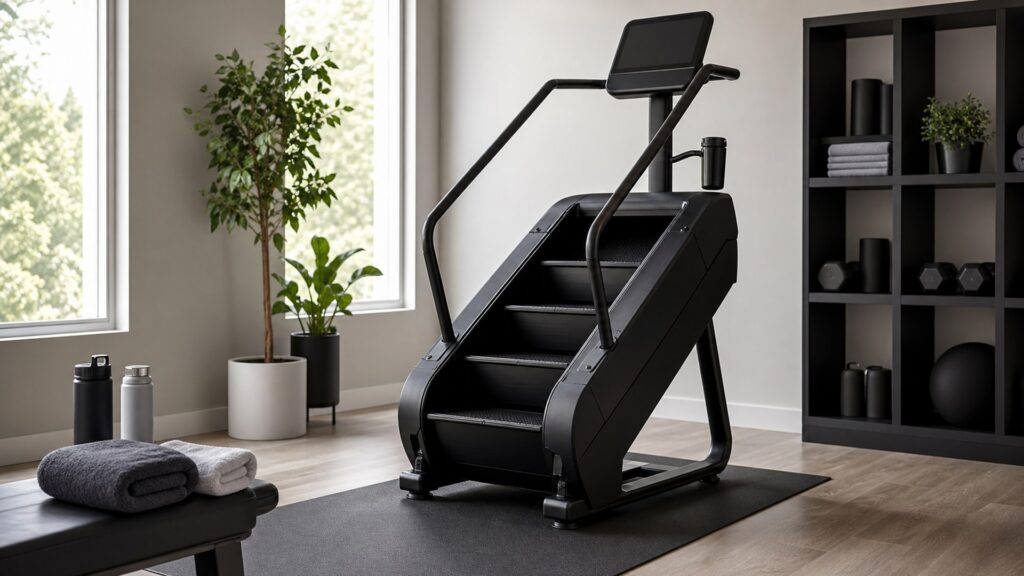
Buying framework
Define the household before choosing the machine
List actual users: Record relevant height, weight, shoe size, support needs and intended session length. Check each person against the manufacturer’s limits instead of selecting from the average household member.
Design for the limiting requirement: The tallest user may determine headroom while another needs a lower entry or slower pace. If one requirement cannot be met, change the model or location rather than expecting that person to adapt.
Count total use: Add the sessions likely to occur on a busy day, including consecutive users. Ask the manufacturer whether that pattern is appropriate, particularly for compact hydraulic machines.
Agree on the location: Protect the climbing and dismounting area from ordinary traffic. Consider people sleeping or working nearby, not just the person on the machine.
Who this is for
Match features to the mix of users
Different heights and shoe sizes: Check headroom, tread area and handrail reach for each user. A console profile does not change the physical fit.
Beginners and experienced climbers: Require a manageable starting pace and simple controls, then check enough range for the more experienced person. The highest speed should not drive the whole purchase.
Back-to-back sessions: Choose a model intended for the combined workload. Allow cleaning and any prescribed cooling between users instead of treating a handover as uninterrupted machine time.
Mixed interest in classes: Confirm whether everyone needs an account or paid membership and what manual mode provides. A person who wants a short climb should not need another user’s phone or login.
What to pay attention to
Check the settings that change between people
Safe starting state: Ask what happens after a workout ends and when the next one begins. Do not assume the machine always resets speed, program or resistance in the same way.
Weight and user limits: Observe all specified limits, including any minimum where applicable. A maximum user-weight rating is not a statement about total daily operating time.
Rails and controls: Each person should demonstrate reaching the normal and emergency controls. Adjustable parts must lock properly before the next session.
Accounts and measurements: Separate profiles can help keep body settings and history from mixing. Ask about the number of profiles, guest mode, account deletion and which features survive cancellation.
Noise and floor transmission: Test the intended machine at realistic effort with a listener in affected rooms. Headphones can remove class audio from speakers, but not step impact or mechanical vibration.
Avoid these traps
Avoid a purchase that works for only one person
One-person showroom testing: A single demonstration cannot verify the fit or confidence of every intended user.
Calling it communal without checking warranty: A machine shared by people in one home may be treated differently from equipment in a building’s communal gym. Confirm the intended setting and coverage with the seller.
Leaving the previous workout ready to resume: Do not rely on a saved program as the default for the next user. Follow the prescribed stop and restart procedure and verify the starting settings.
Treating a mat as a household agreement: Floor protection does not establish acceptable noise. Agree on workout hours and placement before the machine arrives.
Decision guidance
Run a two-person handover before committing
Have each person try the machine: Use normal shoes and demonstrate mounting, easy stepping, controls and dismounting. Include anyone whose height or support needs differ from the first tester.
Complete the first session: Stop normally, wait for motion to end and dismount as directed. Clean the contact areas with approved products.
Start as the second user: Select the correct profile or guest mode, check settings and begin at an appropriate pace. Notice whether changing users is simple or depends on remembering hidden settings.
Plan the busy day: Confirm the permitted duration and cooling requirements against consecutive sessions. Leave time for cleanup and agree on quiet hours with other occupants.
Ownership & compatibility
Assign ownership tasks clearly
After each session: Leave treads, rails and controls clean and dry using the manual’s method. Remove personal devices and keep the entry and exit path clear.
One maintenance owner: Assign someone to track inspections, service contacts and any usage limits. Shared equipment still needs an identifiable person to arrange repairs.
Children and pets: Follow the machine’s access, shutdown and storage instructions and keep children and pets away from moving parts. Do not assume an inactive screen means the equipment is secured.
Accounts and costs: Agree who pays for subscriptions, wear parts and service. Remove personal information using the supported process before transfer or resale.
FAQ
Shared-household stair machine FAQ
Can several people use one home stair machine?
Does each person need a subscription?
Which user should determine the size?
Can users switch immediately on a hydraulic stepper?
How should we leave it for the next person?
Bottom line
Buy for the whole household
Physical fit first: Every intended user must meet the limits and have a suitable climbing position.
Routine second: The machine should support the busiest expected day, including cooling, cleaning and a predictable handover.
Features last: Pay for profiles or connected workouts when they solve a shared-use need, after fit, control and household acceptance are established.
Reading Shortcuts
Use the sections below to check fit, practical constraints and ownership before choosing.
Decision Reminders
Keep these checks in view when comparing finalists.
- Fit every intended user.
- Check total daily use and cooling.
- Agree on the handover and quiet hours.
Glossary Snippets
Terms that help compare the actual machines.
When to Use a Top 10 Review
Use rankings to find candidates after defining your space, fit and session requirements.
- Look for: Exact-model dimensions, control details and ownership support.
- Then verify: The manufacturer’s manual and a suitable demonstration.
Evidence: Sunny NO. 012 SMART manual, p. 6 illustrates why cooling matters between users. Sunny SF-S021055 manual, p. 1 covers user responsibility, children/pets and intended home use. Sources reviewed September 23, 2026. No hands-on product test is claimed.
When to Use a Comparison
Use a direct comparison after two or three models meet the basic requirements.
- Fit check: Fit every intended user.
- Cost check: Include delivery, setup, wear parts, service and any subscription.
Keep the exact model and warranty terms alongside the quote so similar names do not hide different specifications.