
Stair Machines Buying Guide for Weight Loss Goals
For a weight-loss goal, buy a stair machine you can use consistently at a manageable effort. Prioritize secure footing, a slow enough starting pace, easy stopping and a session length that suits both you and the equipment. A large calorie number on the console does not establish better results.
Stair exercise can contribute to physical activity and energy expenditure, but no machine guarantees weight loss. Eating patterns, health, recovery and the broader routine also matter. The buying decision is whether this particular climbing motion makes regular activity practical for you.
Buying framework
Buy for a routine you can repeat
Describe a realistic session: Decide whether you want brief activity breaks, steady climbing or occasional harder work. Try the easiest settings first instead of testing only the level you hope to reach later.
Find the barrier to consistency: Awkward climbing, difficult entry or storage behind furniture can outweigh extra programs. Spend on the feature that removes your actual barrier.
Track more than calories: Choose feedback you can use consistently: completed sessions, time and step rate on the same machine. Fitness and daily function can also matter even when body weight varies.
Respect individual needs: If symptoms, a health condition or recovery affect exercise choices, get advice about an appropriate activity before choosing equipment around an aggressive target.
Who this is for
Match the format to your starting point
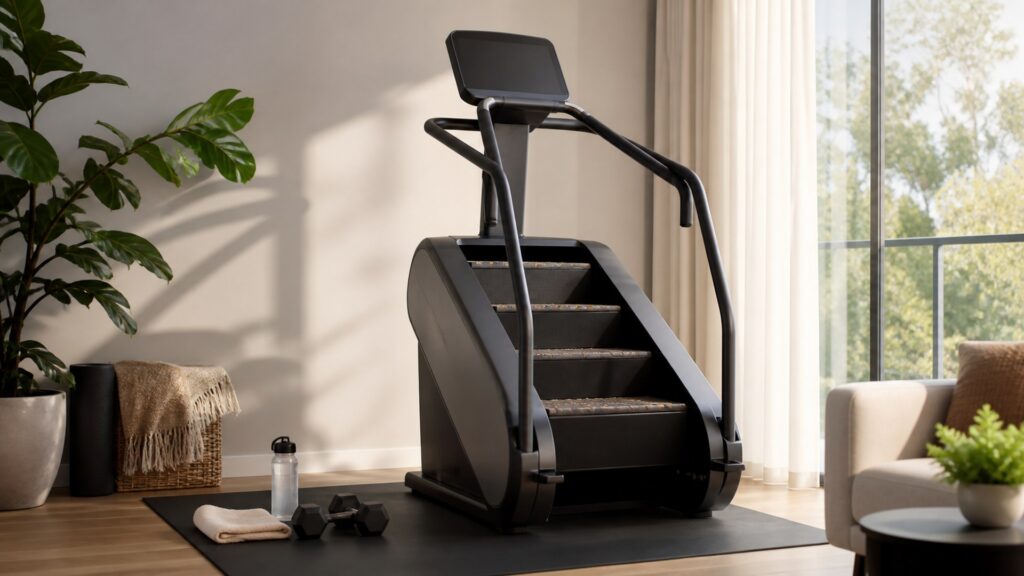
Revolving staircase: Useful when you enjoy continuous climbing and can manage the minimum speed, entry height and moving treads. Confirm that a comfortable easy pace exists before paying for a high maximum rate.
Pedal stepper with hand support: Worth comparing when fixed handles and continuous foot contact feel easier to control. Check the pedal path and support position rather than assuming every stepper feels the same.
Hydraulic mini stepper: May suit brief sessions in limited space, but balance, pedal travel and cooling requirements can limit the routine. Do not assume a compact machine can operate continuously.
Another cardio format: If stepping is uncomfortable or hard to repeat, test another activity. You do not need a stair machine simply because its advertising emphasizes calorie burn.
What to pay attention to
Prioritize control, fit and useful feedback
Minimum pace: The slowest stable setting should let you place your feet deliberately and learn the controls. Numbered levels differ between machines; compare actual movement.
Foot support and access: Wear normal training shoes. Check tread or pedal area, edge visibility, rail reach, first-step height and a controlled exit.
User and operating limits: Stay within the published weight limit and confirm session restrictions. A weight rating alone does not prove body fit or suitability for your weekly use.
Readable measurements: Prefer time and cadence you can read without leaning. Treat calorie output as an estimate, especially when comparing consoles or changing how much you lean on the rails.
Avoid these traps
Avoid buying on a calorie promise
Programs cannot guarantee results: A calorie-program name does not establish an individual outcome. Look at the actual speed changes and whether you can adjust them.
Maximum effort is not the only useful workout: A machine that is too demanding at its easiest setting may discourage use. Buy enough control for easier days and gradual progression.
A higher price does not ensure consistency: A screen may be enjoyable, but cannot fix poor foot support or a difficult mounting step. Compare membership cost with how often you will use the content.
Decision guidance
Try the complete session before choosing
Begin with entry and exit: Ask for the starting and stopping procedure. Check rail reach and control placement before moving at a working pace.
Use an easy demonstration: Notice foot pressure, balance and whether you need to hang on the rails. Stop if symptoms or loss of control occur; this is a fit check, not a fitness test.
Try a small adjustment: Check whether speed or resistance changes are predictable and easy to reverse. You should be able to return to the easier setting without searching through menus.
Consider the next session: Decide where shoes, water and cleaning supplies will go and who resets the machine. Starting again should be straightforward.
Ownership & compatibility
Budget for continued use
Care and downtime: Read cleaning, inspection and cooling instructions before choosing. Ask what happens when a tread, pedal, cylinder or console needs service.
Connected features: Test manual operation and clarify which programs need an account or membership. Avoid building the routine around a subscription you are unlikely to keep.
Gradual progression: Adjust activity to ability and recovery instead of chasing a daily console target. Public-health guidance is a broad reference, not a personalized stair-machine prescription.
FAQ
Stair machines and weight goals FAQ
Can a stair machine help with weight loss?
Which type burns the most calories?
Should I trust the calorie display?
Is a mini stepper enough?
How many minutes should I plan?
Bottom line
Choose the easier routine to maintain
A strong purchase: You can mount, step and stop with control, the easy pace is usable, and the equipment supports your planned session without unreasonable upkeep.
A reason to walk away: Poor fit, an unmanageable starting pace or a promised weight-loss result is doing most of the selling. Extra calorie programs do not fix these problems.
Reading Shortcuts
Use the sections below to check fit, practical constraints and ownership before choosing.
Decision Reminders
Keep these checks in view when comparing finalists.
- Buy a manageable starting pace before extra programs.
- Check footing, rail reach and controlled entry.
- Console calories are estimates, not promised results.
- Match the routine to the operating limits.
Glossary Snippets
Terms that help compare the actual machines.
When to Use a Top 10 Review
Use rankings to find candidates after defining your space, fit and session requirements.
- Look for: Exact-model dimensions, control details and ownership support.
- Then verify: The manufacturer’s manual and a suitable demonstration.
Evidence: CDC physical activity and weight guidance explains the roles of activity, eating patterns and individual variation. Sunny NO. 012 SMART manual illustrates why operating and cooling limits must be checked. Sources reviewed September 24, 2026. No hands-on product test is claimed.
When to Use a Comparison
Use a direct comparison after two or three models meet the basic requirements.
- Fit check: Buy a manageable starting pace before extra programs.
- Cost check: Include delivery, setup, wear parts, service and any subscription.
Keep the exact model and warranty terms alongside the quote so similar names do not hide different specifications.