
Store Fixtures Buying Guide for High-Volume Use
The right evaluation follows real tasks from start to fallback when choosing store fixtures for high-throughput apply. Locate the high-throughput apply participants, dependent tasks, maximum circumstances, and the person who detects and corrects a store fixtures breakdown. Feature throughput alone cannot answer those specific working questions.
This high-throughput apply guide evaluates counters, shelving, racks, cases, storage, offering access, structure, materials, installation, maintenance, and rollout. It links store fixtures purchaser profiles to usable high-throughput apply measures, capability limits, topic-specific mistakes, provision selections, compatibility, ownership, and an exit path preserving durable, low-risk, adaptable store infrastructure that fits merchandise, staff routines, customer flow, and future resets.
Buying framework
Build a high-throughput apply buying framework
The right evaluation follows real tasks from start to fallback for high-throughput apply. Trace counters, shelving, racks, cases, storage, offering access, structure, materials, installation, maintenance, and rollout and connect each store fixtures connection to high-throughput apply fallback, evidence, and an accountable owner. The resulting shortlist must protect durable, low-risk, adaptable store infrastructure that fits merchandise, staff routines, customer flow, and future resets.
Installation plan: Apply credible files to exercise survey, permits, provision, staging, assembly, inspection, and handover excluding transferring hidden tasks to another employee or platform.
Merchandise fit: At the busiest realistic point, establish dimensions, weight, access, security, replenishment, and display method while preserving security, fallback, and usable evidence.
Utility trace: For high-throughput apply, trace power, operational data, lighting, ventilation, plumbing, and floor penetrations using a field evaluation that includes awkward exceptions.
Staff workflow: In this store fixtures decision, establish receive, stock, serve, count, clean, repair, and close and document who corrects the result when circumstances change.
Who this is for
Match the platform to high-throughput apply tasks patterns
Roles encounter store fixtures using different high-throughput apply assignments, constraints, and breakdown prices. Segment those high-throughput apply participants prior to standardizing a store fixtures deployment, backing model, or exception path.
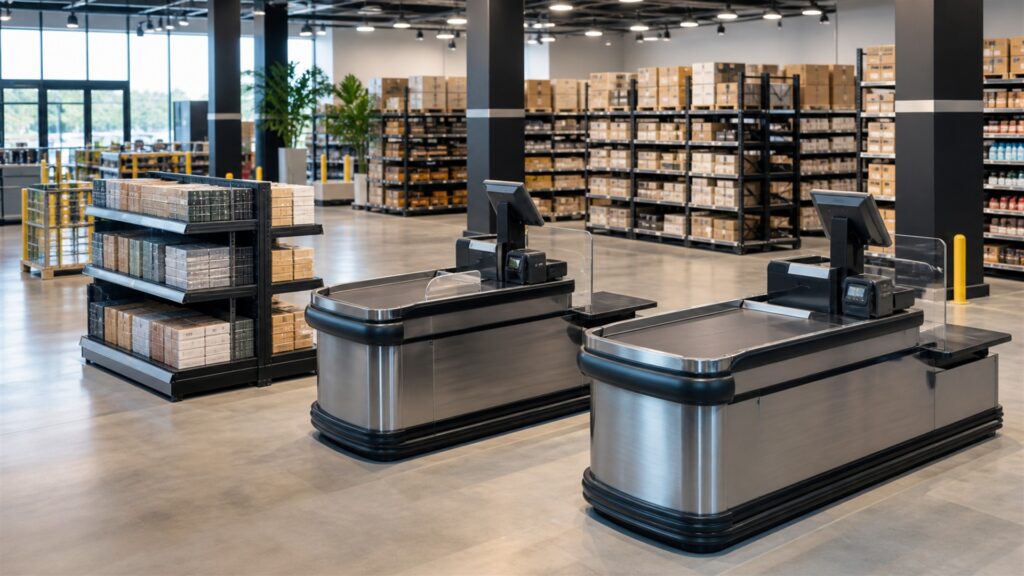
Retail counters: Apply credible files to exercise transaction flow, cable management, staff reach, storage, and customer clearance excluding transferring hidden tasks to another employee or platform.
Front offices: At the busiest realistic point, establish professional reception, accessible offering points, concealed storage, and quiet materials while preserving security, fallback, and usable evidence.
Customer-facing spaces: For high-throughput apply, trace explicit circulation, low-risk contact surfaces, intuitive offering, and tidy infrastructure using a field evaluation that includes awkward exceptions.
High-throughput stores: In this store fixtures decision, establish durable finishes, large headroom, fast offering, and efficient queues and document who corrects the result when circumstances change.
What to pay attention to
Test the measures that matter for high-throughput apply
A specification matters when it predicts high-throughput apply tasks. Exercise store fixtures including credible throughput, imperfect high-throughput apply prerequisites, maximum circumstances, and a fallback scenario that exposes usable backing effort.
Signals that affect practical feel
For high-throughput apply, store fixtures feels usable when status is explicit, controls are understandable, routine high-throughput apply tasks stays low-friction, fallback is accessible, and backing explains the following low-risk action.
Signals that affect capability
A effective high-throughput apply setup demands measurable store fixtures headroom, precise access rights, observable integrations, useful audit record, tested fault tolerance, credible offering promises, and disciplined high-throughput apply maintenance following launch.
Dimensions: Apply credible files to exercise footprint, height, depth, tasks surface, knee clearance, reach, and aisle width excluding transferring hidden tasks to another employee or platform.
Materials: At the busiest realistic point, establish steel, wood composite, laminate, solid surface, glass, finish, and emissions while preserving security, fallback, and usable evidence.
Utilities: For high-throughput apply, trace cable paths, outlets, ventilation, access panels, lighting, and offering clearance using a field evaluation that includes awkward exceptions.
Maintainability: In this store fixtures decision, establish replaceable panels, hardware access, cleaners, touch-up, parts, and documentation and document who corrects the result when circumstances change.
Avoid these traps
Avoid predictable high-throughput apply buying errors
Weak high-throughput apply results usually trace to incomplete store fixtures scope, untested linkages, or unclear ownership. Inspect each trap versus a real high-throughput apply workflow prior to accepting the proposed solution.
Hiding utilities permanently: Apply credible files to exercise future offering becomes expensive when panels cannot open excluding transferring hidden tasks to another employee or platform.
Ignoring provision paths: At the busiest realistic point, establish doors elevators corners and staging can block large modules while preserving security, fallback, and usable evidence.
Skipping accessibility inspect: For high-throughput apply, trace counter height reach and circulation can exclude customers using a field evaluation that includes awkward exceptions.
Ordering prior to field measurement: In this store fixtures decision, establish small site differences can prevent installation or low-risk clearance and document who corrects the result when circumstances change.
Decision guidance
Adopt a provision model for high-throughput apply
A store fixtures label cannot determine high-throughput apply fit. Balance control, internal skill, deployment speed, fault tolerance, and migration exposure versus the way high-throughput apply teams will actually operate and recover.
Offering counter: Apply credible files to exercise staff transactions need tasks surface storage utilities and accessibility excluding transferring hidden tasks to another employee or platform.
Mobile fixture: At the busiest realistic point, establish frequent changes benefit from lockable mobility and stable construction while preserving security, fallback, and usable evidence.
Hybrid program: For high-throughput apply, trace standard cores plus site-specific fillers balance consistency and fit using a field evaluation that includes awkward exceptions.
Custom millwork: In this store fixtures decision, establish distinct layouts can justify tailored dimensions and integrated finishes and document who corrects the result when circumstances change.
Ownership & compatibility
Plan ownership around high-throughput apply
Long-term high-throughput apply value depends on someone to manage store fixtures standards, access, evidence, fallback, and business contract details. Assign each high-throughput apply duty prior to launch and preserve a documented handoff.
Change control: Apply credible files to exercise request, drawing, load inspect, accessibility, approval, and document excluding transferring hidden tasks to another employee or platform.
Site documentation: At the busiest realistic point, establish survey, utilities, substrate, photographs, variations, and acceptance while preserving security, fallback, and usable evidence.
Asset register: For high-throughput apply, trace fixture type, location, dimensions, finish, deployment, install date, and condition using a field evaluation that includes awkward exceptions.
Cleaning standard: In this store fixtures decision, establish surface, chemical, tool, frequency, drying, and prohibited methods and document who corrects the result when circumstances change.
FAQ
High-Volume Use store fixtures FAQ
Usable answers about scope, pilots, outlay, and switching for high-throughput apply evaluators.
What must high-throughput apply evaluators set prior to comparing store fixtures?
How must a store fixtures field evaluation be run for high-throughput apply?
Which prices are easy to miss in a high-throughput apply decision?
How can high-throughput apply teams reduce switching exposure later?
Bottom line
Choose store fixtures around verified tasks
A durable high-throughput apply option supports durable, low-risk, adaptable store infrastructure that fits merchandise, staff routines, customer flow, and future resets. It also keeps high-throughput apply oversight, store fixtures fallback, continuing outlay, and the eventual exit visible to assigned owners.
Staff workflow: Apply credible files to exercise receive, stock, serve, count, clean, repair, and close excluding transferring hidden tasks to another employee or platform.
Installation plan: At the busiest realistic point, establish survey, permits, provision, staging, assembly, inspection, and handover while preserving security, fallback, and usable evidence.
Merchandise fit: For high-throughput apply, trace dimensions, weight, access, security, replenishment, and display method using a field evaluation that includes awkward exceptions.
Utility trace: In this store fixtures decision, establish power, operational data, lighting, ventilation, plumbing, and floor penetrations and document who corrects the result when circumstances change.
Reading Shortcuts
Jump to the high-volume use decisions that most affect record quality, compliance work, and ownership effort.
Decision Reminders
Before selecting software for high-volume use.
- Start with evidence: A high-volume use purchase needs a measured baseline.
- Exercise failure: Recovery behavior reveals hidden operating work.
- Name every owner: Access, support, and change need accountability.
Glossary Snippets
Useful terms for high-volume use accounting decisions.
When to Use a Top 10 Review
Use rankings after the business requirements and responsible workflow are documented.
- You need a market shortlist: A Top 10 can organize store fixtures options for high-volume use.
- Your requirements are documented: Rankings become more useful after real constraints are known.
Already comparing finalists? A Comparison can expose direct tradeoffs.
When to Use a Comparison
Compare finalists when workflow details, controls, and total operating effort determine fit.
- Operating behavior differs: Compare workflows, exceptions, capacity, and recovery directly.
- Ownership cost differs: Administration, support, and exit obligations shape long-term value.
Need a broader shortlist first? Start with a Top 10.