
Swimming Gear Buying Guide for Triathletes
Triathlon swim equipment must work before and after the water segment. A wetsuit that feels acceptable standing may restrict shoulder recovery or rub the neck; goggles must support sighting and expected light; organizer headwear, ankle timing, race clothing, lubricant, and cuffs must coexist; removal must leave the athlete ready for the bicycle without losing equipment.
Use this checklist: 1. read USA Triathlon and event rules; 2. confirm measured water-temperature procedures and wetsuit categories; 3. assess course, supervision, start, and exits; 4. fit shoulder, neck, torso, and cuffs; 5. select sighting goggles and a backup; 6. integrate the event cap, timing chip, tri suit, and anti-chafe product; 7. rehearse removal; 8. map transition placement; 9. practice the swim-to-bike sequence.
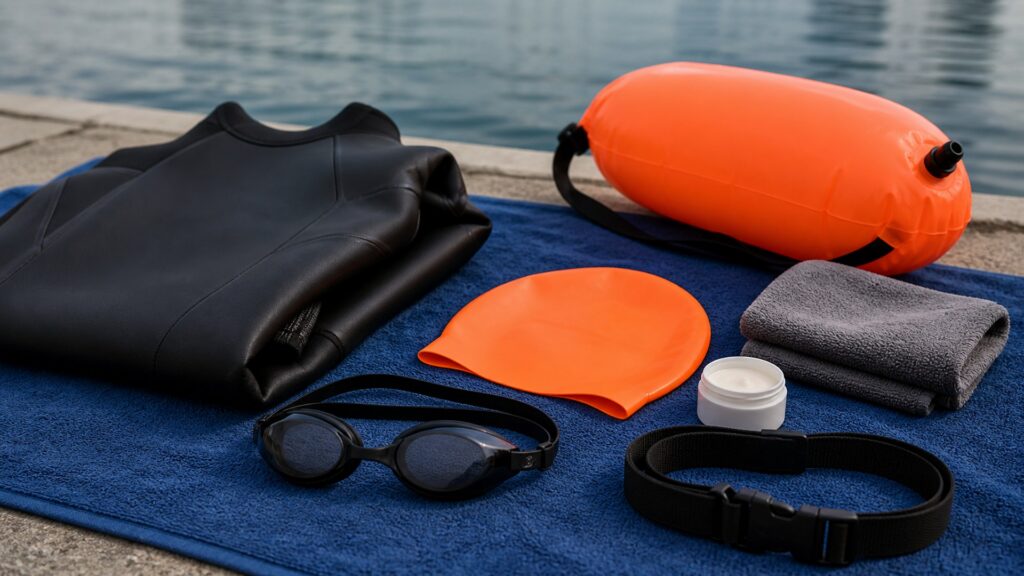
Buying framework
Design one continuous swim-to-bike system
Rules, water conditions, wetsuit fit, sighting, and transition interfaces must be tested together.
1. Read the exact event documents: Save current USA Triathlon rules, the organizer's athlete guide, wetsuit temperature and award-eligibility provisions, course map, start format, required cap, timing-chip instructions, transition policy, cutoff, cancellation process, and any local water advisory.
2. Put conditions before the kit: Assess water temperature as officially measured, weather, current or waves, visibility, water quality, access, supervision, course markings, and exits. Gear cannot make unsafe conditions acceptable or replace the organizer's cancellation and emergency decisions.
3. Fit every body interface: Evaluate wetsuit neck, shoulders, torso, underarms, hips, cuffs, zipper, timing-chip strap, tri-suit seams, goggle seal, cap edge, and anti-chafe compatibility together. One well-fitting item can create friction when layered with another.
4. Map removal to transition: Write the order for cap, goggles, zipper, sleeves, torso, hips, legs, timing chip, and wetsuit placement under event rules. Protect required equipment and keep the path to helmet and bicycle clear.
5. Rehearse the complete sequence: Practice an appropriate supervised swim, exit, orientation, wetsuit removal, bag or rack placement, feet and hands, helmet sequence, and bicycle departure under current rules. Familiarity does not guarantee performance or remove event risk.
Who this is for
Compare triathlon swim product families
Each family affects water fit, event legality, and transition handling, with a limitation that must remain visible.
Full-sleeve wetsuit — best suited for permitted cooler-water insulation: Key criteria are current event temperature rules, shoulder-panel thickness, neck seal, torso length, hip mobility, cuffs, zipper, buoyancy distribution, and removal. Drawbacks include shoulder resistance, chafing, overheating, difficult sizing, high price, and slower stripping.
Sleeveless wetsuit — best suited for permitted shoulder freedom: Compare arm opening and underarm contact, neck, torso, core panels, hip fit, cuffs, zipper, and thermal tradeoff. Greater arm exposure may feel cooler but can increase water entry or skin contact; rules and individual fit still govern.
Sighting goggles — best suited for course-mark visibility: Inspect gasket seal, bridge, field of view, tint, glare treatment, strap retention, event-cap overlap, and backup configuration. Wide lenses may still fog or leak, while dark tint can hinder a cloudy, shaded, or early start.
Tri suit and anti-chafe pairing — best suited for continuous race wear: Check tri-suit neckline, armholes, seams, zipper, pockets, pad, wetsuit lining, topical-product compatibility, and bike posture. Products can stain, irritate, degrade materials, or become slippery; a tri suit may compromise pure-swim feel.
Transition bag and removal aids — best suited for organized handoff: Evaluate event-permitted storage, wet containment, visibility, opening, labeling, rack footprint, and any maker-supplied zipper cord. The drawback is clutter, extra decisions, or prohibited placement when organizer transition rules differ.
What to pay attention to
Translate triathlon details across two disciplines
Specifications should explain event eligibility, swim movement, exit removal, or the interface with bicycle gear.
Wetsuit temperature rule category: USA Triathlon and individual event rules can distinguish wetsuit permission, award eligibility, prohibition, age or special conditions, and measurement procedure. Verify the current 2026 rule text and athlete guide; do not treat a forecast or personal thermometer as official.
Shoulder and neck panel geometry: Read material and thickness maps, then assess recovery, reach, sighting rotation, zipper tension, collar contact, seam position, and breathing. A thin shoulder panel may increase mobility yet offer different durability, warmth, or price tradeoffs.
Cuffs, zipper, and removal: Compare wrist and ankle opening circumference, taper, stretch, seam reinforcement, zipper direction, pull cord, closure, breakaway claims, and care. Test removal without nails cutting the material or the timing chip being displaced.
Goggle tint and backup plan: Choose primary and familiar backup lenses from start time, sun angle, cloud, glare, buoy color, shoreline contrast, and water darkness. Pack both configured under the event cap, while accepting that weather can change after selection.
Event cap and timing-chip interfaces: Confirm whether the supplied cap is mandatory, how personal caps may layer, where goggles sit, which ankle carries the chip, strap closure, wetsuit cuff overlap, and organizer procedures for a lost or malfunctioning chip.
Tri-suit and anti-chafe compatibility: Inspect fabric and zipper beneath the wetsuit, neck and underarm seams, pad water retention, pockets, sunscreen, lubricant ingredients, and maker restrictions. Trial the complete combination within health and return boundaries rather than mixing products on race morning.
Dated rules example: USA Triathlon's 2026 Nationals page says wetsuits are forbidden at 76.2°F or above and mandatory at 60.6°F or below for that championship context. The event expected roughly 60–72°F. These are dated event examples, not universal thresholds; verify current rules, official measurement, division, and organizer decisions.
Avoid these traps
Avoid swim-to-bike interface failures
A legal wetsuit alone does not create a workable course, fit, removal, and transition system.
Buying from an air-temperature forecast: Wetsuit provisions use the event's official water measurement and current rules, not the afternoon air forecast or a swimmer's preferred threshold. Prepare only legal alternatives and follow organizer announcements.
Sizing for compression instead of movement: A suit can feel impressively tight while restricting shoulder recovery, breathing, neck rotation, or removal. Follow the brand method, compare body measurements, and use an allowed trial or rental process before ownership.
Testing the wetsuit without the tri suit: Seams, zipper pulls, pockets, neckline, pad, topical products, timing chip, cap, and goggle straps change the interface. Rehearse the exact layered system rather than evaluating each component separately.
Practicing removal as an isolated trick: Fast stripping has little value if goggles are lost, the chip moves, the suit blocks the aisle, or the athlete reaches the bicycle disoriented. Practice the organizer-compliant sequence from water exit through helmet.
Assuming a wetsuit solves open-water risk: Buoyancy and insulation do not eliminate cold shock, heat, current, waves, contact, contamination, insufficient skill, or medical concerns. Course supervision, rules, conditions, and individual readiness remain independent gates.
Decision guidance
Rehearse the complete triathlon swim handoff
A purchase passes only when its rule, fit, sighting, exit, and bicycle interfaces work as one sequence.
Create the race rule card: Record wetsuit categories and official measurement, required cap, timing chip, warm-up access, start wave, course marks, outside-assistance rules, transition bags or boxes, equipment placement, mount line, cutoff, and organizer communication channel.
Run a layered dry fit: Put on the tri suit, compatible anti-chafe product only as directed, chip, wetsuit, goggles, and cap; inspect neck, shoulders, underarms, cuffs, seams, zipper, visibility, and breathing without overstretching materials.
Complete a supervised sighting trial: In an appropriate controlled setting, test primary and backup lens tints, buoy recognition, head rotation, cap retention, shoulder movement, neck contact, course alignment, and the decision to stop or exit if conditions deteriorate.
Practice exit and stripping: Move from water to stable footing, orient toward the correct aisle, preserve cap and goggles as rules require, open the suit, clear arms, protect the timing chip, remove legs, and place the wetsuit in the designated zone.
Continue through bicycle departure: Confirm feet, hands, vision, tri-suit position, helmet fastening, glasses, number, shoes, wet-gear containment, clear rack space, bicycle control, and mount-line procedure. Modify equipment only after reviewing the entire sequence.
Ownership & compatibility
Maintain the triathlon swim system between races
Wetsuit condition, goggle backups, chip practice, and transition packing need repeatable records.
Inspect wetsuit panels and seams: Check inside and outside surfaces for nail cuts, thinning, seam separation, neck wear, underarm damage, cuff tears, zipper operation, pull cord, closure, and odor. Use only maker-approved repair, cleaning, drying, and storage methods.
Keep two known goggle setups: Document bridge and strap settings for the primary and backup, protect anti-fog surfaces, inspect gasket and frame, and use each in suitable practice. Reconsider tint when the published start time or weather picture changes.
Audit topical compatibility: Retain ingredient and manufacturer information for sunscreen, lubricant, adhesive, and skin products used near the wetsuit or tri suit. Stop using combinations that irritate skin, damage materials, or conflict with current event rules.
Reset transition storage: Rinse and dry wetsuit, tri suit, cap, goggles, chip strap if athlete-owned, towel, and bag by their instructions. Restore labeled positions only after wet compartments are aired and every race item is accounted for.
Refresh rules before registration: Check USA Triathlon's current multisport rules and the new athlete guide for wetsuit temperatures, divisions, equipment, course, transition, and timing updates. Rules or organizer procedures can change between otherwise similar races.
FAQ
Triathlon swimming gear FAQ
Nine answers connect current rules, open-water fit, and transition removal.
When are wetsuits allowed in USA Triathlon events?
Should a triathlete choose sleeves or sleeveless?
How tight should a triathlon wetsuit feel?
What goggles are best for sighting?
Must athletes wear the event swim cap?
Where should the timing chip sit with a wetsuit?
Which anti-chafe product works with neoprene?
How should wetsuit removal be practiced?
Can triathlon swim gear guarantee a safe race?
Bottom line
Approve the swim kit at bicycle departure
The real test continues through open water, exit, removal, gear placement, and the first controlled bicycle steps.
Rule proof: Verify official water-temperature procedure, wetsuit category, cap, chip, and transition policy.
Fit proof: Check shoulders, neck, torso, cuffs, tri-suit seams, goggles, and topical interfaces.
Removal proof: Practice a controlled exit and suit strip without losing or blocking equipment.
Sequence proof: Rehearse the entire swim-to-bike handoff under the current event plan.
Swim-to-Bike Purchase Route
Move through the triathlon swimming decision from conditions to drying.
Wetsuit and Transition Boundaries
Four practical boundaries for triathlon swimming gear.
- Official measurement controls: Forecasts do not decide wetsuit status.
- Fit includes the layers: Test tri suit, chip, cap, and goggles together.
- Removal is an interface: Carry the rehearsal through the bicycle.
- Conditions can cancel: Gear never makes unsafe water acceptable.
Triathlon Swim-Interface Terms
Terms used to compare triathlon swimming equipment.
When a Triathlon Ranking Helps
Open rankings only after the triathlon swimming fit and rule checks are written.
- Best suited for: Filter each family by the swimmer, venue, session, and triathlon swimming job.
- Typical drawback: For triathlon swimming, keep seal, drag, fatigue, storage, cleaning, replacement, and rule limitations visible beside attractive features.
Rule source: USA Triathlon current 2026 multisport rules. Conditions and organizer decisions remain controlling; this guide claims no race compliance or safety guarantee.
Compare Complete Swim-to-Bike Kits
Compare the full triathlon swimming kit, including backups and wet-item handling.
- Fit evidence: When evaluating triathlon swimming, use permitted dry or water trials and the seller's return conditions; do not invent performance evidence.
- Ownership evidence: For triathlon swimming ownership, check policy, material care, drying access, replacement availability, and dated delivered price.
Event-specific temperature context: 2026 USA Triathlon Nationals. Verify the athlete guide, official measurement, category, and updates for the exact race.