
Tires & Wheels Buying Guide: How to Choose the Right One
Tires and wheels are one load-bearing control system. The tire carries weight through air pressure and casing structure; the wheel locates it relative to brakes, suspension, bodywork, and steering. A visually appealing package can still be unsafe or unpleasant when size, load, offset, pressure, or clearance is wrong.
Begin with the vehicle placard and owner’s manual, then record actual use: passengers, cargo, towing, climate, speed, road surface, and seasonal storage. Compare candidates meeting approved size, load, speed, rim, and pressure requirements. Verify brake, hub, fastener, suspension, steering, and full-travel clearance on the exact trim. Preserve TPMS and stability-system function. Choose the narrowest compromise that solves the real grip or durability need while remaining serviceable and replaceable where the vehicle travels.
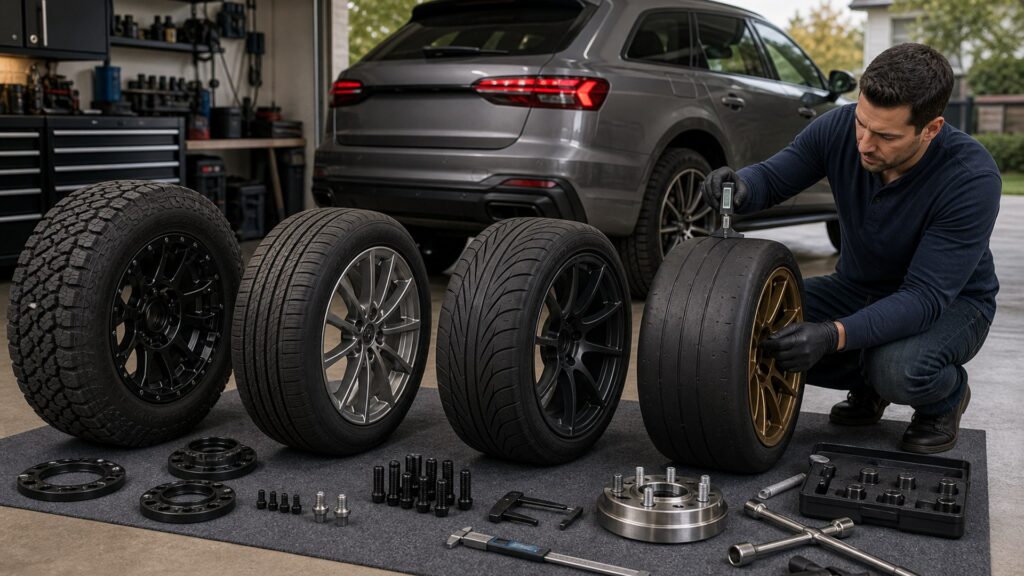
Buying framework
Define the vehicle envelope before comparing tread patterns
Placard requirements, actual load, climate, road use, clearances, and service availability set the boundaries for every tire and wheel choice.
Record the approved baseline: Capture placard tire sizes and cold pressures, manual options, wheel specifications, axle ratings, brake package, TPMS, spare, and fastener details.
Describe the duty cycle: List temperature, precipitation, snow and ice, highway speed, rough roads, towing, cargo, off-pavement use, mileage, noise tolerance, and seasonal changes.
Model the complete geometry: Check tire section and diameter, approved rim width, wheel diameter, width, offset, center bore, bolt pattern, seat, brakes, suspension, steering, and body.
Plan commissioning and ownership: Include mounting, balancing, TPMS, fasteners, pressure setup, alignment, clearance inspection, break-in guidance, rotations, repairs, storage, and replacement availability.
Who this is for
Match tire and wheel type to the dominant condition
Daily commuters, winter drivers, performance users, heavy-load vehicles, and mixed-surface travelers need different compromises.
Year-round commuters: Prioritize wet braking, hydroplaning resistance, temperature range, predictable wear, noise, efficiency, availability, and a realistic winter plan.
Seasonal-climate drivers: Use dedicated sets when weather spread exceeds one compound's strengths, with compatible wheels, TPMS, storage, and changeover timing.
Performance drivers: Value steering response, heat range, braking grip, consistency, wheel strength and mass, while respecting cold and wet limitations.
Heavy-load and mixed-surface users: Prioritize verified load capacity, casing, pressure, chip or puncture resistance, wheel rating, service access, and acceptable road behavior.
What to pay attention to
Specifications that connect the tire to the vehicle
Codes and dimensions matter only when interpreted with the placard, rim, pressure, load, temperature, and real clearance.
Fit and Capacity
Size, rim range, load, speed, pressure, wheel geometry, hub, fasteners, brakes, suspension, steering, and body.
Operating Behavior
Compound, tread, wet and snow grip, heat, noise, ride, rolling resistance, wear, repair, storage, and availability.
Tire size and rim range: Verify section, aspect, construction, diameter, approved wheel-width range, overall diameter, circumference, load, speed, and manufacturer application guidance.
Load at pressure: Use vehicle and tire maker data to ensure capacity at the specified cold pressure supports measured loads; never treat sidewall maximum pressure as the normal target.
Wheel interface: Confirm diameter, width, offset, center bore or centering method, bolt pattern, fastener seat and engagement, wheel load, brake clearance, and hub condition.
Full operating clearance: Inspect steering lock, suspension compression and droop, body roll, brake hoses, liners, chains where needed, packed snow, heat, and tire growth or deflection.
Electronic integration: Maintain TPMS hardware and relearn, correct pressure references, rolling-radius compatibility, stability and ABS expectations, speed display, and driver-assistance calibration where required.
Avoid these traps
Tire and wheel choices that pass a parking-lot fit test
Static mounting cannot prove capacity, dynamic clearance, wet or cold behavior, electronic integration, or serviceability.
Using sidewall maximum as the pressure target: The vehicle placard or approved alternative guidance determines routine cold pressure; the sidewall maximum describes a limit under specified conditions.
Choosing offset for flush appearance: Position changes scrub radius, bearing load, steering effort, debris throw, fender contact, suspension clearance, and tire coverage.
Mixing unlike tires casually: Different construction, size, tread, compound, wear, or seasonal behavior can destabilize braking and cornering and may conflict with vehicle or tire instructions.
Ignoring local replacement supply: An uncommon size or wheel can strand the vehicle, force an incompatible temporary replacement, or make a damaged tire impossible to match mid-trip.
Decision guidance
Choose the package with the fewest unresolved system compromises
Start from approved fit and capacity, then choose the compound, tread, construction, and wheel that best serve the dominant condition.
If winter includes persistent snow or ice: Choose a verified winter strategy—often dedicated winter tires—before spending on wheel diameter, style, or warm-weather response.
If load reserve is small: Weigh the vehicle, use approved load and pressure data, retain wheel and axle capacity, and reduce load rather than relying on a higher sidewall marking alone.
If a size change is proposed: Require documented effects on load, rim, pressure, clearance, gearing, speed, ABS, TPMS, stability, braking, spare compatibility, and legal dimensions.
If replacement access is poor: Favor common supported sizes and serviceable wheels with a planned spare or mobility strategy over marginal performance available only from rare products.
Ownership & compatibility
Commission and maintain the complete set
A correct purchase can still fail through mounting damage, wrong pressure, lost balance, misalignment, unregistered tires, or neglected spare age.
Document installation: Record tire and wheel models, sizes, TINs, positions, pressures, load assumptions, TPMS IDs where useful, balance, alignment, fastener procedure, and installer.
Inspect monthly and after impacts: Check cold pressure, tread, cuts, cracks, bulges, punctures, irregular wear, vibration, leakage, wheel damage, fasteners as instructed, TPMS, and spare condition.
Plan rotations and replacement: Follow allowed patterns, preserve directional and staggered constraints, measure wear by position, register tires, monitor recalls and age, and replace compatible groups.
FAQ
Tire and wheel selection questions
These answers cover size, pressure, load, speed, offset, TPMS, mixing, wheel diameter, and replacement.
Where should I find the correct tire size and pressure?
Can I use a tire with a higher load index?
What does a tire speed rating mean?
How does wheel offset affect fitment?
Do larger wheels improve handling?
Will aftermarket wheels work with my TPMS?
Can different tire brands be mixed on the same vehicle?
What should be checked after a new package is installed?
How do I know when tires need replacement?
Bottom line
The right package fits the vehicle at full load and full motion
Use approved specifications, real conditions, complete geometry, professional commissioning, and disciplined inspections—not appearance or one sidewall number.
Start with the placard: Approved size, cold pressure, load, brakes, TPMS, and manual guidance define the baseline.
Verify the system: Match tire, rim, wheel interface, clearance, electronics, seasonal behavior, and replacement plan.
Maintain the evidence: Document installation, inspect monthly, track wear and age, register tires, and respond early to vibration or damage.
Reading Shortcuts
Move from the operating need to a documented vehicle-envelope package that can be installed and verified.
Decision Reminders
Keep the complete vehicle-envelope package in view while comparing tires and wheels.
- Placard: Size and cold pressure baseline.
- Duty: Climate, surface, load, speed.
- Capacity: Tire, wheel, axle, pressure.
- Geometry: Width, offset, hub, clearance.
- Systems: TPMS, ABS, stability, speed.
- Lifecycle: Mount, rotate, inspect, replace.
Glossary Snippets
Terms that separate useful performance from apparent compatibility.
When to Use a Top 10 Review
Use a product roundup only after the required performance and vehicle-envelope package limits are known.
- Problem defined: The visibility or mobility failure is specific.
- Vehicle mapped: Interfaces and limits are documented.
- Format chosen: The correct product family is settled.
- Evidence available: Finalists can be compared on relevant tests.
Have finalists already? Open a Comparison for a closer tradeoff.
When to Use a Comparison
Compare finalists that solve the same defined vehicle-envelope package need on the same vehicle.
- Application: Both match the exact vehicle and function.
- Performance: Evidence addresses the operating problem.
- Integration: Mounting and system effects are understood.
- Ownership: Inspection and service demands are acceptable.
Need a broader field? Use a Top 10 to form a shortlist.