
Towing, Trailers & Hauling Buying Guide for Farm and Jobsite Use
Farm and jobsite hauling requires more than matching a machine's advertised weight to a trailer GVWR. Attachments, deck point loading, ramp geometry, hitch transfer, soft ground, tight gates, and the unload zone can each control the decision.
Document the working load and the complete route from storage yard to field or site. Then compare trailer architecture, every rating in the chain, loading procedure, restraint, visibility, corrosion exposure, and service access.
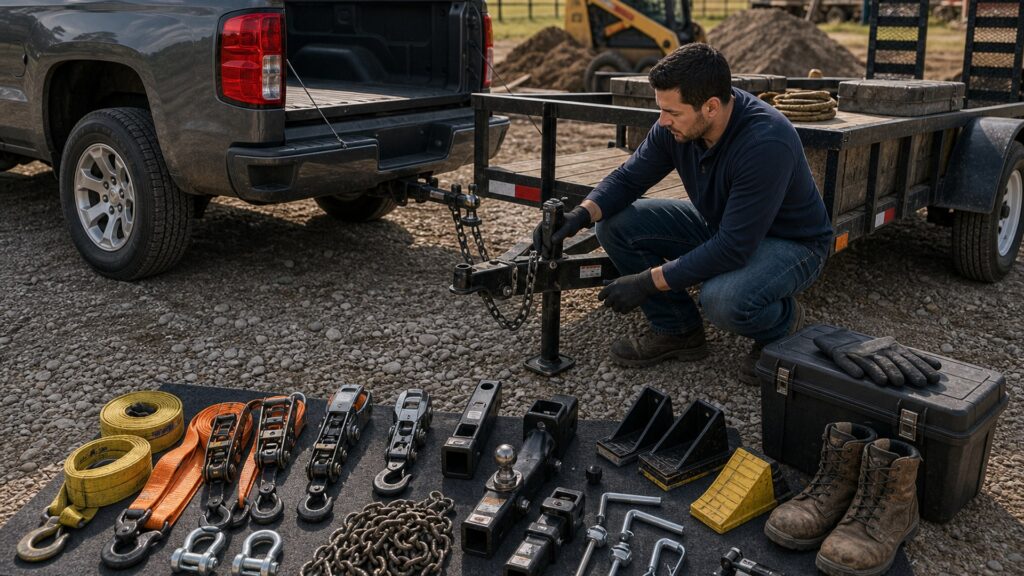
Buying framework
Plan the move from field gate to unload point
Farm and jobsite transport combines road ratings with soft ground, slopes, mud, attachments, changing loads, and people working nearby. Start with the complete operation, not a trailer label.
Inventory the working load: Record the machine, installed attachment, loose attachment, fuel, ballast, tools, materials, chains, spare, and anything kept on the trailer. Use scale or manufacturer data and note width, height, center of gravity, tire or track footprint, and approved tiedown points.
Choose the trailer architecture: Match deck-over, low-deck equipment, utility, dump, or enclosed construction to loading method, side access, containment, height, and unloading. A low deck can improve ramp angle; a deck-over may clear fenders and accept wide material.
Build the rating chain: Compare actual loaded trailer weight with trailer GVWR, axles, tires, coupler, safety components, tow-vehicle ratings, hitch hardware, payload, and tongue or pin transfer. The smallest applicable rating controls even when another component has unused capacity.
Walk the site and route: Check gate width, overhead wires, tree limbs, soft shoulders, slopes, turning space, bridge or road restrictions, traffic exposure, and a level loading zone. Plan where the tow vehicle can remain aligned and where bystanders will stand.
Design loading and restraint: Confirm ramp and deck point-load capability, use a trained spotter where the operation calls for one, lower or lock attachments for transport, and build rated restraint paths at approved points. Plan safe release and unloading before departure.
Who this is for
Match hardware to the work cycle
Different farm and construction loads change deck, ramp, containment, cleanout, and service priorities.
Compact tractors and implements: Measure the tractor with loader, bucket, mower, backhoe, ballast, and other installed equipment. Check length, rear overhang, attachment restraint, ramp breakover, axle placement, deck contact, and whether a low deck improves stability and loading angle.
Skid steers and compact excavators: Dense machines create concentrated deck and ramp loads. Verify track or tire path, ramp rating, bucket and boom transport position, machine-specific securement points, axle distribution, door clearance, and ground support under the trailer during loading.
Bulk material and debris crews: Dump trailers add hydraulic systems, hoist geometry, tailgate clearance, load shift, and elevated-body hazards. Match body volume to material density, use gross and axle weights, stabilize on suitable ground, and keep people clear of the discharge zone.
Mobile service and fencing crews: Tools, compressors, welders, posts, wire, and small machines need inventory control and separate restraint. Prioritize access from the ground, protected storage, ventilation where required, rack load limits, long-material support, and a repeatable end-of-shift check.
Mixed seasonal operations: A trailer that alternates among hay, livestock support equipment, pallets, implements, and cleanup loads needs configurable anchors and documented load plans. Do not assume a successful light load proves suitability for a dense machine or high-centered attachment.
What to pay attention to
Specifications that survive rough sites
Road capability and field usability meet at the deck, running gear, hitch, ramps, and restraint structure.
Load & Geometry
Loaded machine, attachments, deck, ramps, ground clearance, axles, tires, and hitch transfer.
Worksite Control
Anchors, restraints, spotters, visibility, surface support, unloading, inspection, and field service.
Actual empty weight and payload: Confirm the trailer's as-equipped empty weight, then account for ramps, spare, toolbox, winch, battery, tarp, side extensions, and permanent gear. Available payload remains subject to axle, tire, deck, hitch, and distribution limits.
Deck height and ramp transition: Compare deck height, ramp length, hinge rating, approach and breakover angles, ground contact, width between fenders, and traction when wet or muddy. The machine maker may specify loading orientation, attachment position, or prohibited slopes.
Deck and ramp point loading: GVWR does not prove that narrow tires, tracks, stabilizers, pallets, or jacks can load any spot. Verify concentrated-load paths, crossmember support, ramp wheel paths, hinge capacity, and suitable support beneath the trailer.
Axles, tires, brakes, and hubs: Read axle and tire labels, cold-inflation requirements, speed ratings, brake type, breakaway equipment, hub service, and spare compatibility. Field debris, washdown, mud, and long idle periods can make inspection access especially important.
Coupler, jack, and ground clearance: Match the exact hitch system and ball or pin, verify jack capacity and foot support, and inspect departure angle, stabilizers, steps, drains, wiring, and low-mounted components. A trailer that clears the road may still drag at a field entrance.
Anchors and working load limits: Map rated anchors to approved machine points and the directions that must be resisted. Use labeled tiedowns, connectors, tensioners, blocking, and edge protection; the weakest suitable component limits the restraint path.
Lighting, visibility, and field marking: Verify required road lamps, connector circuits, reflectors, conspicuity, license placement, slow-moving-equipment markings where applicable, and backup visibility. Keep lights and reflective surfaces clean after mud, dust, or material discharge.
Avoid these traps
Shortcuts that fail away from pavement
The same combination that looks acceptable in a yard can become unstable on a slope, soft shoulder, or uneven loading zone.
Using machine base weight: Published base weight may exclude cab, tires, tracks, loader, bucket, ballast, fluids, fuel, counterweights, and other attachments. Weigh the working configuration or use complete manufacturer data before sizing the trailer and tow vehicle.
Selecting by GVWR alone: Trailer GVWR cannot override an axle, tire, ramp, deck point, hitch, tow-vehicle payload, or rear-axle limit. Preserve a worksheet showing each loaded value and the exact configuration label used.
Loading on soft or sloped ground: Ramps or jack feet can settle, the trailer can move, and a machine can shift sideways. Use a location and procedure approved for the equipment, control the area, and reposition rather than improvising on unstable ground.
Attaching to convenient metal: Steps, guards, buckets, hoses, handrails, or body panels may not be transport attachment points. Use machine and trailer maker guidance, rated anchors, proper tiedown hardware, and separate restraint for articulated or removable equipment when required.
Releasing before the unload zone is ready: Cargo can roll, articulate, settle, or discharge when restraint is removed. Confirm brakes, chocks, ground, overhead clearance, people, unloading equipment, and sequence before loosening a binder, opening a gate, or raising a body.
Decision guidance
Choose for the controlling jobsite problem
Select the architecture that makes the heaviest, widest, hardest-to-load, or most frequent legitimate task manageable.
If low approach angle controls: Favor a purpose-built low-deck equipment trailer with ramps or tilt geometry approved for the machine. Verify breakover, traction, ramp point loading, tongue transfer, and clearance for mower decks, stabilizers, or low attachments.
If width and side loading control: A deck-over layout may clear fenders and accept pallets or long material from the side, but it raises deck height and center of gravity. Confirm load height, ramp geometry, tie-down access, and forklift or crane procedures.
If unloading bulk material controls: Use a dump design sized by material weight rather than body volume. Compare hoist, battery, hydraulic, tailgate, tarp, cleanout, stability, overhead clearance, and a safe discharge zone on firm, level ground.
If tools must remain protected: An enclosed trailer or service body can improve weather and inventory control, but adds empty weight, wind area, door constraints, ventilation needs, and hidden-load risk. Maintain rated internal restraint instead of relying on walls.
If one trailer serves changing work: Choose adjustable, clearly rated features and create a load sheet for every repeat configuration. Reweigh after adding racks, winches, tanks, spares, sides, or attachments; versatility cannot come from exceeding the weakest limit.
Ownership & compatibility
Keep field equipment ready for the next move
Mud, fertilizer, salt, impacts, washdown, vibration, and seasonal storage accelerate faults that are easy to miss on a parked trailer.
Inspect after harsh use: Check tires, wheels, hubs, brakes, wiring, coupler, jack, chains, breakaway equipment, ramps, hinges, deck, anchors, hydraulics, fasteners, and structural damage. Clean enough to expose cracks, leaks, abrasion, and unreadable labels.
Control corrosion and contamination: Follow material and component guidance for cleaning soil, chemicals, manure, salt, crop residue, concrete, or debris. Dry connectors and storage spaces, protect finishes appropriately, and avoid wash practices that force contamination into bearings or electrical parts.
Maintain load-specific kits: Store labeled chains, binders, straps, edge protection, chocks, blocks, flags, cones, and PPE by application and condition. Quarantine damaged or unidentified components so they cannot return to service during a rushed departure.
Document changes and recurring loads: Keep scale tickets, photographs, anchor maps, maintenance, repairs, tire data, registration, inspections, and operator notes. Recalculate when the machine, attachment, trailer equipment, tow vehicle, route, or loading surface changes.
FAQ
Farm and jobsite hauling FAQ
Answers about equipment weight, ramps, securement, ground conditions, and trailer selection.
Should I size a trailer from the tractor's listed weight?
Can trailer GVWR prove a skid steer will fit?
What makes a ramp suitable for equipment loading?
May I load equipment on a slight slope?
How should an articulated attachment be transported?
Do trailer walls secure tools and materials?
What should I inspect after muddy jobsite use?
When is a dump trailer better than a utility trailer?
Should farm-road towing use the same plan as highway towing?
Bottom line
Choose for the loaded machine and the work zone
A farm or jobsite trailer is part road vehicle, part loading platform, and part work system. Fit all three roles before comparing convenience features.
Measure the working configuration: Include every attachment, tool, fluid, accessory, and permanent trailer addition.
Validate the weakest limit: Check vehicle, hitch, trailer, axle, tire, ramp, deck, jack, and anchor ratings separately.
Control loading and unloading: Use stable ground, trained people, clear communication, and equipment-specific procedures.
Maintain for field exposure: Inspect after impacts, mud, chemicals, washdown, heavy cycles, and seasonal storage.
Reading Shortcuts
Start with machine, material, and site facts.
Decision Reminders
Checks to complete before committing.
- Use loaded values: Catalog empty weight is not the working combination.
- Check every limit: Vehicle, hitch, axle, tire, trailer, ramp, and anchor ratings remain separate.
- Control the work zone: Keep bystanders clear and use trained spotters where required.
- Protect the load path: Use rated anchors, tiedowns, connectors, and approved attachment points.
- Plan the unload: Arrival surface and sequence affect safety.
- Verify requirements: Road, farm, commercial, and jobsite rules vary.
Glossary Snippets
Terms used in this decision.
When to Use a Top 10 Review
Use rankings after the requirements and budget are fixed.
- The mission is documented: Filter candidates against real trips and loads.
- Nonnegotiables are measured: Reject units that fail fit or capacity.
- Ownership costs are estimated: Rank value after recurring costs are visible.
- Evidence is comparable: Use the same configuration and scenario.
Already down to 2–3 options? A Comparison is usually faster.
When to Use a Comparison
Compare finalists under one written scenario.
- Compare fit: Use identical passenger, cargo, route, or load assumptions.
- Compare capability: Read exact labels and configuration data.
- Compare total cost: Include acquisition, use, service, and exit.
- Compare confidence: Review contracts, inspections, safety data, and support.
Still building a shortlist? Start with a Top 10.