
Towing, Trailers & Hauling Buying Guide: How to Choose the Right One
Trailer shopping becomes clearer once the cargo is described as a loaded object rather than a general plan. Its weight, dimensions, center of gravity, ability to roll, exposure to weather, and unloading method determine whether an open utility, enclosed cargo, equipment, dump, or specialty trailer makes sense.
The trailer must then fit a complete road system. Tow-vehicle payload and axle ratings, combined weight, hitch parts, tongue load, trailer running gear, brakes, securement, route clearance, and storage all impose boundaries. Choosing the right one means satisfying those boundaries without buying unused size or mechanisms.
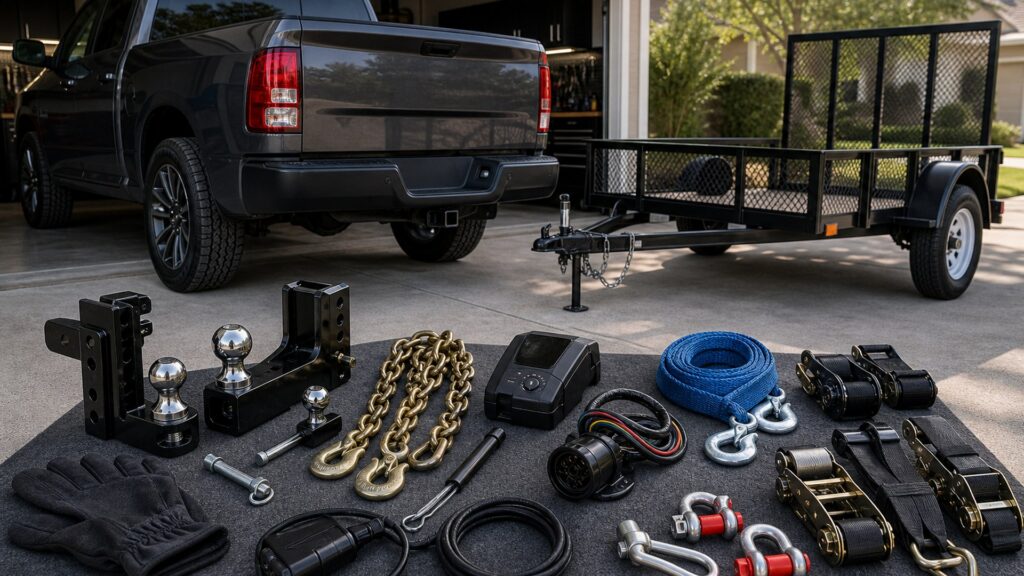
Buying framework
Choose the hauling format before the model
Start with the loaded mission, not the trailer lot. Cargo geometry, tow-vehicle limits, loading method, restraint, and parking narrow the correct architecture quickly.
Describe the heaviest normal load: Record cargo weight, length, width, height, center of gravity, rolling ability, weather sensitivity, value, and unloading method. Design for a credible loaded trip rather than a vague possibility or the trailer's empty trip home.
Confirm the complete rating chain: Match the exact tow vehicle to loaded trailer weight, tongue or pin load, payload, axle ratings, combined rating, hitch components, trailer GVWR, axles, and tires. The lowest applicable limit controls the combination.
Select open, enclosed, or specialized construction: Open utility trailers simplify side access and irregular loads; enclosed trailers add containment and weather protection; equipment, dump, car, and powersports trailers solve specific loading or unloading tasks. Extra structure also adds empty weight, wind area, cost, and storage burden.
Plan how cargo crosses the threshold: Compare deck height, ramp capacity and angle, door opening, fender interference, winch path, forklift access, tie-down reach, and rear clearance. A trailer that carries the weight can still be wrong if the load cannot enter or exit safely.
Test the ownership footprint: Measure parking length, gate width, turn room, hitch height, roof clearance, and off-season storage. Add registration, inspection, tires, hubs, brakes, wiring, deck care, hydraulic service, and security before assigning a budget.
Who this is for
Match the trailer to the repeatable job
The same cargo weight can call for different equipment when loading frequency, weather, security, and unload method change.
Home-project and cleanup users: An open utility trailer with practical side height, removable or folding gates, useful anchor points, and a manageable ramp often beats an oversized enclosed box. Check whether mulch, appliances, mowers, and dump runs share compatible loading needs.
Weather-sensitive cargo movers: Furniture, tools, packaged goods, and event equipment may justify an enclosed trailer. Door dimensions, interior height, ventilation, floor anchors, wall protection, ramp capacity, payload lost to the enclosure, and towing side area matter more than cubic volume alone.
Equipment and vehicle haulers: Cars, compact machines, and powersports equipment need deck and fender clearance, axle placement, approach angle, rated ramps, winch or recovery points, wheel restraint, brakes, and anchors positioned for that machine. Verify attachment points on the cargo itself.
Bulk-material and landscape users: A dump trailer adds hydraulic unloading but also battery, pump, hinge, cylinder, and tailgate maintenance. Match bed volume to material density; a load can fill only part of the box and still reach payload or axle limits.
Multi-purpose and frequent users: Prioritize configurable sides, removable ramps, repeatable anchor layouts, common tire sizes, spare access, parts support, and easy inspection. A slightly narrower mission fit can be better than a complex trailer whose every compromise appears daily.
What to pay attention to
Specifications that define a usable trailer
Ratings establish boundaries; dimensions and systems determine whether the trailer works on the route and at the loading point.
Capacity & Load Geometry
Loaded weights, rating chains, deck or enclosure clearances, ramps, axle placement, tongue load, and restraint access.
Road System & Ownership
Hitching, brakes, wiring, tires, maneuvering, storage, maintenance, paperwork, and security.
GVWR, empty weight, and payload: Trailer payload begins with GVWR minus actual empty weight, but axle, tire, coupler, deck, and distribution limits still apply. Options such as spare mounts, batteries, toolboxes, winches, and added structure consume available capacity.
Axles, tires, and running gear: Confirm axle and tire load ratings, wheel specifications, brake equipment, suspension type, hub service requirements, and spare compatibility. More axles can add capacity and stability but also tire scrub, maintenance, turning resistance, and cost.
Deck or enclosure dimensions: Use clear dimensions, not nominal body size. Measure between fenders, door posts, roof bows, cabinets, ramps, and wheel wells; account for overhang and room to tension restraints without crawling under suspended or unstable cargo.
Ramp and loading system: Check rated capacity, concentrated-load limits, hinge or attachment design, surface traction, length, approach angle, storage, and whether the ramp can be deployed at the actual site. Loading equipment must support the entire loading sequence.
Coupler, hitch, and tongue geometry: Match coupler type and ball size, receiver and mount ratings, tongue height, safety chains, jack clearance, and turning envelope. Weight-distribution or sway-control equipment must be permitted and set up under vehicle, hitch, and trailer instructions.
Brakes, lights, and breakaway equipment: Verify brake type and axle coverage, controller compatibility, connector functions, breakaway arrangement, lamp visibility, grounds, and legal requirements. A working tail lamp test does not prove trailer brake output or emergency function.
Restraint and body features: Evaluate anchor ratings and direction, stake pockets, rails, bulkheads, rub points, interior track, door latches, and the tie-down path around the real cargo. Walls and covers provide containment but do not automatically immobilize heavy items.
Avoid these traps
Trailer-shopping shortcuts that hide a mismatch
Common errors come from comparing a single number while ignoring the loaded system and the places where it must operate.
Comparing empty weight with tow rating: The trailer label's unloaded figure excludes cargo and may exclude dealer or owner additions. Calculate a realistic loaded trailer and the resulting tongue or pin load, then check every tow-vehicle and trailer limit.
Buying the largest deck available: Extra length and width add empty mass, turning sweep, storage space, wind exposure, and sometimes a poorer axle position for small loads. Size for repeat cargo and securement geometry, with enough room for safe loading rather than unused floor.
Assuming enclosure solves restraint: Doors and walls may contain loose lightweight items but can be damaged by shifting heavy cargo. Use rated anchors, tiedowns, blocking, cradles, or other methods appropriate to the load and applicable requirements.
Forgetting the destination: A trailer can fit at home yet fail at a narrow jobsite gate, low garage, steep driveway, crowded launch, or restricted parking area. Map the entire route, including turnarounds, loading clearance, and legal width or height considerations.
Treating maintenance as optional: Long idle periods do not protect tires, bearings, brakes, connectors, hydraulic systems, or wood decks. Inspection and service follow time, exposure, mileage, load, and manufacturer instructions—not only how often cargo is carried.
Decision guidance
Pick the architecture that removes the main constraint
Choose the format whose primary strength matches the cargo and unloading method. Do not pay for structure or mechanisms that solve a problem you rarely have.
Choose an open utility trailer if: You carry mixed household, landscape, or recreational cargo that benefits from side access, flexible height, and easy cleanup. Specify anchors, side configuration, ramp, deck width, and payload around the heaviest repeat load.
Choose an enclosed trailer if: Weather, privacy, theft deterrence, organized shelving, or mobile workspace matters enough to justify added empty weight and side area. Confirm door clearance, interior anchors, ventilation, weight distribution, tow-vehicle capacity, and secure storage.
Choose an equipment or vehicle trailer if: Wheel track, machine weight, approach angle, fender clearance, ramps, winching, brakes, and restraint points must be engineered around rolling equipment. Verify how the machine is loaded, immobilized, and recovered when it cannot move under its own power.
Choose a dump trailer if: Dense bulk material or debris makes powered unloading the central need. Calculate payload from material weight rather than box volume, and include battery, hydraulic, hinge, tailgate, tarp, and cleanup maintenance.
Choose a carrier or rental instead if: The load is light and compact enough for a rated hitch carrier, or rare and specialized enough that renting the correct trailer avoids storage and upkeep. Recalculate vehicle payload and axle load for any carrier or tongue load.
Ownership & compatibility
Keep the trailer ready between infrequent trips
A trailer spends much of its life parked. Storage and pre-trip inspections are part of the purchase, especially for tires, brakes, wiring, hubs, and weather-exposed structure.
Inspect the connection and running gear: Check coupler engagement, safety devices, jack, hitch components, tires, wheel fasteners, hubs, bearings, brakes, breakaway equipment, lamps, wiring, suspension, and frame under the manufacturer's schedule and before use.
Protect the deck, body, and mechanisms: Address coating damage, corrosion, wood deterioration, door alignment, ramp hinges, latches, seals, hydraulic leaks, battery state, and tarp wear early. Keep drains and ventilation clear where the design requires them.
Store for stability and tire life: Park on a suitable surface, secure against rolling and unauthorized use, protect connectors, and follow manufacturer guidance for support and long storage. Verify gate, roof, tongue, and door clearance before committing to a location.
Keep legal and load records: Retain title, registration, inspection, insurance, manuals, option weights, service history, and repeat-load scale tickets as applicable. Documentation makes it easier to spot capacity changes after adding a toolbox, winch, spare, rack, or interior build-out.
FAQ
Trailer and hauling selection FAQ
Answers to practical type, capacity, brake, ramp, and ownership questions.
Should I size a trailer from empty weight or GVWR?
Is an enclosed trailer safer for every kind of cargo?
How much trailer payload do I really have?
Do I need trailer brakes?
What ramp details matter for equipment loading?
Can a larger trailer be easier to tow?
Should I buy tandem axles for occasional home use?
When does renting make more sense than owning?
What should I inspect before every trailer trip?
Bottom line
Choose the trailer around the loaded job
The best trailer is the smallest coherent system that carries, loads, restrains, stops, and stores the real cargo within every applicable limit.
Define the cargo mission: Use credible loaded weight, dimensions, movement risk, weather exposure, and unloading method.
Respect the lowest rating: Vehicle, hitch, trailer, axle, tire, coupler, and tongue limits operate together.
Prove loading and restraint: Confirm ramp geometry, clear openings, anchor paths, and a stable unload sequence.
Accept the ownership footprint: Parking, tires, hubs, brakes, wiring, structure, paperwork, and security remain after the trip.
Reading Shortcuts
Start with the cargo mission, not the model list.
Decision Reminders
Checks to complete before the combination moves.
- Use loaded weights: Empty figures do not describe the trip.
- Check every rating: The lowest applicable limit governs.
- Measure clear openings: Nominal size can hide fenders, bows, and doors.
- Plan the ramp: Capacity and approach angle both matter.
- Verify brakes and lights: Plug fit is not a functional test.
- Secure the cargo: Walls and gates are not universal restraint.
Glossary Snippets
Terms used in this towing decision.
When to Use a Top 10 Review
Use rankings after you know the trailer architecture and non-negotiable dimensions.
- The cargo type is fixed: Compare trailers serving the same loading task.
- The loaded weight is credible: Reject ratings that do not cover the mission.
- The route is mapped: Screen width, height, and maneuvering limits.
- Storage is confirmed: Avoid a trailer with no practical home.
Already down to 2–3 options? A Comparison is usually the faster next step.
When to Use a Comparison
Compare finalists only after both satisfy the tow vehicle and cargo mission.
- Compare usable payload: Include installed options and running gear.
- Compare loading geometry: Review ramps, doors, fenders, and deck height.
- Compare restraint access: Check anchors, rails, tracks, and tie-down paths.
- Compare ownership: Price tires, brakes, hubs, storage, and security.
Still building a shortlist? Start with a Top 10.