
Travel Accessories Buying Guide for Durability and Support
A travel umbrella sold as automatic can still need a separate hand motion to close it fully. The manual for the exact model tells you which motions to expect. Use it to choose controls you’re comfortable with, recognize a problem on arrival, and find out who handles concerns about your order.
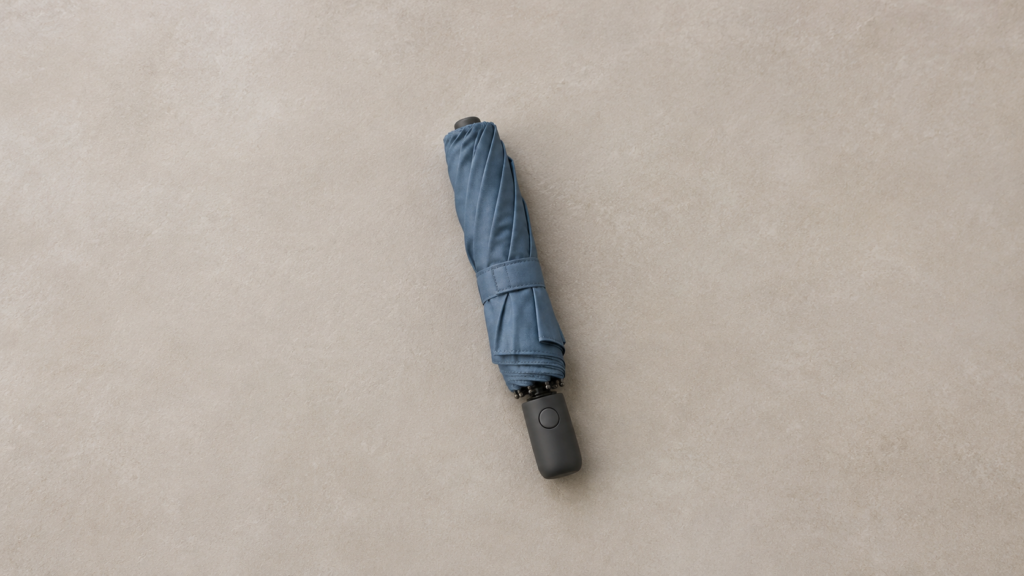
Buying framework
What to look for in a travel umbrella
Start with the instructions for the umbrella you can actually order. They describe the actions you’ll use in the rain and give you a reference if the umbrella behaves differently when it arrives.
Match the model to the manual: Use the exact model name or number from the listing to locate the maker’s instructions. If one guide covers several umbrellas, match the opening and closing mechanism as well.
Read the full closing sequence: Look at what happens after the canopy, the fabric-covered top, folds. Any remaining hand action is part of the routine each time you put the umbrella away.
Make room for ordinary care: Read the drying directions alongside the opening instructions. If the maker specifies drying with the canopy open, you’ll need somewhere to leave it open after getting in out of the rain.
Identify who takes delivery questions: Find the seller named on the listing or at checkout and see where that seller directs buyers with an arrival problem. The maker’s name printed on the umbrella tells you which instructions to look for, while the order identifies who sold it.
Decide before the first button press: The closure strap and button give you the first opening sequence to look for. If keeping an unused-item return option matters, ask the seller how it treats that ordinary opening before you perform it.
Who this is for
Which travel umbrella suits the way you buy and use it
The same compact size can come with different controls. Your choice also changes with who sells the umbrella and how soon you’ll need to rely on it.
You want a button to move the canopy: If you often step from a covered entrance into rain, look for an umbrella whose instructions specify button-operated opening. If you also want the button to fold the canopy when you come inside, look for that action in the directions too.
You prefer to move the canopy by hand: Look for a compact manual model if you want direct control over opening and closing. Read its own directions so you know where to grip and what to move on that model.
You want to put it away as soon as you get inside: Read through the motions that follow canopy closure. If an umbrella asks you to shorten the shaft with your hand, include that step when deciding what you’re comfortable doing at a crowded entrance.
You’re ordering directly from the maker’s U.S. store: Look for the store’s published customer-service contact before buying. Having the channel in hand is useful if an umbrella ordered online arrives with a control that behaves differently from the manual.
You see the same umbrella at more than one shop: Look up how each seller takes reports about a delivered umbrella. If you want to decide whether you like the button and separate shaft action after delivery, check what each shop says about opening an item you may return.
What to pay attention to
Travel umbrella controls and seller terms that matter
The operating guide describes what each control moves. The seller’s published terms help you decide whom to ask if what arrives gives you cause for concern.
What the controls move
Follow the maker’s illustrations through a complete opening and closing. The resting position of the canopy and shaft tells you when the next action is yours.
What the purchase route covers
Read the contact and return pages for the storefront you’ll use. They give you a way to ask how the seller handles an umbrella that arrives with a problem.
The correct instructions for the mechanism: In the example here, the exact product listing identifies an automatic open-and-close folding model. That mechanism matches Section C and Figure C in the maker’s instructions, which cover several umbrella types.
A closure strap and a handle button: The closure strap holds the canopy bundled. The applicable directions have you undo it before pressing the handle button, which opens the canopy.
A folded canopy and an extended shaft: Pressing the button again folds the canopy. The instructions then call for a flat hand to push the shaft, the central stem, together.
The store that sold the umbrella: The example concerns an order placed directly with the maker’s U.S. online shop, which publishes a customer-service email on its contact page. Match a support contact to the storefront and country shown on your own order.
The conditions on ordinary returns: That direct U.S. shop publishes a general return window of 30 days from delivery and calls for an unused item in its original packaging with its original tags. If you’re unsure how the shop treats a first opening, ask before operating the umbrella.
How the store handles coverage: The example shop describes replacement support for approved claims with valid coverage. If the umbrella arrives with an operating concern, ask the store how it handles that condition for your order.
Avoid these traps
Travel umbrella claims and controls that are easy to misread
Compact umbrellas can look alike in a listing even when their instructions differ. Treat the wording of the listing as a starting point and use the manual and purchase terms for decisions about handling and support.
Borrowing the sequence from another umbrella: A similar handle or folded shape can make two umbrellas look as though they share controls. Find the diagram for the exact mechanism before using directions remembered from another model.
Trying to move a button-operated canopy by hand: The directions for the automatic model in this guide prohibit opening or closing the canopy by hand. If you want to move the canopy yourself, choose a model designed for manual operation.
Assuming the whole umbrella closes at once: It’s easy to see the word “automatic” and picture an umbrella that shortens as soon as the canopy folds. Read through to the final illustration so you know when the umbrella is ready for its cover.
Shopping by the fabric or frame label alone: A material name describes part of the umbrella. To judge what you’ll actually do when opening it, look for the release and control shown in the manual.
Relying on the first support page you find: A search for the maker can turn up a contact in a different country or a policy for another storefront. Use the seller and market on the receipt to find the contact that can advise on your order.
Reading ordinary return terms as a case decision: An ordinary return policy gives you a window and conditions to read before handling the umbrella. The seller can tell you how to report an arrival problem and what to do with the item while it considers the issue.
Decision guidance
What to do the first time you open the umbrella
Suppose a compact automatic umbrella arrives from the maker’s U.S. online shop. Its listing matches the automatic folding mechanism in Section C, Figure C of the manual, so that diagram governs the first opening and closing in this example.
If you see damage before opening: Leave the umbrella as it arrived and ask the seller how to proceed. Do the same if you need the seller to clarify how opening it would affect an ordinary return.
If the umbrella appears intact and you can proceed: Release the strap that holds the folded canopy together, then press the handle button as shown in the manual. The expected result is that the canopy opens from that button press.
If the canopy opens as described: When you close it, a second press folds the canopy. The shaft is still extended at that point in the sequence. The manual then directs you to push the shaft together with a flat hand to finish closing.
If the canopy stays folded after the opening press: Stop there and leave the umbrella in the condition you observed. You could report it this way. “The canopy stayed folded when I pressed the handle button with the strap undone.”
If you need the seller to take it from there: Use the shop’s published customer-service contact and identify the exact umbrella and order. Give the short description of what happened and ask how the seller wants you to handle the item.
Ownership & compatibility
Travel umbrella care and help with an order
After rain, follow the care directions for a normally operating umbrella. An arrival problem belongs with the seller, who can give instructions for the specific purchase.
Dry it with the canopy open: The maker of the example umbrella directs owners to leave it open until dry. After coming inside from the rain, choose somewhere it can stay open until it is ready to put away.
Let it air-dry: The care directions advise against extra heat from a radiator or hairdryer. If you need to put the umbrella away again soon, plan for somewhere it can air-dry when you next stop.
Put the cover back on once it’s dry: The maker’s storage sequence puts the protective cover on after the umbrella dries. An umbrella can be folded when you get indoors and still need to come back out of its cover to finish drying.
Keep the order information with the umbrella: For an arrival concern, have the original packaging, tags and order details to hand. Listing the model and order number together helps the seller identify the exact umbrella you received.
Get instructions before sending it anywhere: For the direct U.S. order in the example, start with the customer-service email listed on that shop’s contact page. Ask what the seller needs from you and where the item should go if it requests a return.
FAQ
Travel umbrella FAQs
Find out which instructions to follow and what to ask the store before handling an umbrella that arrives with a problem.
How do I know which diagram to follow in a manual that covers several umbrellas?
Do I undo the strap before pressing the button?
Should the button shorten the umbrella after it closes the canopy?
What if I see a bent part as soon as I take the umbrella out of the box?
Can I pull the canopy open by hand if the button leaves it closed?
Does the example store’s return window start when I order or when it arrives?
Does one ordinary opening count as use under an unused-return policy?
Whom do I contact if my receipt names another retailer or shows a different country?
Can I keep the umbrella in its cover if the canopy is wet?
Bottom line
Choose a travel umbrella you can operate and get help with
Choose how you want the canopy to move at the doorway, then picture the last motion before the umbrella goes into its cover. Before ordering, find the shop’s route for reporting a canopy that stays folded on arrival.
A clear match between listing and manual: Keep the directions for the mechanism on the model you order. An illustrated sequence gives you something concrete to refer to when the umbrella arrives.
Controls that suit how you’ll use it: Picture opening it at the door and closing it once you’re back under cover. Choose the umbrella whose documented motions you’re comfortable doing at both points.
A clear point to leave the item alone: If there’s apparent damage on delivery or the canopy stays closed after the prescribed opening, preserve what you received and let the seller advise on the next step.
A contact that matches the order: Keep the order confirmation and use the published contact for that seller in the country where you bought the umbrella.
An open spot for drying: Plan where a working umbrella can stay open after rain. Put the protective cover back on after it dries, as the example maker directs.
Travel Umbrella Reading Shortcuts
Jump to umbrella buying criteria, the controls, the first-opening decision or a specific care and returns question.
Travel Umbrella Decision Reminders
Keep these details in view when ordering a travel umbrella or deciding what to do when it arrives.
- Manual match: Use the diagram for the exact umbrella mechanism.
- Canopy control: Know whether the canopy moves by button or by hand.
- Shaft action: Find out how you finish shortening the umbrella.
- Delivery condition: Ask the seller how to proceed if damage is visible.
- Seller contact: Use the contact that matches your storefront and market.
- Dry storage: Let a working canopy dry open before covering it.
Travel Umbrella Glossary
Read the terms you’ll see in a travel umbrella manual and on the seller’s return page.
When to Use a Top 10 for Travel Umbrellas
Use a list format when you’re surveying travel umbrella options and still deciding which controls to look for.
- Orient yourself: See which umbrella types the list includes.
- Narrow by controls: Look for models with the canopy movement you prefer.
- Follow up on documentation: Find the exact umbrella manuals for the entries that interest you.
- Identify the sellers: Check who sells the umbrellas you’d like to consider.
Use a comparison to check which umbrellas fold the canopy at the button and what hand motion remains before the cover goes on.
When to Compare Travel Umbrellas
Put the opening and closing diagrams side by side. Keep the shop contact with each listing so you can see which seller would handle a concern about that umbrella.
- Compare the opening action: Look at how each maker says to open the canopy.
- Compare the last closing step: See what you do to shorten each umbrella after folding.
- Compare the care directions: Read how each maker says to dry and store its umbrella.
- Compare seller contacts: See where each proposed seller takes arrival questions.
If the diagrams leave the shaft step unclear, return to a Top 10 to look for folding umbrellas with more complete closing instructions.