
Travel Accessories Buying Guide for Long-Term Value
Before buying a luggage tag, look at what you could keep if your phone number changed or the loop broke. A removable card can make updating your details simple. Replacing a loop takes a documented match and a seller who can supply it on terms that make sense for your suitcase.
Buying framework
Buy for the part you might change
A luggage tag has to carry your current contact details and stay attached to the suitcase handle. How the tag is put together determines what you can keep when either part of that job needs attention.
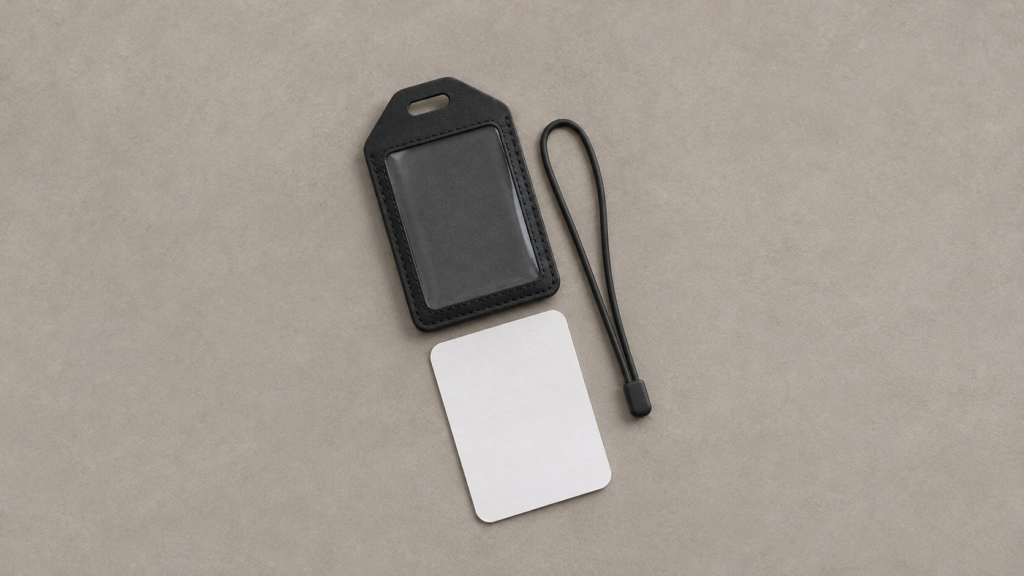
Card, holder and loop: The card carries the writing, the holder keeps the card in place, and the loop joins the holder to the handle. Shop for a complete tag when you need all three to do the job for the first time.
What the initial sale covers: One rigid holder comes with its paper card and names a loop you buy separately. For a first purchase, price the holder and its specified attachment together so you can compare it fairly with a complete tag.
A change you can anticipate: If you expect your contact details to change, favor a pocket with a documented replacement card format. You can plan for the update before you know what the new details will be.
A connection you can identify later: If keeping the holder after a loop breaks matters to you, look for a product listing that names the attachment paired with that holder. The part reference gives you something specific to look up when you need it.
Two kinds of replaceability: A tag can make the information easy to change, the mounting piece easy to identify, or both if each feature is documented for that design. Give priority to the feature that solves the change you are buying for.
Who this is for
Which luggage tag purchase fits your situation?
Use what you already have to narrow the search. Someone with a working tag and an upcoming phone number change can start with a much smaller purchase than someone fitting a tag for the first time.
Your contact details are changing: If the card is accessible, establish whether the pocket has a named card format. A phone number change may then be a matter of preparing a fresh card for the tag already on your suitcase.
The existing writing is hard to read: Your information can still be current even when the writing needs to be recopied. A fresh insert in an accepted format gives you a clean space for the same details.
You already have a suitable blank card: If you have a blank business card ready, look for a tag that explicitly takes that format. An ordinary card on hand is useful when its fit is documented for the exact pocket.
Your holder is missing its attachment: An intact holder and readable card leave you looking for the piece that mounts them. Start with your original holder listing so the search is tied to the version you own.
You are buying your first tag: A bundle that identifies its contents makes it easier to tell what will go on the handle when it arrives. If the listing splits the purchase, budget for both the holder and its named loop.
What to pay attention to
The fit details that matter on a luggage tag
The product page should answer two different fit questions. Read the card details for what can go in the pocket and the holder details for what can attach to it.
Card and holder fit
Start with the pocket opening and the named insert format. Those details tell you whether a fresh card can carry the writing in the holder you plan to keep.
Loop and holder connection
Trace the loop from the holder description to its own listing. That gives you both a documented connection and the terms for buying the piece on its own.
Access to the insert: Look for directions that show how the card comes out and goes back into the pocket. Those directions tell you whether a change to the writing can be made away from the holder.
A named card format: One removable-card sleeve specifies a standard business card as a compatible format. That gives you a known option when you need a fresh surface for your contact details.
Card dimensions and holder dimensions: If a listing gives measurements, look for the ones labeled for the insert or the space it fits into. Outside measurements include the tag body and can lead you to cut a card too large for the pocket.
Holder and loop part references: A holder can have its own product code and name a different code for the loop that attaches it. Read the pairing in the description of your version, then look for that loop code on the separate listing.
The slot where the loop attaches: One slotted holder has a documented loop that passes through its opening. The connection on the holder matters as much as routing the loop around the suitcase handle.
How the loop is offered: Read the sale terms for the exact loop alongside its compatibility details. An individual listing and a listing with a quantity minimum can lead to very different purchases.
Avoid these traps
How shoppers end up with the wrong tag part
A listing can look right at a glance while describing the wrong part or an incomplete purchase. The mistake usually becomes clear when you try to use what arrived.
Cutting a card to the outside outline: A card traced around the holder can catch at the pocket opening. If an insert size is specified, use it before writing out the new card.
Taking a paper insert as a standard size: Paper describes the material. A listing that mentions a supplied paper insert leaves you with a sizing question unless it also states what card format the pocket takes.
Ordering by loop length: A loop can look long enough to go around the carry handle and still leave a question about the connection at the holder. Use length as a cue to look up the documented part pairing.
Moving a part reference between listings: A maker's holder and a retailer's similar bundle can name different loops. Following the second listing for the first holder can leave you with a part whose fit was only documented for the retailer's bundle.
Treating the product photo as the parts list: A photo may show the holder attached as it would be in use. Read the written contents before ordering so a pictured loop sold separately does not leave your new tag sitting unattached.
Taking a cart button as an order confirmation: A product page can display a cart button before you know whether the part can ship to you. If the loop is needed for a particular departure, find out whether that seller can supply it in time before relying on that route.
Decision guidance
When to update the card, buy a loop or replace the tag
Picture one checked suitcase with a tag on its top carry handle. The handle and the job of carrying your current written contact details stay fixed as you weigh two separate tag designs.
Keep the bag and the job fixed: Set aside any reason to change the suitcase or move the tag. The useful comparison is how much of the tag you can still use on that same handle when the writing or the attachment needs attention.
If your phone number changes: With a sleeve documented to take a standard business card, make a fresh card with the new number. The existing holder and working attachment keep doing their jobs, so the only thing you need to supply is the card.
If a loop breaks on a different tag design: Now picture a rigid holder on the same handle, with a sound slot and a readable card. If its listing identifies a separately sold loop by part number, that exact match lets you keep the holder and the writing in place.
If the matched loop has order terms you cannot use: For one maker-specified holder, the separately listed loop comes with a quantity minimum. A different retail bundle names its own loop and gives it an individual listing. Follow the route for the holder you have, and see whether the part can actually be ordered on terms that suit you.
If a complete tag is the better buy: If the required loop is available only on terms that do not work for you, a complete compatible tag can be the more practical order. Compare what you would have to buy for each choice. If you can obtain the documented loop in a useful quantity, keeping the intact holder and card avoids replacing parts you can still use.
Ownership & compatibility
Updating a tag you already own
A card change happens at the sleeve, while a loop change happens where the holder meets the handle. Use the directions for the tag you have so the work stays limited to the component that needs attention.
Keep the purchase details handy: Save the listing or order details that identify the holder version and its specified attachment. Even if the tag itself gives you little to go on later, you will still have the original pairing to look up.
Take out the old card: On the documented removable sleeve, slide the card out before writing on the replacement. With the card in hand, you can copy any details that are still current and replace the ones that changed.
Put the new information back in place: Write the updated details on a card in the accepted format and slide it into the pocket. See that the card sits in the holder as intended and the contact details can be read.
Use the loop directions for that holder: For the documented slotted design, the matching loop goes through the holder opening. Use that part's directions for the connection and return the tag to the same top carry handle.
Look at the tag on the handle: Once the card or loop is in place, look at the whole tag where you use it. You should be able to see that the card stays seated and the attachment is connected at both the holder and the handle.
FAQ
Questions about luggage tag cards and loops
Use these answers to interpret the small details that can hold up a card or attachment purchase.
Is the insert the same as the tag?
Can I write my details on my own card?
Which measurement should I use to prepare a replacement card?
Can I keep my holder if the original loop is lost?
Is a loop in the same length enough to go by?
Where should I look for the exact loop part number?
Does a separate loop listing tell me how many I can order?
What should I ask a seller if the attachment is unclear?
When should I stop looking for a separate loop?
Bottom line
Buy only what restores the tag's job
A tag is worth keeping when its remaining pieces can carry the current details on the same handle. Let the missing or unusable piece determine what you shop for.
Need fresh writing: Choose a card format documented for the existing pocket and keep the working tag on the suitcase.
Need to mount an intact holder: Use the part number paired with that holder and confirm that a seller can supply it in a quantity that makes sense.
Need to start over: If the holder no longer carries the card or accepts its attachment properly, shop for a complete tag that fits the handle.
Buying a complete tag: Count what comes with the tag and what you must order separately. That is the purchase you can weigh against keeping the existing holder.
Save what identifies the purchase: Keep the listing or order record showing the part reference while you still have it to hand.
Guide shortcuts
Go straight to the question holding up your purchase.
Before you order
Keep these details handy when you have the product page open.
- Pocket: Find the named format for the card inside.
- Writing: Use contact details that are current when the tag goes back on.
- Version: Use the code for the holder you are buying or already own.
- Contents: Look for the loop in the written description of the sale.
- Quantity: Read the terms on the separate part page.
- Condition: Look at the slot and pocket before paying for a part.
Luggage tag glossary
These are the terms that distinguish the pieces and the ways sellers offer them.
Browse travel accessory lists
Start here when you are still surveying options across travel accessories.
- Start with the job: For a luggage tag, keep written contact details as your first requirement.
- Read product descriptions: Look for candidates whose listings describe the pocket or name its card format.
- Spot separate parts: Mark candidates that specify an attachment outside the main purchase.
- Narrow the field: Carry forward the options whose contents you can identify.
Use a comparison to judge whether a spare card or a separately sold loop would make either tag easier to keep in use.
Compare travel accessories
Use side-by-side coverage when you already have options and need to tell their features apart.
- What you get: Set an included loop beside a holder that requires a separate attachment.
- What you can update: Compare the card format and access on each documented design.
- What you can replace: Look for the part reference tied to each holder.
- What you would order: Compare the complete purchase with the separate part you actually need.
If you are still deciding which products to put side by side, browse the list pages to find candidates with the card or attachment details you need.