
Travel Clothing & Footwear Buying Guide for City Walking
When a sightseeing day mixes rainy sidewalks with long indoor stops, it can be hard to tell whether your walking shoes need a waterproof upper. Start with the stretch you expect to walk in the rain. Then use the exact shoe’s description to see what it offers for that stretch and which questions still need a try-on.
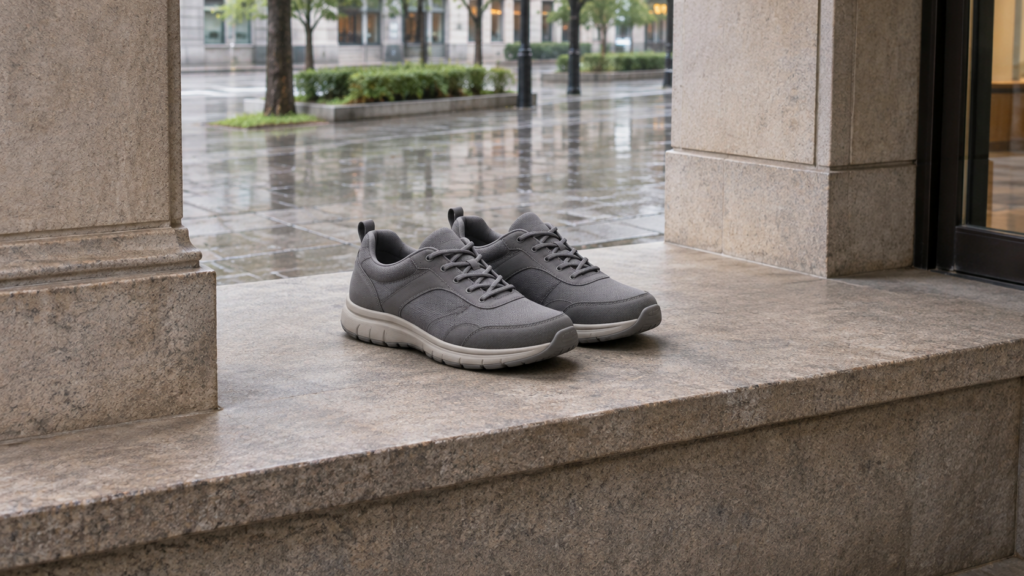
Buying framework
Map the parts of the day you’ll walk
Start with the time you’ll spend outside in the weather you expect. The order of the stops tells you when you’ll face rain, which surfaces you’ll cross and where you could get under cover.
Break the walk at indoor stops: Mark where you’ll head indoors and where you’ll step back onto the street. Two stretches on either side of a museum visit give you two separate windows of outdoor exposure.
Find the longest uncovered stretch: Estimate how long you’ll be outside before you can get under cover again. A single continuous walk in rain gives the waterproof layer a clearer job than the day’s total distance does.
Mark where the surface changes: Note the pavement, crossings and indoor flooring in the order you’ll encounter them. This gives you actual surfaces to ask about when you look into grip.
Count the shelter you can use: A covered path helps when you can reach it and still get to your stop. Check how much of the outdoor walk it would actually replace.
Decide how much rain you’re willing to walk in: If you’ll keep walking in steady rain and want to limit water coming through the upper, use documented waterproof construction to narrow the field. If your plans let you stay under cover, give the feature less weight.
Who this is for
Five ways a city walk can go
A sightseeing day can put you outside through a shower or let you spend most of it behind doors. Where you have room to change plans helps determine how high rain protection belongs on your list.
You have a fixed walk in steady rain: A timed entry can leave little room to wait indoors before the next uncovered walk. Put a shoe with documented waterproof construction on your list if you want protection from rain through the upper.
You can wait out showers or walk under cover: You can pause during a downpour or take an arcade for part of the walk. If the gaps between covered stretches are ones you’re willing to walk in rain, the standard shoe can stay in contention.
Your day is mostly indoors: With brief links between indoor visits, you’ll spend most of the day in the shoes under a roof. Give indoor fit and comfort their own weight alongside whatever rain protection you want between doors.
You can switch to transit: If you’re willing to take transit in rain, work out which part of the walk the ride removes. Give the rain feature weight according to the time you’ll still spend outside getting to and from the stops.
You need the pair again the next morning: A second walking day can make damp shoes more consequential, especially if you’re relying on one pair. Leave room in the plan for the shoes to be damp when you need them again, whichever upper you choose.
What to pay attention to
Read the upper specification for the exact pair
The upper is the part of the shoe above the sole. Two related men’s running shoes illustrate the choice. The maker describes an air-mesh upper on the standard version and documents waterproof construction on the other.
What the manufacturer documents about the upper
Use the two exact product descriptions to tell the air-mesh build from the version with a bonded waterproof layer.
Which outcomes need different evidence
The membrane description explains the purpose of the layer. Personal feel, liquid drainage and grip each depend on evidence beyond the upper specification.
Air mesh on the standard version: The manufacturer describes the standard men’s upper as air mesh intended to provide breathability and structure. Its description gives no airflow measurement or full list of internal layers.
A waterproof membrane inside the upper: The manufacturer specifies a waterproof membrane bonded directly to the upper on the men’s waterproof version. The membrane maker describes the layer as bonded to the inside, and the shoe description leaves the outer fabric unspecified.
The exact style number: Match the listing’s full version name and style number to the manufacturer’s description. The maker identifies the bonded waterproof upper as an addition on the waterproof version, so treat the documented standard version as non-waterproof for this choice.
The scope of the rain claim: The membrane is intended to keep rain from passing through the upper. The product descriptions give no time limit for exposure in ordinary rain, so the claim can guide a shortlist without predicting how dry your feet will stay.
Sweat vapor and liquid water: The membrane maker’s breathability description concerns sweat in vapor form. To judge drainage, you’d need evidence about liquid water leaving the inside of the finished shoe.
Fit and feel across surfaces: The construction descriptions leave open how warm or comfortable each exact pair will feel, how much sweat will build up and how either sole will grip wet pavement or indoor tile. Personal fit remains a separate decision.
Avoid these traps
Where footwear listings can lead you astray
A family name, a mesh photo and a waterproof label answer different questions. Read each one narrowly so you can tell when a listing is missing something that matters for your trip.
Buying by the family name: Retailers can use the same main name for versions with different upper construction. If waterproofing is part of the reason you’re buying, an abbreviated title leaves the key feature unverified.
Assuming visible mesh drains liquid: The listing photo shows part of the outside of the shoe. If getting liquid out matters to you, look for evidence on the full build before choosing a shoe for that job.
Using waterproofing to choose for wet tile: A membrane addresses water passing through the upper. If an indoor entrance with wet tile matters to your choice, a waterproof label leaves that grip comparison unanswered.
Counting on a breathable label for dry socks: The word describes an intended feature, and your own sweat buildup remains uncertain. A shopper relying on that label alone could end up with a shoe that feels different indoors than they expected.
Shopping by distance alone: The total mileage can make a long day under cover look more demanding for rain than a short trip with one fully exposed walk. Locate the miles that actually coincide with the rain you expect.
Applying a rain claim to deep puddles: A documented waterproof upper supports a choice for ordinary rain exposure. The two product descriptions give you no basis for buying either shoe on the expectation that it will keep water out during immersion.
Decision guidance
Choose for the walk between stops
Imagine a roughly 3-mile downtown sightseeing loop from a hotel to a museum, then to a cafe and back. It uses paved sidewalks and street crossings outside and indoor tile at the stops, with ordinary steady rain expected on the middle stretch. The example assumes you’ll avoid deep puddles.
If you’re comparing the whole day, put the stops on the map: Allow 15 minutes from the hotel to the museum, 30 minutes from the museum to the cafe and 15 minutes back to the hotel. Plan on 75 minutes inside the museum and 30 minutes at the cafe.
If cover ends at the museum door, focus on the next half hour: The museum-to-cafe stretch is the longest uncovered part of this walk, and the example has no sheltered alternative for it. That’s where protection from rain coming through the upper would matter most.
If you’re choosing between the two versions, match the builds: The standard men’s version has a documented air-mesh upper, so treat it as the option without a waterproof claim. The related men’s version has a manufacturer-documented waterproof membrane bonded directly to the upper.
If both fit and keeping rain out is the priority, shortlist the waterproof version: The bonded layer has a stated purpose that matches the exposed walk in steady rain. The two indoor stops still leave open how warm or comfortable either shoe would feel, how much sweat would accumulate and how either sole would grip the surfaces.
If the weather or the middle stretch changes, reopen the choice: The standard version can stay on the shortlist if the same loop is dry. It can also make sense if you replace the exposed museum-to-cafe walk with transit and you’re comfortable with the remaining outdoor exposure.
Ownership & compatibility
What to do when your walking shoes are damp
Once you’re indoors, look at where moisture has collected and decide when you need the shoes again. For a wet pair at the hotel, use the manufacturer’s drying guidance and keep the next outing flexible.
Look inside as well as outside: The outside and inside can be damp in different places. That tells you what needs attention, while the source of the moisture may still be unclear.
Give a wet interior time at the hotel: If liquid is already inside, plan around having a wet shoe when you get back. A museum visit or a break at a cafe gives you shelter and an opportunity to reassess the next walk.
Air dry according to the maker’s directions: The maker’s general directions call for stuffing wet shoes with newsprint, preferably plain, and letting them air dry in a cool room away from excess light or heat. Keep them out of direct sun and away from a heater or dryer, and follow any directions supplied with the exact pair.
Check again before you leave: Inspect the inside when you’re getting ready for the next outing. The care instructions provide a method, and the pair’s condition when you need it will tell you whether it’s ready to wear.
Use the experience to plan the next walk: If your socks felt damp, note when you noticed it and look at how much time the next outing puts you in the rain. Damp socks alone leave the cause open, so use what you observed to decide whether to change the amount of time you’ll spend outside.
FAQ
Questions about rain and city walking shoes
Use these answers when a shop listing, a stretch of cover or a damp shoe leaves you unsure what to do next.
Which identifier should I look for on a marketplace listing?
Would the standard version make sense on a dry day?
How much of a partly sheltered crossing counts as exposed?
Does a soaked-looking upper mean the inside is wet?
Does breathable tell me how sweaty I’ll feel indoors?
What evidence would help me compare grip on wet indoor tile?
Can I count on the cafe stop to dry the inside?
Does mesh show that a shoe can drain liquid?
Can the membrane tell me how warm the shoe will feel?
Bottom line
Make the call before you order
Shortlist waterproof construction when you expect to spend a meaningful part of the walk in rain and want to keep it from entering through the upper. The listing tells you which build you’re ordering, and trying on the actual shoe helps you decide whether you want to wear it.
Locate the walk that matters most: Start with the longest part of your sightseeing walk that you’ll have to do in the rain without cover.
Give waterproofing a specific job: Make it a requirement when keeping rain from passing through the upper on that stretch would change what you choose.
Verify the pair in the listing: Match the style number to the manufacturer’s upper description before committing to the rain feature.
Try the exact version in your travel socks: Use the socks you’ll wear on the trip and see how the pair feels as you stand and walk.
Leave time between outings: If you’ll need the same shoes early the next day, keep the plan flexible in case the pair is still damp.
Reading Shortcuts
Find the uncovered walk, read the upper specs or see when the forecast changes the shoe choice.
Decision Reminders
Keep these details nearby when a shopping page claims more than you can tell from the shoe photo.
- Time your exposure: Count how long you’ll walk in rain before you can get inside.
- Trace the covered path: Include the open gaps at crossings and entrances.
- Match the style number: Use the exact version’s upper description to verify the feature.
- Look at the floor ahead: Treat tile and pavement as separate surfaces when reading traction information.
- Read moisture claims closely: Vapor movement leaves liquid drainage unanswered.
- Keep tomorrow flexible: Allow for damp shoes when the next walk starts early.
Footwear Terms for Rainy Walks
Translate the words on the shoe page before you decide what they mean for damp streets or damp socks.
When to Use a Top 10 Review
Start in the Travel Footwear section of the lists index when you’re gathering ideas for a sightseeing trip.
- You’re starting with the itinerary: Browse for candidates suited to paved outings with time indoors.
- Rain is a firm requirement: Look for entries that identify a version with a waterproof upper.
- Your plans can change: Keep candidates for a drier itinerary in view if you can take transit during showers.
- You want pairs to try on: Write down any versions you’d like to try, then look up their construction on the manufacturer’s site.
When you have two finalists, use the comparison index to reach Travel Footwear. Verify each shoe’s upper in its manufacturer listing.
When to Use a Comparison
For shortlisted shoes, browse the comparisons index under Travel Footwear. Check whether any matchup covers the exact versions you’re considering.
- You have two related versions: Compare the style numbers before treating the product descriptions as interchangeable.
- You’ve settled on a rain requirement: Look for a specific waterproof layer in each candidate’s construction details.
- You’ll walk indoors and out: See whether the available traction evidence covers the particular surfaces you expect.
- You still need to try both pairs: Bring any remaining construction questions to the manufacturer’s listings, then try the exact pairs for fit.
If you’re still looking for candidates, browse the Travel Footwear section of the Top 10 lists index.