
Travel Clothing & Footwear Buying Guide: How to Choose the Right One
Buying clothes or shoes for a trip gets easier once you know what your current outfit can handle. Lay out what you’ll wear, match it to the activities and weather on a specific day, and name the one job still uncovered. That gives you a reason to shop and a way to recognize when you can stop.
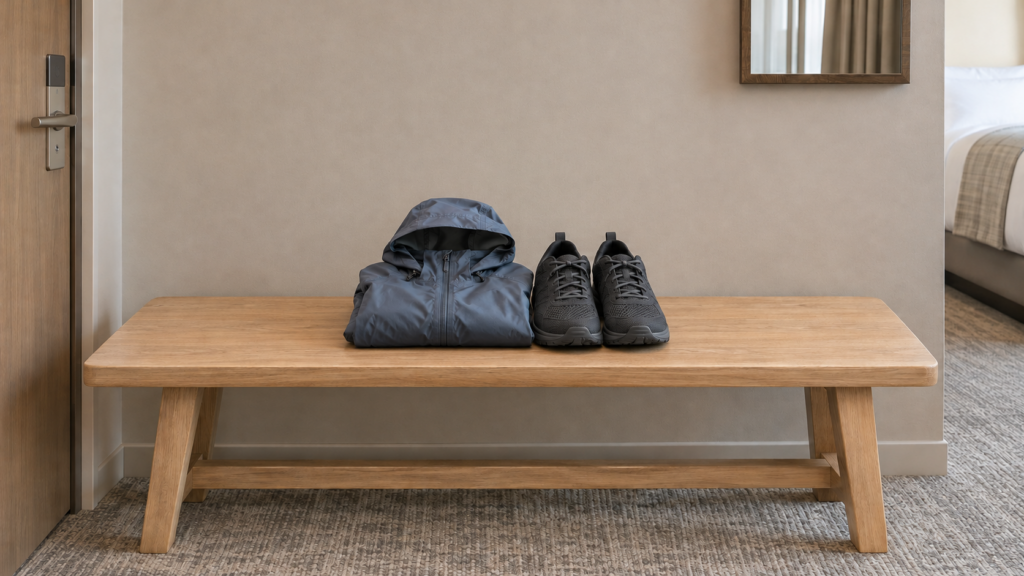
Buying framework
How to find the gap in your travel outfit
A purchase should solve a problem you can point to on the itinerary. Start with the day and the clothes and shoes you’ve picked for it, then work out where you’re asking that outfit to do more.
Put the stops in order: Sketch the day from departure to return, including the time between stops. A stretch outside on the way to an appointment belongs on the plan alongside the appointment itself.
Name what the outfit has to do: Write down what each part of the day calls for, such as clothes appropriate for an indoor visit, shoes suitable for the planned walking, or rain coverage outdoors.
Give each job to an item you own: Put your intended clothing and footwear next to the jobs on that list. If the pair you’ll wear already suits the planned activities, count the footwear job as covered.
Look at the hours you’ll be outside: Use the local hourly forecast for the destination and line it up with the parts of your day outdoors. On a U.S. trip, the National Weather Service’s hourly graph lets you look at precipitation for those hours.
Write the gap as a job: Name the coverage you need, where you need it on the body, and when you’ll use it. That sentence gives you a more precise search term than ‘travel jacket.’
Who this is for
Where to start with the outfit you own
The same itinerary can lead to different purchases depending on what’s in the closet and which stops are fixed. Your starting point determines whether to use what you have, look up an item, or shop for something specific.
You can already dress for the whole day: Your clothes suit the planned stops, your shoes serve the walking you’ll do, and you already have the weather layer you need. Wear the outfit you’ve planned and leave the shopping list empty for that day.
You have a clear rain gap: Rain is in the outlook for a required part of the day outdoors, and the outfit you plan to wear leaves your head and upper body without rain coverage. Look at outer garments whose listings state a rain role and show the coverage you need.
You have a jacket with an unclear role: The jacket in your closet looks like something you might wear in rain. Look up that exact garment first so you can decide whether its listed use and actual coverage resolve the gap.
Your outdoor stop is flexible: The outing that creates the weather need has no fixed start time. Decide when you’ll do it before spending, since moving it can change which part of the forecast applies to your outfit.
Rain is covered and something else is missing: Your outer layer already serves the rainy part, but your clothes fall short of what a planned indoor stop calls for. Shop for the requirement of that stop and judge candidates by how well they address it.
What to pay attention to
What a clothing listing can tell you
Read the product page at two levels. The maker’s description tells you the garment’s stated job, while the construction details tell you what the listing actually shows about coverage.
Stated use and material claims
Identify whether the wording describes a job for the whole garment or a property of one material.
Coverage you can confirm in the listing
Use the listed hood, opening and seam details to establish what the maker documents about the design.
Stated rain use: Look for a description that applies to the finished jacket, such as a maker listing it as waterproof for everyday outdoor outings. A specification for the shell fabric applies to the material named in the listing.
Stated warmth use: A maker may describe a full-zip knit fleece as a layer for warmth. That stated purpose helps you decide whether to consider it, while the weather and the rest of your outfit affect how warm you’ll feel.
Durable water repellent: A durable water-repellent finish, often shortened to DWR, helps water bead and roll off the outer fabric. Read it as a surface treatment and look separately for the maker’s rain claim about the finished garment.
Hood coverage: An adjustable hood is a listed feature you can use to identify head coverage. Look for a hood on the exact garment when covering your head is part of the job.
Front-opening design: A jacket listing may show a snap-fastened flap called a placket over the front zipper. That construction covers the opening, while a zip-through stand-up collar is a feature at the neck.
Treatment at the seams: Seam tape is used to seal fabric joins in some garments, and a maker may describe seam checks in its general testing standard. The exact jacket’s listing is where to look for which seams are treated.
Avoid these traps
Six shortcuts that can send you shopping for the wrong thing
A daily forecast icon or a product category can help you orient yourself. Before either drives a purchase, see whether it answers the specific question your outfit leaves open.
Buying from a daily rain icon: A single icon compresses a day into one symbol. If it drives the purchase, you can end up shopping for rain during hours you plan to spend inside. Line up the local outlook with the time you’ll actually be outside.
Counting a second garment as a second function: A spare fleece adds another garment, but if your outfit already covers the warmth you need, the reason you went shopping is still unresolved. Give a proposed addition a job before it goes in the basket.
Reading surface beading as a whole-jacket claim: Beading tells you about water at the fabric surface. If you make it your only filter, you can stop looking before you learn what rain use the maker claims for the finished jacket.
Assuming the word jacket establishes coverage: A result labeled ‘jacket’ gets you to a garment category. If head coverage is part of your reason for buying, that word still leaves you with a hood to verify.
Sorting by fabric layer count: A layer count describes a construction, so using it as a ranking can send you past a garment with an explicit statement of everyday rain use. Screen for that stated use before comparing construction among candidates.
Replacing shoes when the gap is above them: When your shoes already suit the stated plan, an extra pair adds another purchase and leaves the upper-body rain question open. Revisit the shoes when the itinerary gives you a separate footwear need.
Decision guidance
What to buy when your hotel day calls for rain coverage
Suppose you’re staying at a city hotel and have to walk outside to a scheduled indoor appointment during a period when rain is forecast. The outfit already suits the rest of the day, and the shoes already suit the planned walking.
If the outdoor walk is fixed: The appointment sets the timing for the walk from the hotel. That makes rain on the way there relevant even though the appointment itself is indoors.
If the gap is head and upper-body coverage: Give the new item that specific job. With the outfit and shoes fixed, you can judge the two garment options by what they add on that walk.
If the listing describes a jacket for everyday rain: An outer layer the maker describes as waterproof for everyday outings is a candidate for this walk. The example listing also describes an adjustable hood and a snap-fastened flap over the front zipper, so you can see how the design covers the areas at issue.
If the other option is a general fleece: The extra knit fleece in this example is described for warmth and has a zip-through stand-up collar. Your current outfit already serves that purpose for the day. If you need to buy something for the walk, put the money toward the outer rain layer.
If you already have a rain layer that fills the role: Use the one you own when its documented use and coverage match the job and it’s available for the walk. You can take both new garments off your shopping list for this day.
Ownership & compatibility
Get the rain layer you own ready for the day
An existing jacket is a useful option when you can identify it, confirm the relevant features, and have it on hand when you need it. Do those checks before treating it as a gap in the wardrobe.
Identify the garment in front of you: Use the garment label or a past order to find the exact listing. Similar-looking jackets can have different descriptions, so use the details that go with yours to verify its stated use.
Make sure it will be available: A jacket in your closet can still be at home when you leave the hotel. Set it out with the planned outfit so it makes the trip with you.
Use the hood and front closure: Put up the hood and close the front the way you would before stepping outside. That lets you check the parts you’re counting on are present and usable.
Look up the care directions if beading changes: If the outer fabric has stopped beading as it used to, consult the directions for that exact garment before deciding to replace it. Treat the change as an observation about the surface and leave the garment’s condition open until you can assess it.
Put it where you can reach it: Have the layer at hand before the first exposed walk. If the day changes, look at when you’ll next be outside before deciding whether to take it out of the room.
FAQ
Travel clothing and footwear questions
Use these answers when a listing or a change of plan leaves the purchase undecided.
How specific should my reason for buying be?
What if I can move the outdoor part of my day?
What if the listing says outdoor use and leaves rain unclear?
Is a water-repellent finish enough information to buy?
What if the listing leaves out the hood or closure detail?
Will one choice work for every day of the trip?
When would another fleece be worth considering?
Should I look at new shoes if rain is in the forecast?
Can I decide what to buy before choosing an exact jacket?
Bottom line
Buy for the job your outfit still needs
A useful purchase earns its place during a part of the day you can name. Take that reason to the product page so you can tell when you’ve found a garment that answers it.
Start with the exposed interval: Use the part of the itinerary when you’ll actually be outside.
Give your current outfit credit: Count the clothing and shoes that already serve the planned activities.
Name the coverage still missing: Identify the body area and weather role in the same sentence.
Read the exact garment listing: Look for a stated use that matches the job and construction that shows the coverage you need.
Make one purchase decision: Use an item that covers the job, verify an item whose role is unclear, or buy for the one gap that’s still open.
Reading Shortcuts
Jump to the outfit check, garment specs, hotel-day decision, or a specific buying question.
Decision Reminders
Keep these checks beside the product page when you’re deciding whether to add something to your outfit.
- Use the itinerary: Mark the actual stretch outdoors before buying for a weather icon.
- Count your current clothes: Give each garment a job so you can see what another one would add.
- Keep suitable shoes: Bring an already suitable pair into the plan and shop only when there’s a footwear job left.
- Read the scope of the claim: Look for a finished-garment rain description when rain coverage is the reason for buying.
- Look at the opening and hood: Verify the listed details for the areas of the body you need to cover.
- Locate the layer you own: Make sure the garment you’re counting on will be within reach when you leave.
Rainwear terms on a clothing listing
Use these terms to tell which part of a rain garment the maker is describing.
When to Use a Top 10 Review
Use the Top 10 lists hub to browse by clothing or footwear category once you know what your outfit still needs.
- You’re starting from a clothing role: Choose the matching category on the lists page. For the hotel-day rain gap, start with Travel Jackets.
- The category is broad: Use the job to choose a category before you consider individual products. An indoor clothing requirement could send you to a different category.
- You have one required feature: If you find a promising garment, open the maker’s listing to verify a required detail such as the hood.
- You need a manageable set: Carry forward only the options that address the gap you can name.
Browse the comparison hub by clothing or footwear category when you have a type of item in mind.
When to Use a Comparison
Browse the comparisons hub by category. If you already have specific garments in mind, put their maker listings side by side.
- You’re down to a few options: Put the remaining options side by side against the same itinerary and weather role.
- The coverage details differ: On the maker pages, read how each exact garment’s listing describes the hood or front opening you care about.
- The wording has different scope: Check which claims apply to the finished garment and which describe its fabric.
- One requirement will settle it: Focus on the detail that will change what you wear for that part of the day.
If you’re still identifying the type of garment to look for, use the list hub to browse clothing and footwear categories.