
Travel Comfort Buying Guide: How to Choose the Right One
A seated break on a train can end early because your head has nowhere to rest, the carriage feels too bright, or a low rumble keeps pulling your attention back. The change you want in that moment tells you which travel comfort aid to consider, from a pillow to an eye mask or noise-canceling headphones.
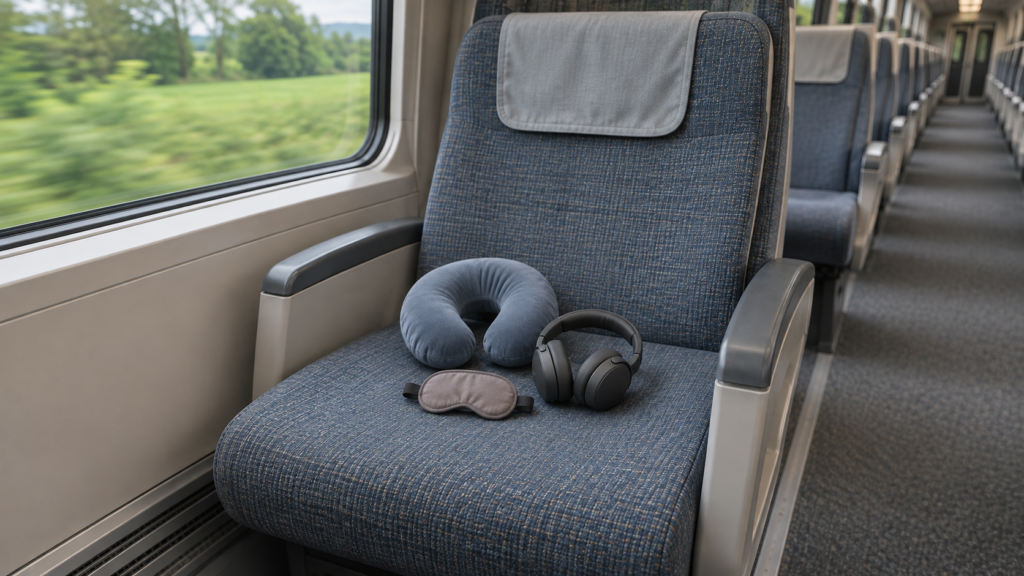
Buying framework
Start with what cuts the break short
Think about the moment you get comfortable enough to pause. What you find yourself doing next can tell you more than a product labeled for travel.
Notice when the break actually stops: Use the moment you sit up, open your eyes or reach for something else to do as your clue. Think about what broke your pause at that point.
Distinguish a passing nuisance: A burst of chatter can grab your attention and then pass. Think about what is still bothering you once that moment is over.
Describe the change you want: Turn a broad wish for comfort into something you could notice, such as having a place to rest your head without propping it on your hand.
Search for the job first: Search for something as specific as a pillow for seated head support. A general search for travel comfort puts several unrelated accessories on the same screen.
Keep the seat itself in the picture: If you can lean back and take the break you wanted with what you already have, leave the shopping list empty. A regular trip can be comfortable with no extra gear.
Who this is for
Which rider sounds like you?
People in the same carriage can notice different things when they stop reading or put their phones away. Some have a clear reason to shop, while others have a nuisance they can live with.
You keep resting your head on your hand: Your attention goes to where your head can settle. The relevant feature is a pillow that gives it somewhere to rest when you sit back.
You keep closing your eyes against the light: The seat already feels fine, and you want the brightness at your eyes to ease. A mask intended to block light addresses that specific part of the break.
The background rumble wears on you: A steady, low sound is what you keep noticing even when nearby passengers are quiet. Look for headphones with active noise canceling (ANC), a mode that can reduce some outside sound.
You keep picking out nearby words: It’s the conversation you can follow that bothers you. If the purchase only makes sense when the words disappear, the noise-canceling label leaves your main question unanswered.
Several things bother you a little: You still get the break you wanted, and each distraction is easy enough to live with. You can leave the seat as it is and take one less thing along.
What to pay attention to
What the product page can tell you
Start with the maker’s description of what the item does and how it’s used. Read any claim about the result within the conditions the maker describes.
The job the aid is designed to do
The first three points identify what to look for in the product description or instructions.
What the product documentation lets you conclude
The last three show where the maker’s description ends and your experience in the seat begins.
Seated head support: Look for a description that explicitly says the pillow supports the head while you sit. That gives you a reason to consider it when the seat offers nowhere you want to rest your head.
A covering made to block light: The relevant description says the mask reduces light reaching your eyes while you wear it. The name “sleep mask” tells you less about that job than the description does.
An active noise-canceling mode: Look for active noise canceling in the manual and see how the maker says to turn it on. The instructions should make it possible to tell when you’re using the feature you bought.
Pillow purpose and personal comfort: A description of support tells you what the pillow is designed to do. Whether that support makes it easier for you to settle into the seat is a personal judgment.
Light blocking and the degree of darkness: A mask’s stated purpose makes it relevant when brightness is the issue. Treat the degree of darkness as a result you’ll judge once you wear it.
Rumble and voices in the documentation: If steady rumble is the problem, look for guidance about it in the manual for the exact headphones you’re considering. If nearby speech bothers you, listen for whether you can still follow the words when that pair’s noise-canceling mode is on.
Avoid these traps
Buying shortcuts that can send you to the wrong item
Labels make it easy to narrow a search quickly. Trouble starts when a label ends up doing the work of deciding what you actually need the item to change.
Replacing an aid that already does its job: A mask might make the carriage dark enough while you still spend the break steadying your head with your hand. Before shopping for another mask, ask what still makes you sit up. The darkness you already have may be enough.
Judging a pillow by a product photo: A photo can show where the item goes on the person pictured. If you’re buying it for seated support, look for that use in the maker’s written description before relying on the image.
Paying for the strongest blackout wording: A bolder claim can steer you toward a mask even when your goal is simply to take the edge off the brightness. Decide how much the wording adds to your decision given what the maker actually explains.
Shopping for silence around conversations: If you buy headphones to take nearby conversation out of the picture, audible words may leave you disappointed even when the low background sound eases. Give the kind of sound that bothers you more weight than the label.
Assuming the headphones are already in the mode you want: A pair can have a noise-canceling feature that needs to be selected. If you judge the headphones with that feature off, you can mistake the setting for what the headphones are capable of doing.
Making a nap the purchase test: A useful accessory can make the carriage feel less bright while you stay awake. If you judge it only by whether you nod off, you can miss the smaller change you bought it for.
Decision guidance
One train seat, three possible purchases
Imagine taking a break in a coach seat on a daytime train. Keep the ride and seat the same through each case and change what gets in the way when you lean back.
Give the break a starting point: Put your reading down and lean back. See what makes you open your eyes or sit up, and whether you can get comfortable again once it passes. Use that pause to judge each of the cases below.
If you need somewhere to rest your head: Suppose you keep shifting your head to find a place to rest while the light and sound feel tolerable. Put a travel pillow designed for seated head support on your shortlist.
If the light keeps ending the break: A bright patch makes you open your eyes. If it passes and you settle again, leave the mask off your list. If the carriage stays bright and you keep giving up on resting, try a light-blocking eye mask and see whether you can stay settled.
If the low rumble keeps intruding: Suppose you’re comfortable leaning back and the light is fine. If the low rumble keeps drawing your attention, consider active noise-canceling headphones and look for model documentation about lower-pitched sound.
If two things share your attention: Imagine the light easing while the rumble continues. If you’d still give up on resting, a mask alone may leave the main problem in place. Now picture the rumble easing while the light stays the same. Start with the change that would let you keep resting. If neither distraction actually cuts the pause short, you can skip both purchases.
Ownership & compatibility
Use the aid for the job you bought it to do
The first time you use it, pay attention to one ordinary change you can judge for yourself. That keeps the first outing focused on what made the purchase worthwhile.
Wear the pillow as directed: Read the wear instructions for the pillow you chose before sitting back with it. Once you have it in place, give yourself a moment to decide whether you have a spot to rest your head.
Cover your eyes when you want less light: Put the mask over your eyes during the pause you had in mind. Notice how bright it feels while you’re wearing it.
Select noise canceling on the headphones: Use the instructions for your particular pair to confirm that the mode is on. Then listen for the low sound that prompted you to choose the headphones.
Make it easy to return your attention to the carriage: Lift the mask when you want to see around you. Take the headphones off when you want to listen directly to something nearby.
Decide whether the change was enough: After the pause, think about whether the original distraction still made you stop, or whether you could settle back with the aid in place. If you could take the break you wanted, there’s little reason to add something else.
FAQ
Travel comfort questions before you buy
A few label and use questions can come up even after you know which kind of aid you want.
Can I use a sleep mask while staying awake?
Can I use headphones I already own for the train ride?
What if the headphone listing just says “noise reduction”?
Will a new travel pillow go on the same way as my old one?
Is a little passenger chatter enough reason to buy noise-canceling headphones?
What if something different bothers me on the return ride?
How should I read a performance figure without much explanation?
How can I tell if a second aid would help?
Does choosing a category tell me which model to buy?
Bottom line
Buy for what keeps cutting the break short
Give yourself a chance to settle back into the seat. If the same thing keeps cutting the pause short, look for the aid that could let you take more of the break you wanted.
Think of the next break: Picture the moment you’ll lean back and want to stop paying attention to the carriage.
Keep the goal observable: Use words that describe what you’d notice, such as less brightness when your eyes are closed.
Pick the category: Keep the pillow, mask, or headphones on the list only when its purpose answers the need you named.
Check the maker’s description: Find the intended use or mode in the description for the particular item you’re considering.
Give yourself an exit: Buy the aid if that change feels worth carrying something for. If you’d happily take the break the way it is, you’re done shopping.
Reading Shortcuts
Jump to the part that helps with your next decision.
Decision Reminders
Keep these points in mind while you look at travel comfort accessories.
- Name the distraction: Think of what gets your attention when you lean back.
- Listen to the character of the sound: Distinguish the low rumble from the words you can pick out.
- Read the intended use: Look for an explicit job in the maker’s description.
- Know which mode you want: Find how your chosen headphones switch noise canceling on.
- Start with one improvement: Pick the change you would welcome most on the ride.
- Leave room to skip it: Carry the accessory only if you want the change enough.
Travel Comfort Glossary
Plain-language meanings for the terms you’ll see while shopping.
When to Use a Top 10 List
A list can help you discover options once you know the kind of aid you want.
- You’ve just picked a category: Use a list to get a first look at the kinds of products sold for that job.
- The product names sound similar: Read the entries by intended use, such as which pillows are described for sitting upright.
- The category is new to you: Note unfamiliar feature names, such as ANC, so you can recognize them in a maker’s instructions.
- You want a short set to research: Save a few relevant names and go to the makers’ descriptions for the details.
If you already have two candidates, a comparison can help you focus on the difference that matters.
When to Use a Comparison
Compare specific options when a difference between them could decide the purchase.
- Two candidates do the same job: Put their descriptions side by side and see how each describes the use you have in mind.
- You still have a question about use: Look at the relevant instructions together when the product pages leave you with a choice to make.
- A feature name is doing too much work: See which option explains that feature clearly enough for you to use it.
- You’re close to choosing: Focus on the one difference that would matter during your seated break.
If you still need candidates, start with a list to see what belongs on your shortlist.