
Walkers Buying Guide for Daily Movement and Home Use
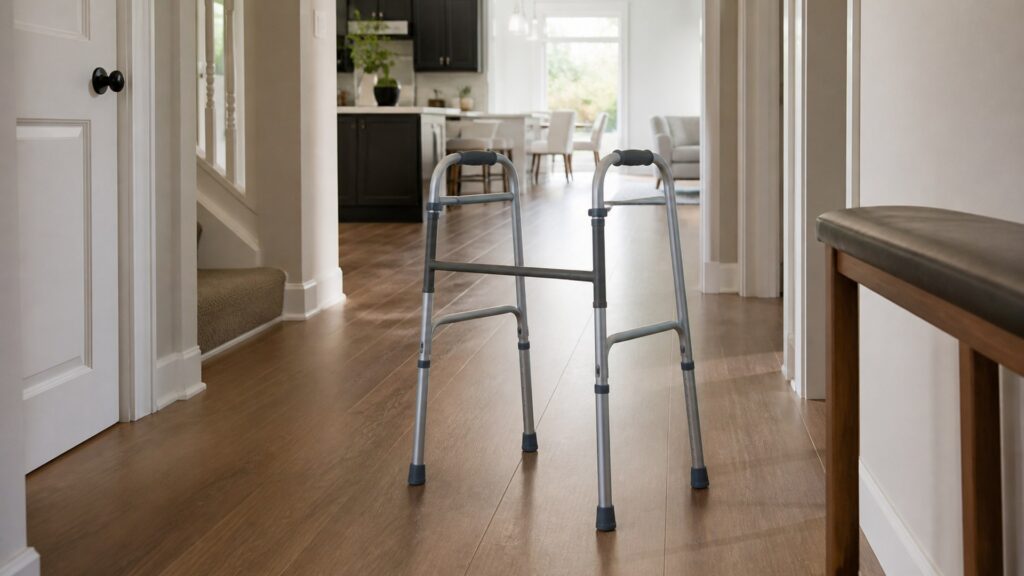
A walker for daily home use has to work in tight, ordinary places: bedroom turns, bathroom approaches, kitchen counters, door thresholds, chair arms, hallway rugs, and the spot where it parks overnight.
This guide turns the home into the buying checklist. It focuses on frame width, turning space, rear contact, folding position, storage location, and safe repeat use from room to room.
Buying framework
Choose around the home's tightest daily route
Home use rewards a walker that fits the real floor plan more than one that looks convenient in a product photo.
Doorway clearance: Measure the narrowest useful opening, including trim, baskets, and furniture that stays in place.
Bathroom access: The frame must park and turn near toilets, sinks, showers, and towel bars without trapping the user.
Floor transitions: Tips, glides, and front wheels should handle rugs, mats, tile edges, and thresholds predictably.
Night placement: The walker needs a reachable parking spot that does not block the next safe step.
Who this is for
Home-focused walker users
These profiles reflect the rooms and routines that usually decide whether a walker gets used comfortably.
Bedroom-to-bath user: Needs predictable handling in the route used when attention may be low.
Kitchen mover: Needs contact parts that do not snag on mats or cabinet toe kicks.
Chair transfer user: Needs a frame that parks squarely near favorite seating.
Small-home planner: Needs open width and storage position checked before buying.
What to pay attention to
Home-use walker checks
The practical specs are the measurements and contact details that decide whether the frame fits daily rooms.
Daily Home Contact
For daily home, contact parts show how this walker grips, slides, rolls, or wears.
Daily Home Setup
For daily home, settings and locks need a clear confirmation routine.
Open width: Compare the full operating width against doorways, hall turns, and furniture gaps.
Turning depth: A walker that passes straight through may still be awkward at bedsides or bathroom corners.
Rear contact style: Tips may grip; glides may travel easier; either can behave differently on rugs and mats.
Folded parking: The folded walker should stand or lie where it will not create a trip hazard.
Cleanable surfaces: Home use brings dust, hair, food spills, and bathroom moisture to grips and feet.
Avoid these traps
Daily home walker mistakes
Home-use mistakes usually come from measuring the walker instead of measuring the routine.
Forgetting the bathroom: The most important clearance may be beside the toilet or sink, not the hallway.
Ignoring rugs: Mats and carpet edges can change how rear glides, tips, or wheels move.
Parking as an afterthought: A walker left in the wrong place can block transfers or nighttime routes.
Adding bulky accessories: Baskets and trays may widen the frame or interfere with counters and chairs.
Decision guidance
Let daily rooms narrow the shortlist
Choose the walker that clears the real route with the least awkward turning, snagging, lifting, or parking trouble.
If the bathroom is tight: Prioritize open width and stable parking over larger accessories.
If rugs are unavoidable: Compare rear contact parts for drag, catching, and stopping confidence.
If storage is limited: Check the folded shape in the closet, bedroom corner, or vehicle area.
If routines vary: Choose a frame that caregivers can inspect and reposition easily.
Ownership & compatibility
Keep the home route workable
Daily walker ownership includes route checks, floor-contact inspection, and removing small obstacles before they become regular hazards.
Recheck rooms: Moved furniture, new rugs, or seasonal clutter can change walker clearance.
Clean contact parts: Hair, grit, or moisture on tips and glides can change how the frame moves.
Maintain parking habits: Keep the walker in the same reachable place when the user sits, sleeps, or transfers.
FAQ
Questions buyers ask about walkers buying guide for daily movement and home use
These answers focus on the daily home decisions that affect walker fit, contact, setup, and safe use boundaries.
What is the most important home measurement?
Are narrow walkers always better indoors?
Do rugs make walker choice harder?
Where should a walker be stored at home?
Are trays useful for home use?
What contact parts work best on tile?
How should caregivers check a home walker?
Can a walker be used in the bathroom?
When should the home setup be changed?
Bottom line
The home route decides the walker
A good daily walker fits the rooms, clears the turns, handles the floor transitions, and has a parking spot that keeps the next movement safe and repeatable.
Measure real paths: Bathrooms and chair approaches often matter most.
Watch floor contact: Rugs, mats, and thresholds change movement.
Plan parking: The walker should be reachable without becoming an obstacle.
Reading Shortcuts
daily-home checkpoints.
Decision Reminders
Before choosing: daily-home.
- Control: Confirm walker control in use.
- Fit: Measure body contact points.
- Surfaces: Check the expected floors.
- Wear: Inspect replaceable parts.
- Storage: Park it without clutter.
- Guidance: Ask about clinical limits.
Glossary Snippets
walker terms for daily-home.
When to Use a Top 10 Review
Ranked picks after daily-home.
- Shortlist: Compare after fit decisions.
- Filter: Use daily-home priorities.
- Complaints: Watch repeated fit issues.
- Upkeep: Check replacement details.
For daily-home finalists, use Comparison next.
When to Use a Comparison
Compare close walker options.
- Fit: Check measurements side by side.
- Control: Compare brakes and contact.
- Storage: Match the real location.
- Care: Review wear and cleaning.
For broad daily-home shopping, start with Top 10.