
Walkers Buying Guide for Travel and Storage Planning
Travel and storage change the walker decision because the frame has to fold, load, reopen, and return to the correct setup without becoming damaged or confusing.
This guide focuses on folded depth, latch security, vehicle loading, removable glides, tip protection, closet parking, and the checks needed before the walker is used again after transport.
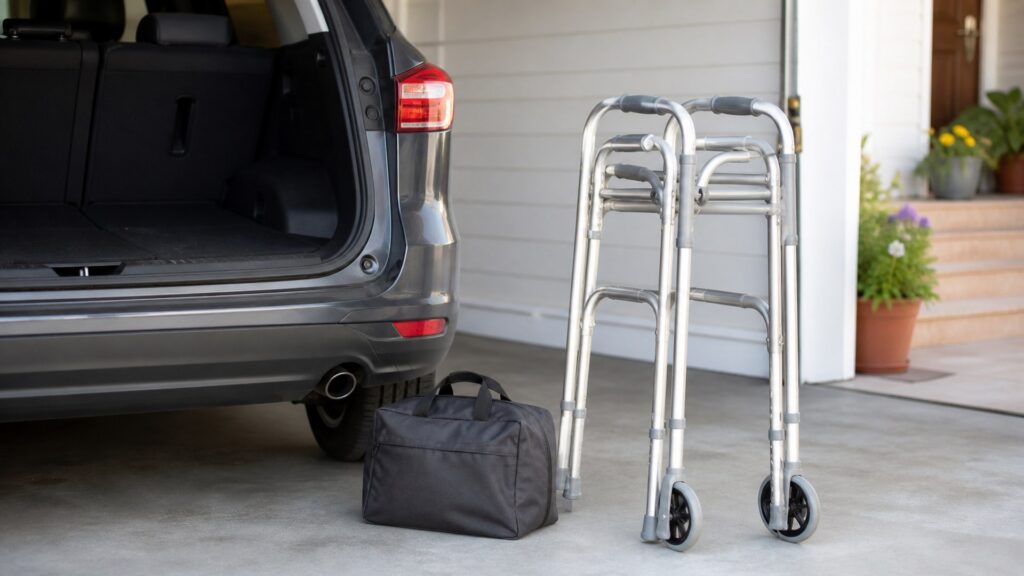
Buying framework
Choose a walker that travels without losing setup
A travel-ready walker should fold cleanly, fit the storage space, protect contact parts, and reopen with the same height and frame alignment.
Fold behavior: The latch should be obvious, secure, and easy to confirm after the walker is reopened.
Loaded shape: Check the folded width, depth, and protruding legs against trunks, rideshare seats, closets, and clinic corners.
Part protection: Tips, glides, and wheels should not bend, tear, or collect debris during transport.
Setup recovery: The user or helper must be able to confirm height, buttons, and alignment before walking again.
Who this is for
Walker buyers planning storage or travel
These profiles focus on handling the walker away from its usual route.
Car traveler: Needs a folded frame that loads without twisting legs or scraping tips.
Closet storer: Needs a predictable parking shape that will not fall or block access.
Clinic visitor: Needs fast reopening and visible locks after appointments.
Helper loader: Needs obvious handholds and a weight that can be managed repeatedly.
What to pay attention to
Travel and storage specs that matter
The relevant details are the folded footprint, latch clarity, part durability, and ability to restore the walker before use.
Travel Storage Contact
For travel storage, contact parts show how this walker grips, slides, rolls, or wears.
Travel Storage Setup
For travel storage, settings and locks need a clear confirmation routine.
Folded dimensions: Measure the actual storage space, including door swing, trunk lip, and nearby bags.
Latch design: A latch that looks closed but is not fully engaged can create a dangerous surprise.
Frame weight: The helper or user must lift and position the walker without grabbing unstable parts.
Tip and glide exposure: Contact parts should not be crushed under luggage or scraped along pavement.
Reopening check: The walker should return to square alignment without forcing or guesswork.
Avoid these traps
Travel and storage mistakes
Most travel problems come from treating folding as the final step instead of the midpoint between safe uses.
Measuring only open width: A walker can fit the home but fail the trunk, closet, or appointment waiting area.
Ignoring protruding parts: Rear tips, wheels, and handles may catch even when the folded frame seems narrow.
Forgetting reassembly checks: Height buttons and latches should be confirmed after every transport event.
Overloading the frame: Do not use the folded walker as a hook, rack, or luggage brace.
Decision guidance
Narrow the choice by the storage event
Choose the walker around the hardest recurring storage moment, whether that is a car trunk, closet, clinic visit, or shared living space.
If car loading is frequent: Prioritize folded shape, manageable weight, and protected contact parts.
If closets are tight: Check whether the folded frame stands, lies flat, or needs wall support.
If helpers rotate: Choose clear latches and visible settings that different people can verify.
If trips are occasional: Still inspect the frame after transport before returning to normal use.
Ownership & compatibility
Inspect after every travel or storage change
Travel can shift the exact parts that make a walker safe: locks, height buttons, tips, wheels, glides, and frame alignment.
Look at contact parts: Remove grit and check for tears, flattening, or missing pieces before use.
Confirm the latch: Open the frame fully and verify the folding mechanism is locked.
Check straightness: Bent legs or uneven feet can appear after loading even when no part is broken.
FAQ
Questions buyers ask about walkers buying guide for travel and storage planning
These answers focus on the travel storage decisions that affect walker fit, contact, setup, and safe use boundaries.
What makes a walker good for travel?
Should I choose the lightest walker for travel?
How do I measure a walker for a car?
Can folded walkers be stored upright?
Do glides travel well?
What should I check after a trip?
Are bags and trays helpful for travel?
Can a walker be checked during air travel?
When is travel storage a bad fit?
Bottom line
Travel planning ends when the walker is ready again
The best travel-and-storage walker folds, fits, survives handling, and reopens into a verified setup before the user depends on it.
Measure folded reality: Storage spaces fail on protruding parts, not just total width.
Protect the contact points: Tips, glides, and wheels deserve inspection after loading.
Reopen deliberately: Locks and height settings must be confirmed before walking.
Reading Shortcuts
travel-storage checkpoints.
Decision Reminders
Before choosing: travel-storage.
- Control: Confirm walker control in use.
- Fit: Measure body contact points.
- Surfaces: Check the expected floors.
- Wear: Inspect replaceable parts.
- Storage: Park it without clutter.
- Guidance: Ask about clinical limits.
Glossary Snippets
walker terms for travel-storage.
When to Use a Top 10 Review
Ranked picks after travel-storage.
- Shortlist: Compare after fit decisions.
- Filter: Use travel-storage priorities.
- Complaints: Watch repeated fit issues.
- Upkeep: Check replacement details.
For travel-storage finalists, use Comparison next.
When to Use a Comparison
Compare close walker options.
- Fit: Check measurements side by side.
- Control: Compare brakes and contact.
- Storage: Match the real location.
- Care: Review wear and cleaning.
For broad travel-storage shopping, start with Top 10.