
Walkers Buying Guide: How to Choose the Right One
A walker decision starts with the movement pattern: lift-and-place support, front-wheel rolling, or a frame built for a larger body. The right pick depends on how the user starts, stops, turns, and clears ordinary rooms.
This guide compares walker styles without treating the frame as a substitute for clinical advice. Use it to understand tips, wheels, glides, hand height, folding hardware, and home clearance before comparing extras.
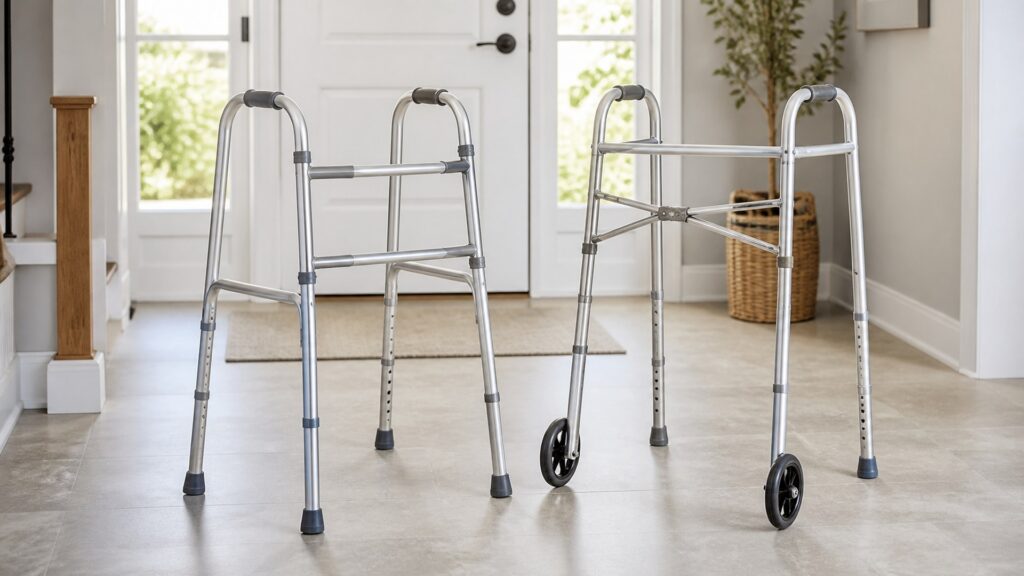
Buying framework
Choose the walker style before judging features
The first decision is how much the frame should move between steps. Once that is clear, handle setup, rear contact, width, and folding details become easier to judge.
Movement pattern: Standard walkers pause firmly, while front-wheel versions trade some fixed stopping for easier forward progress.
Floor contact: Rubber tips, rear glides, and front wheels create different start-and-stop behavior on tile, carpet, thresholds, and mats.
Body position: Handle height and frame depth should let the user stand inside the support area without reaching ahead.
Boundary check: Surgery recovery, fall history, dizziness, or weight-bearing limits belong with a qualified professional before purchase.
Who this is for
Walker buyers sorting the main styles
These profiles help separate broad walker choices before narrowing to model details.
Pause-and-place user: Needs the frame to settle before each step and values firm rubber contact.
Front-wheel user: Needs less lifting effort but still wants rear contact that does not slide unexpectedly.
Home route checker: Needs the frame to fit doorways, bathroom turns, bedsides, and favorite chairs.
Recovery buyer: Needs the walker category to match the gait instructions already given by care staff.
What to pay attention to
Walker details that change daily use
Useful specifications explain how the frame behaves in the user's route, not just how it looks in a product photo.
General Choice Contact
For general choice, contact parts show how this walker grips, slides, rolls, or wears.
General Choice Setup
For general choice, settings and locks need a clear confirmation routine.
Handle range: Adjustment holes should put both grips at a repeatable level that keeps shoulders relaxed.
Rear contact: Plain tips grip more firmly; glides reduce drag but can change control on slick floors.
Folded shape: A latch that closes clearly matters if the walker moves between rooms, vehicles, or closets.
Frame footprint: Overall width and depth must match the tightest practical passage, not the widest hallway.
Capacity and rigidity: Weight rating should be considered with frame flex, cross-brace design, and stance width.
Avoid these traps
General walker buying mistakes
Most poor choices come from comparing convenience features before confirming the basic support behavior.
Treating all walkers alike: A standard frame, two-wheel walker, and bariatric frame solve different movement problems.
Ignoring the rear legs: Rear tips or glides decide whether the frame stops cleanly after the front moves.
Buying from folded size only: A compact folded walker may still be too wide or awkward while open.
Guessing on medical limits: The product listing cannot decide gait pattern, allowed weight bearing, or fall-risk precautions.
Decision guidance
Narrow the walker by the first real constraint
Use the first likely failure in the user's route or body position to shrink the shortlist.
If lifting is hard: Compare front-wheel walkers before adding accessories to a standard frame.
If stopping is the worry: Prioritize secure rear contact and a frame that feels planted between steps.
If rooms are tight: Let bathroom access and chair approaches decide the maximum frame width.
If recovery rules apply: Confirm walker type and setup before ordering a different style for convenience.
Ownership & compatibility
Keep the walker predictable after purchase
Walker ownership is mainly about inspection, repeatable adjustment, and keeping contact parts in usable condition.
Check tips and glides: Replace worn, cracked, loose, or uneven contact parts before they change control.
Confirm both sides: Height buttons should protrude fully and match on the left and right legs.
Park it deliberately: Store the frame where it will not block nighttime routes or bend while folded.
FAQ
Questions buyers ask about walkers buying guide: how to choose the right one
These answers focus on the general choice decisions that affect walker fit, contact, setup, and safe use boundaries.
Which walker type should I consider first?
Are two-wheel walkers safer than standard walkers?
Do rear glides matter?
How much should frame width matter?
Can accessories decide the best walker?
When should I ask a clinician?
Is a bariatric walker only about weight capacity?
How do I compare walker weight?
What should be checked after delivery?
Bottom line
Pick the frame that matches the user's movement
The right walker makes the support pattern clear: how the frame moves, where it stops, how it fits the body, and whether it clears the spaces used every day.
Start with motion: Decide between fixed placement and easier rolling before shopping extras.
Prove the fit: Check grip height, stance, and room clearance in the intended spaces.
Respect care limits: Use professional guidance for gait, recovery, and fall-risk questions.
Reading Shortcuts
general-choice checkpoints.
Decision Reminders
Before choosing: general-choice.
- Control: Confirm walker control in use.
- Fit: Measure body contact points.
- Surfaces: Check the expected floors.
- Wear: Inspect replaceable parts.
- Storage: Park it without clutter.
- Guidance: Ask about clinical limits.
Glossary Snippets
walker terms for general-choice.
When to Use a Top 10 Review
Ranked picks after general-choice.
- Shortlist: Compare after fit decisions.
- Filter: Use general-choice priorities.
- Complaints: Watch repeated fit issues.
- Upkeep: Check replacement details.
For general-choice finalists, use Comparison next.
When to Use a Comparison
Compare close walker options.
- Fit: Check measurements side by side.
- Control: Compare brakes and contact.
- Storage: Match the real location.
- Care: Review wear and cleaning.
For broad general-choice shopping, start with Top 10.