Wasp InventoryCloud vs Fishbowl Inventory: Which Barcode Inventory Systems Is Better?

Wasp InventoryCloud and Fishbowl Inventory both serve businesses that want inventory accuracy beyond spreadsheets, but they are not aiming at the same operating model. Wasp is cleaner for barcode-centered stockroom control, audits, and item movement. Fishbowl is stronger when barcode scanning sits inside deeper warehouse, order, manufacturing, and accounting workflows.

By: Review Streets Research Lab
Updated: September 9, 2026
Approx. 10-12 min read
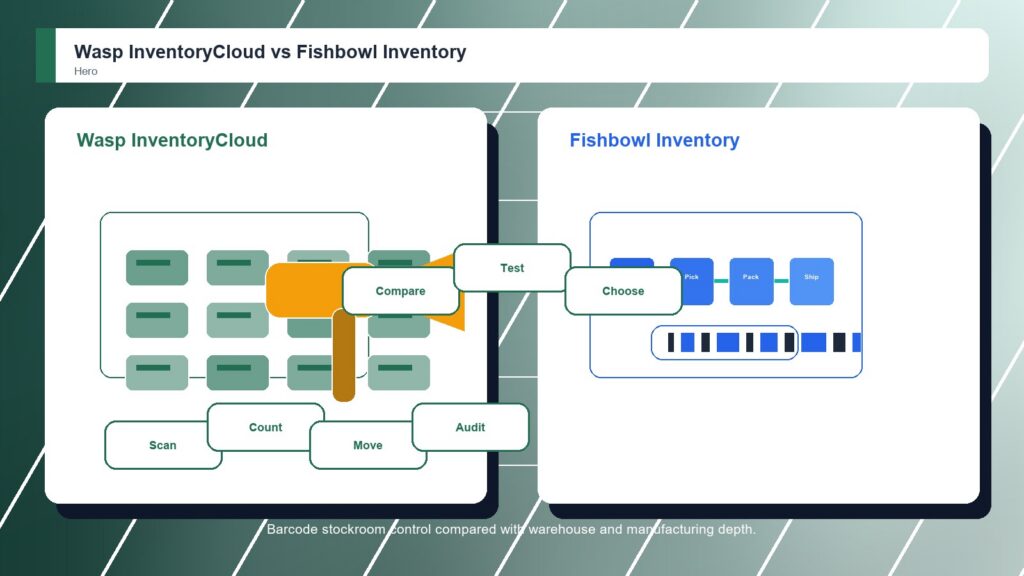
Wasp InventoryCloud vs Fishbowl Inventory business comparison image

Head-to-head

Wasp InventoryCloud vs Fishbowl Inventory: Which Barcode Inventory Systems Is Better?

Fishbowl Inventory wins because barcode inventory systems often need more than scans and counts once operations grow. It has the stronger fit for receiving, picking, packing, shipping, manufacturing, lot or serial tracking, and accounting-adjacent inventory control. Wasp remains a strong pick for teams that want barcode discipline without taking on a heavier warehouse system.

Wasp InventoryCloud comparison image

Wasp InventoryCloud

Wasp InventoryCloud is stronger when barcode scanning, item moves, cycle counts, permissions, reporting, multi-site stock visibility, and a barcode-centered operating model are the main needs.

Score 8.5/10 Best for barcode-first inventory control across stockrooms and small warehouses Focus Barcode control Rating 8.5/10
  • Barcode-centered inventory workflow
  • Good stockroom and asset tracking fit
  • Useful multi-site cloud inventory controls
VS
Fishbowl Inventory comparison image

Fishbowl Inventory

Fishbowl Inventory is stronger when barcode receiving, picking, packing, shipping, lot and serial tracking, manufacturing workflows, and accounting adjacency matter more than quick setup.

Score 8.8/10 Best for warehouse and manufacturing inventory operations Focus Warehouse depth Rating 8.8/10
  • Strong warehouse inventory depth
  • Good barcode receiving and picking fit
  • Useful manufacturing and accounting workflow support
Metric
Wasp InventoryCloud
Fishbowl Inventory
Winner
Barcode scanning workflow
Barcode-centered counts, item moves, receiving support, and label-driven control
Strong barcode receiving, picking, packing, shipping, and warehouse execution
Wasp InventoryCloud
Warehouse and stock control
Good stockroom, tools, assets, locations, and small warehouse tracking
Deeper inventory control for warehouses, manufacturers, lots, serials, and orders
Fishbowl Inventory
Mobile inventory work
Useful mobile audits, scans, permissions, and cloud inventory visibility
Good scanning support, though workflows are more operations-heavy
Wasp InventoryCloud
Accounting and operations
Practical reports and controls, with less manufacturing depth than Fishbowl
Stronger manufacturing, order, QuickBooks, and accounting-adjacent workflows
Fishbowl Inventory
Ease of rollout
Approachable when teams already want barcode discipline and fixed processes
More planning because the system supports broader operations
Wasp InventoryCloud
Best fit
Barcode-first inventory control for stockrooms and small warehouses
Warehouse and manufacturing inventory operations
Fishbowl Inventory
Real-world context
This is the stockroom-control versus operations-depth decision. Wasp gets barcode inventory organized quickly. Fishbowl can anchor more of the business process. If inventory touches purchasing, production, fulfillment, and accounting, Fishbowl has the better long-term shape.

Why people choose it

  • Barcode-centered inventory workflow
  • Good stockroom and asset tracking fit
  • Useful multi-site cloud inventory controls

Why people choose it

  • Strong warehouse inventory depth
  • Good barcode receiving and picking fit
  • Useful manufacturing and accounting workflow support
Winner: Fishbowl Inventory Fishbowl Inventory is the better overall barcode inventory system for companies with warehouse complexity, manufacturing needs, order workflows, and accounting visibility. Wasp InventoryCloud is better for stockrooms, asset-heavy teams, tool tracking, and smaller warehouses that want barcode control with less operational sprawl.
Read FAQs

Deep dive

What actually matters in this matchup

Start by deciding whether scanning is the workflow or the entry point into a larger operation. Wasp is strongest when barcode control is the main project. Fishbowl is stronger when scans feed warehouse and manufacturing decisions. That keeps the choice practical.

Barcode Discipline: Wasp InventoryCloud is stronger when a team needs consistent scans, item records, locations, labels, counts, and permissions without redesigning the whole operation. That makes it attractive for stockrooms, tool cages, asset teams, and smaller warehouses. That keeps the choice practical.

Operational Depth: Fishbowl Inventory is stronger when barcode activity connects to receiving, picking, packing, shipping, manufacturing, and accounting workflows. It can handle more operational gravity, which matters when inventory accuracy affects production schedules and customer orders. That keeps the choice practical. That matters during rollout.

Implementation Fit: Wasp can be the cleaner project when adoption risk is high and the team needs scanning discipline fast. Fishbowl is worth the heavier setup when leadership wants inventory data to support purchasing, production, fulfillment, and financial reporting. That keeps the choice practical.

Demo Evidence: Buyers should make Wasp InventoryCloud and Fishbowl Inventory run the same inventory workflow with real items, labels, locations, and scanners. A good demo shows whether counts stay accurate when people receive, move, count, and adjust stock. That keeps the choice practical.

Control Check: The winning barcode inventory system should fit the team's control model. That means roles, locations, labels, exceptions, count approvals, reports, and support handoffs are clear enough that workers do not rebuild side spreadsheets. That keeps the choice practical. That matters during rollout.

Adoption Reality: Inventory systems only work when people scan consistently. Buyers should watch whether warehouse staff, field workers, managers, and accounting users can update records without slowing the job or creating cleanup work after each count. That keeps the choice practical. That matters during rollout.

Methodology

How we evaluated the matchup

This review weighs barcode inventory systems fit against real buyer workflows, adoption risk, control needs, and long-term ownership.

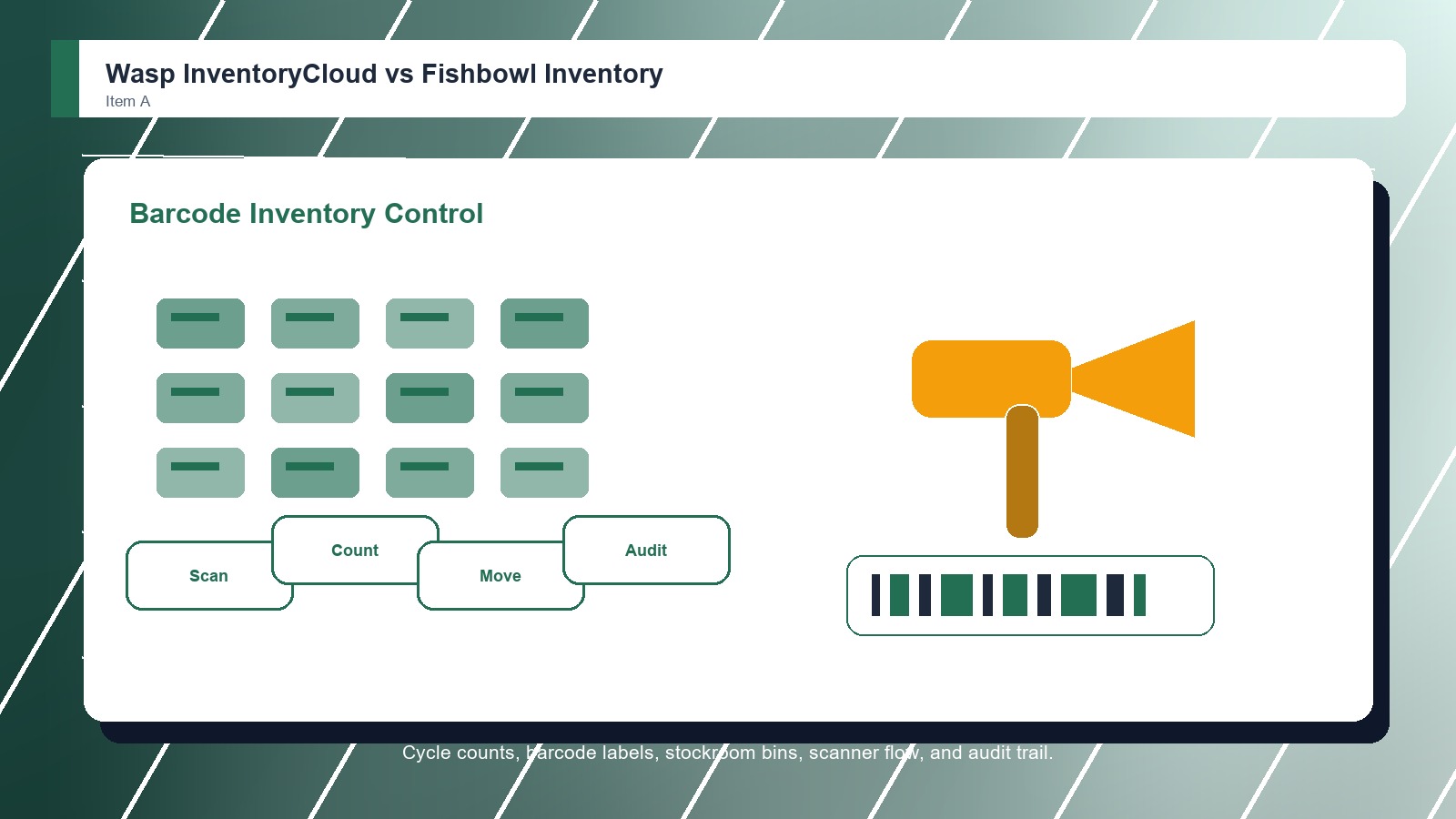
Barcode operations: We weighted scan workflows, labels, item movement, cycle counts, location control, user permissions, count accuracy, and whether scanning helps workers keep records current. That keeps the choice practical. That matters during rollout. That keeps the buying decision grounded.
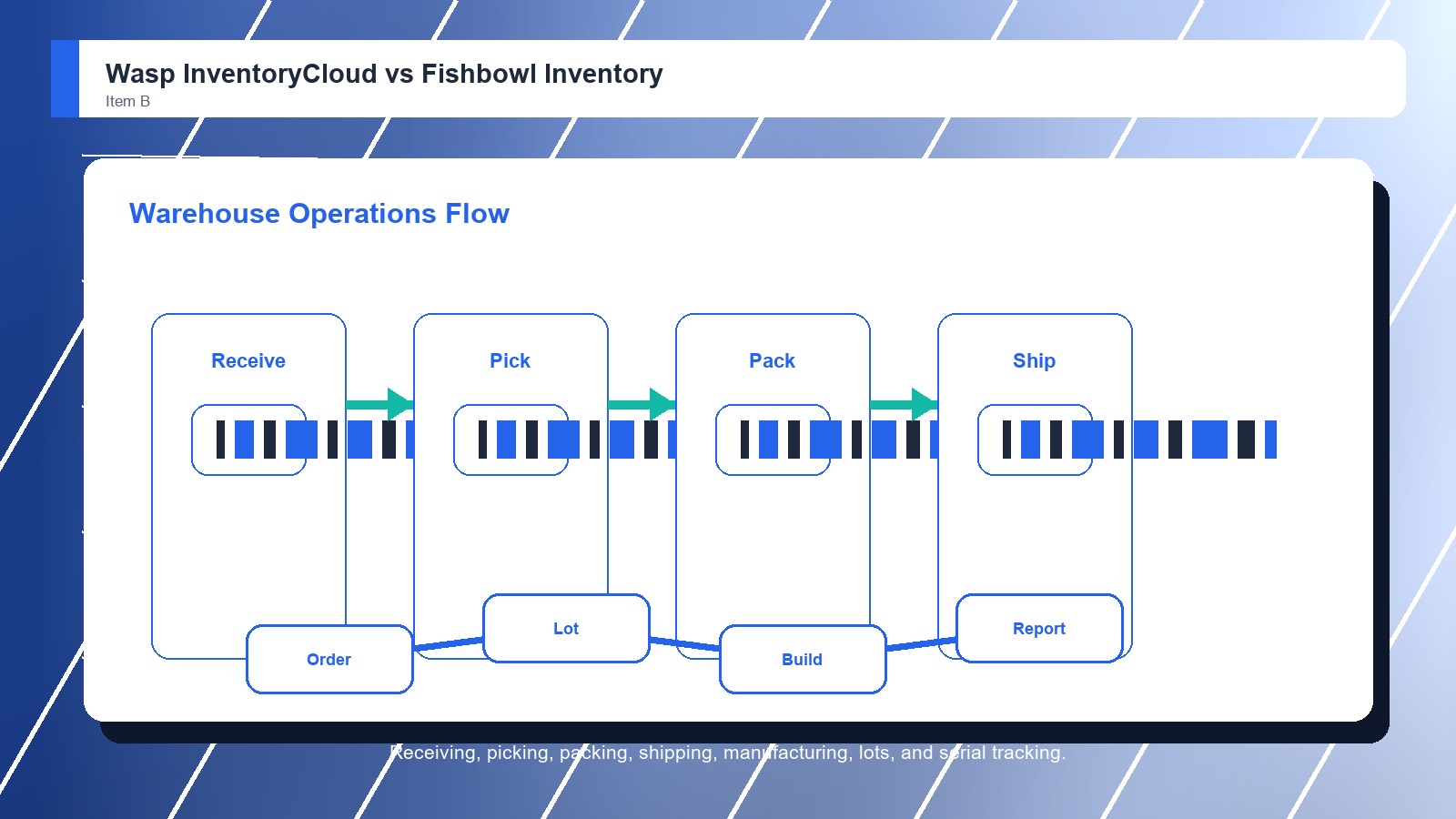
Warehouse depth: We compared receiving, picking, packing, shipping, manufacturing support, lot and serial tracking, order flow, accounting adjacency, reporting, and the operational complexity each product can absorb. That keeps the choice practical. That matters during rollout. That keeps the buying decision grounded.
Rollout risk: We considered setup effort, user training, scanner habits, data import, process ownership, support expectations, and whether the buyer needs a focused stockroom project or a larger inventory system. That keeps the choice practical. That matters during rollout. That keeps the buying decision grounded.

Buyer checks: Before choosing a barcode inventory system, confirm scanner support, label needs, user permissions, import quality, reporting, integrations, mobile behavior, support scope, pricing, and contract terms with the vendor. That keeps the choice practical. That matters during rollout. That keeps the buying decision grounded.

FAQ

Wasp InventoryCloud vs Fishbowl Inventory: common questions

Is Wasp InventoryCloud better than Fishbowl Inventory?
Wasp InventoryCloud is better when the business mainly needs barcode-centered stockroom control, item tracking, cycle counts, permissions, and multi-site visibility. Fishbowl Inventory is better when scanning must support warehouse workflows, manufacturing, order management, shipping, and accounting-adjacent inventory control. That keeps the choice practical.
Where does Fishbowl Inventory beat Wasp?
Fishbowl Inventory beats Wasp when the operation needs deeper warehouse and manufacturing coverage. Receiving, picking, packing, shipping, lot or serial tracking, production workflows, and accounting connections make Fishbowl stronger for teams outgrowing a simpler barcode inventory system. That keeps the choice practical. That matters during rollout.
Which is easier for a small team?
Wasp InventoryCloud is usually easier for a small team that wants barcode discipline without redesigning purchasing, production, and fulfillment. Fishbowl can still fit a small business, but the setup makes more sense when inventory complexity is already visible. That keeps the choice practical.
Which is better for manufacturers?
Fishbowl Inventory is the better fit for manufacturers because barcode scanning can connect with production, parts, lots, serials, orders, and accounting workflows. Wasp is more attractive when the manufacturer only needs cleaner item tracking and stockroom counts. That keeps the choice practical. That matters during rollout.
Should buyers demo Wasp InventoryCloud and Fishbowl Inventory with real inventory?
Yes. Buyers should bring real SKUs, labels, locations, scanners, count rules, users, and exception examples into both demos. The best barcode inventory system choice becomes clearer when workers receive, scan, move, count, and report inventory instead of watching sample records. That keeps the choice practical.
Should pricing decide the winner?
Pricing should narrow the shortlist, but it should not decide the winner alone. A cheaper barcode inventory system can cost more if counts stay inaccurate, scans are skipped, imports fail, reports confuse managers, or support cannot solve rollout problems. That keeps the choice practical.
Can a team migrate from Wasp InventoryCloud to Fishbowl Inventory later?
Yes, but migration should be treated as a project. Confirm exports, item history, location structures, barcode labels, user permissions, count records, integrations, reporting fields, training needs, and support responsibilities before assuming a future move will be simple. That keeps the choice practical. That matters during rollout.
Who should own the final decision?
The final decision should include the people who receive, scan, move, count, reorder, report, and audit inventory every week. Leadership can approve the budget, but the best barcode inventory system fit depends on real work habits. That keeps the choice practical. That matters during rollout.

Key Takeaways

  • Fishbowl Inventory wins overall.
  • Wasp InventoryCloud still fits a clear use case.
  • Scanning habits decide value.
  • Mobile adoption needs testing.
  • Inventory data must stay current.
  • Support ownership should be named.

Verdict

Fishbowl Inventory wins for Barcode Inventory Systems

Choose Fishbowl Inventory if barcode scanning must support warehouse control, manufacturing, fulfillment, order management, lot or serial tracking, and accounting workflows. Choose Wasp InventoryCloud if the primary goal is cleaner barcode-based item tracking, cycle counts, locations, and stockroom visibility.

#1 Winner

Fishbowl Inventory

Fishbowl Inventory wins because it goes deeper on warehouse, manufacturing, and operational inventory control

  • Warehouse and stock control
  • Accounting and operations
  • Best fit

Runner-up

Jump to the Head-to-Head

Tip: A school district, contractor, or maintenance team tracking tools and supplies may prefer Wasp. A manufacturer or distributor managing receiving, builds, inventory, orders, and shipping should prefer Fishbowl because barcode scanning feeds a bigger operational system.

Where to Buy

Use the official Wasp InventoryCloud and Fishbowl Inventory pages to confirm current demos, features, implementation options, support details, and contract terms.

Vendor terms, demos, pricing, and feature availability change regularly. Some links may earn a commission and never affect rankings.

Accessories You’ll Want

  • Item import (cleans SKUs, names, categories, units, and locations before setup)
  • Label plan (defines barcode or QR formats, printers, durable labels, and relabeling rules)
  • Scanner test (checks handheld, mobile, and workflow compatibility before rollout)
  • Count routine (sets cycle count owners, exception handling, approvals, and recount rules)
  • Report checklist (names the stock, reorder, variance, and audit reports managers need)

Tip: Before choosing either barcode inventory system, run one real receiving, move, count, adjustment, and report workflow with the people who will use it every week.