
Waxing Kits Buying Guide for Quick Touch-Ups
Waxing touch-ups are not miniature full sessions. They involve a few visible hairs or a small border, so precision, low waste, and immediate control matter more than heater capacity or bulk refill pricing.
Prepared strips, a small hard-wax warmer, or a targeted applicator can each work, but the format must allow a clean edge without spreading onto hair or skin the user intends to leave alone.
Buying framework
Define the quick touch-ups routine before comparing products
Use the setting, frequency, and skin priorities to narrow waxing kits logically.
Start with the use case: Name the recurring correction and its smallest boundary before selecting strip or applicator dimensions.
Rank the practical tradeoffs: Confirm that the limited regrowth meets the formula’s hair-length requirement; wax cannot reliably grip every newly visible short hair.
Check instructions early: Keep tweezers or another appropriate alternative in the decision when heating an entire kit would be disproportionate.
Use profiles
Match waxing kits to the person and pace
Three shopper profiles expose different priorities for quick touch-ups.
Routine-focused buyer: A facial-border user needs a product explicitly labeled for that area and enough sight-line control to protect adjacent hair.
Performance-focused buyer: A traveler correcting isolated leg or underarm misses may prefer individually sealed strips that avoid carrying an electrical warmer.
Occasional or flexible user: A home user with an existing pot system can buy narrow clean applicators rather than a second complete bundle.
Specifications
Read the specifications through a quick touch-ups lens
Translate technical language into visible routine benefits.
Handling lens
Compare the time and waste of warming wax with the simplicity of one prepared strip or another precise removal tool.
Ownership lens
Calculate cost per correction, not package weight; most bulk material may expire or become contaminated before use.
Wax Format: Strip dimensions determine whether the adhesive area exceeds the intended correction.
Temperature Control: Pre-cut shapes reduce setup only when their contour matches the target rather than requiring awkward folding.
Applicator Sizing: Low minimum melting quantity prevents wasting wax merely to cover the warmer base.
Strip Compatibility: Narrow applicator edges help define placement without leaving a thick uncontrolled ridge.
Aftercare Supplies: Resealable packaging protects unused pieces from humidity, debris, and accidental sticking.
Common mistakes
Avoid shortcuts that undermine quick touch-ups
A good purchase can still disappoint when selection or use is based on the wrong assumption.
Buying from one metric: Do not place a wide strip across a tiny target and hope to control removal at the corner.
Skipping compatibility checks: Avoid waxing hairs shorter than the labeled range repeatedly when the formula cannot establish grip.
Ignoring post-use care: Never heat a large pot and return used material simply to avoid waste after a small correction.
Decision guidance
Choose the simplest option that covers the real need
Use these decision rules to finish a shortlist for quick touch-ups.
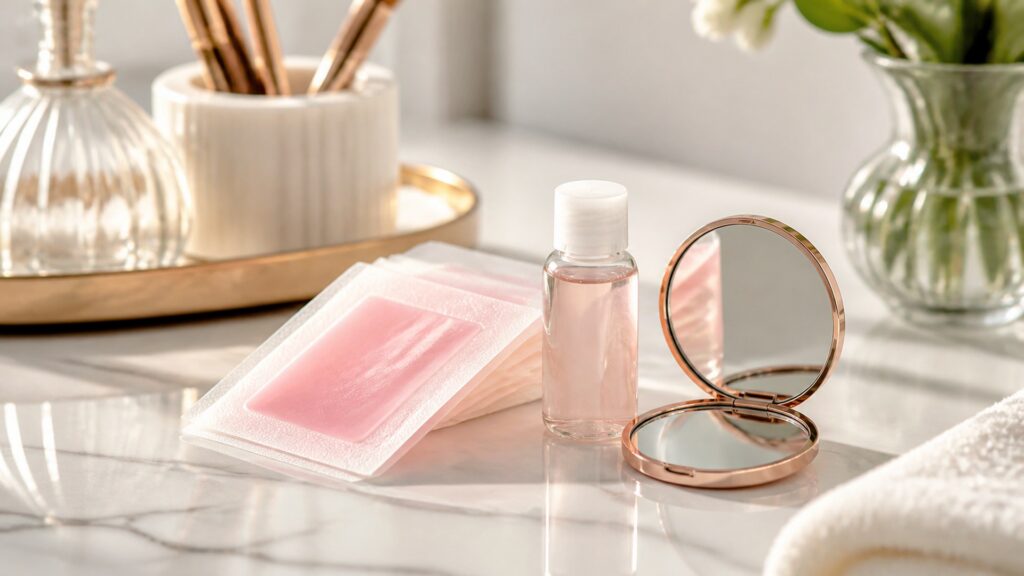
Choose the basic format when: Choose prepared precision strips when their formula, area labeling, and dimensions match the recurring job.
Choose the flexible format when: Use a small warmer only when the household already performs enough controlled touch-ups to justify cleaning and storage.
Pause before upgrading when: Prefer another method when only one or two hairs remain and waxing would expose much more skin than necessary.
Ownership & compatibility
Plan for clean, repeatable ownership
The best value remains convenient after the first few uses.
Consumables and replacements: Keep sealed touch-up products flat and within their stated temperature range.
Cleaning and storage: Discard any strip or applicator that has contacted skin rather than trying to reserve unused-looking sections.
Routine compatibility: Store precision supplies together so a rushed correction does not lead to improvised tools.
FAQ
Waxing Kits Buying Guide for Quick Touch-Ups FAQ
Practical answers about choosing and owning waxing kits for quick touch-ups.
What matters most when choosing waxing kits for quick touch-ups?
Is the most expensive option better for quick touch-ups?
How should I compare two similar waxing kits options?
Bottom line
Buy for repeatable quick touch-ups results
A focused shortlist is easier to own and use well.
Prioritize fit: Size the adhesive area to the correction, not the package bargain.
Verify the limits: Respect minimum hair length instead of repeating unsuccessful contact.
Count ownership costs: Use a simpler precise method when heating wax adds no value.
Reading Shortcuts
Jump to the key waxing kits decisions.
Decision Reminders
Keep these checks beside your shortlist.
- Check wax format: Test wax temperature and follow the kit instructions before applying it to a larger area.
- Check temperature control: Do not wax irritated, sunburned, broken, or otherwise compromised skin.
- Check applicator sizing: Check hair-length, medication, and body-area warnings in the product directions.
Glossary Snippets
Plain-language waxing kits terms.
When to Use a Top 10 Review
Use a ranked list to identify a manageable set of strong candidates.
- You are still exploring: A ranked list can reveal the main formats and price tiers.
- You want a shortlist: Start broad, then confirm fit with this buying guide.
Have finalists? Use a Comparison.
When to Use a Comparison
Use a direct comparison when only a few candidates remain.
- Features are close: Side-by-side details clarify meaningful differences.
- Prices overlap: Compare ownership value, not only purchase price.
Still exploring? See the Top 10.