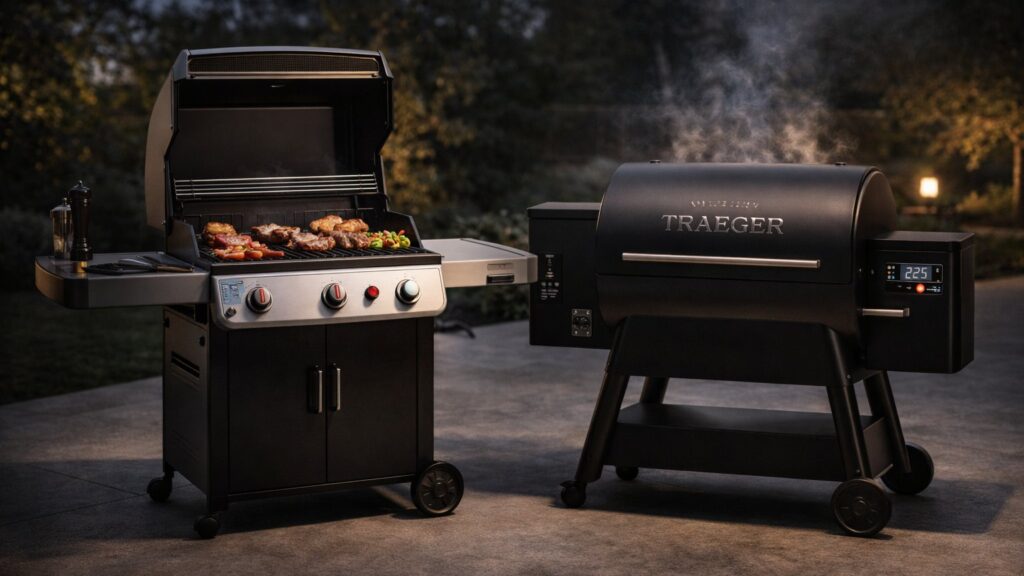
Weber vs Traeger

This Weber vs Traeger comparison examines key differences in fuel type, flavor, temperature control, and usability, helping you understand real-world performance and choose the right grill for your cooking style.

By: Review Streets Research Lab
Updated: March 20, 2026
Approx. 10–12 min read

Head-to-head

Weber vs Traeger: Which Grill Is Better for Real-World Backyard Cooking?

A clean A/B view of what matters in real outdoor cooking: flavor style, temperature control, ease of setup, day-to-day convenience, long-cook consistency, and the long-term value of choosing charcoal or pellet grilling.
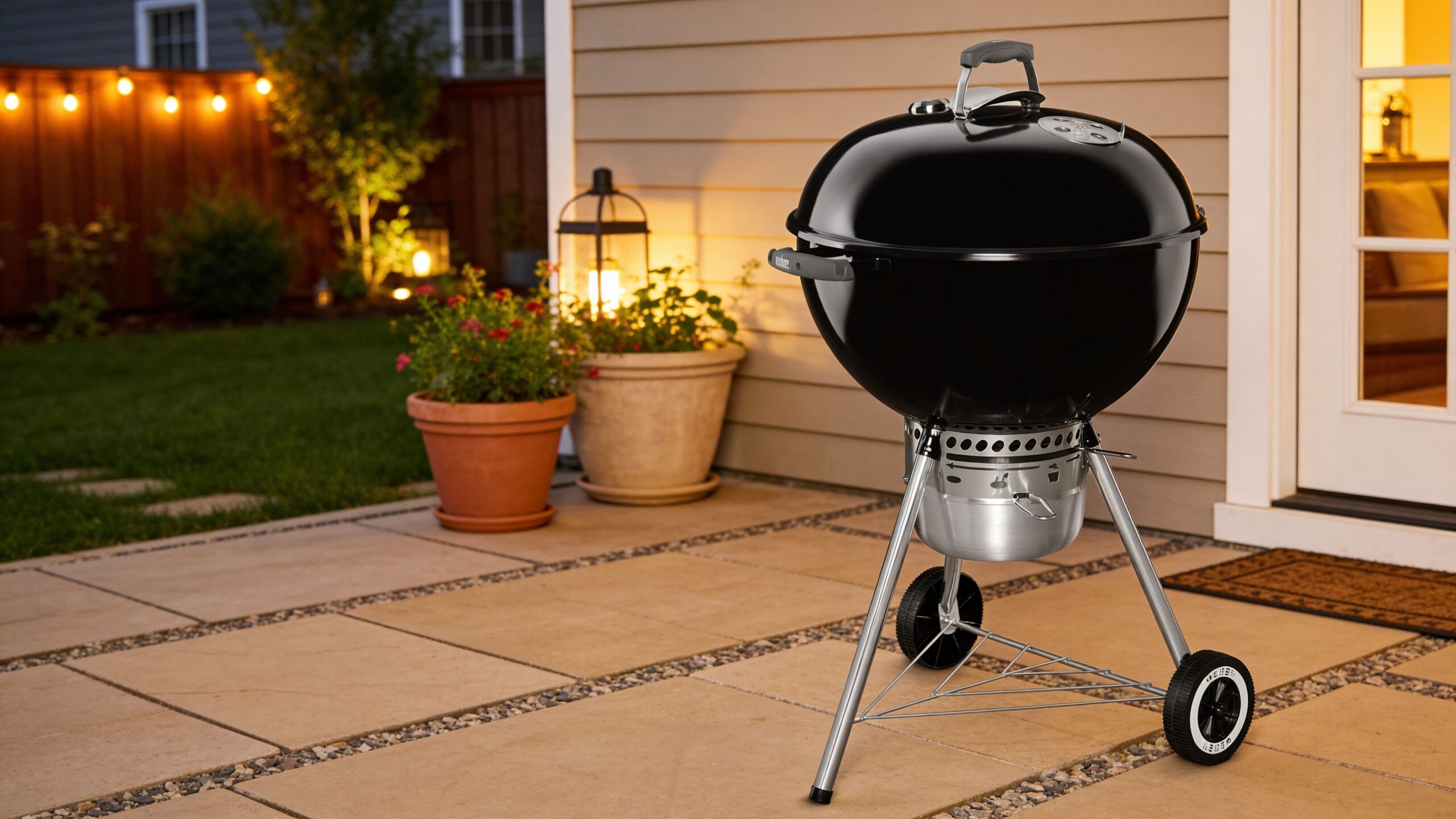
Weber Grill

Weber Grill

A classic hands-on grill built for cooks who value direct heat control, fast weeknight sessions, and the unmistakable grilled flavor that comes from managing the fire yourself.

Score 8.9 Best for classic grilling feel Battery charcoal/gas Why buy searing + simplicity
  • Typically quicker to fire up for burgers, steaks, vegetables, and shorter cooks
  • More direct, hands-on heat management for people who like to control the cook manually
  • Strong pick when you care more about traditional grilling than app-driven convenience
VS
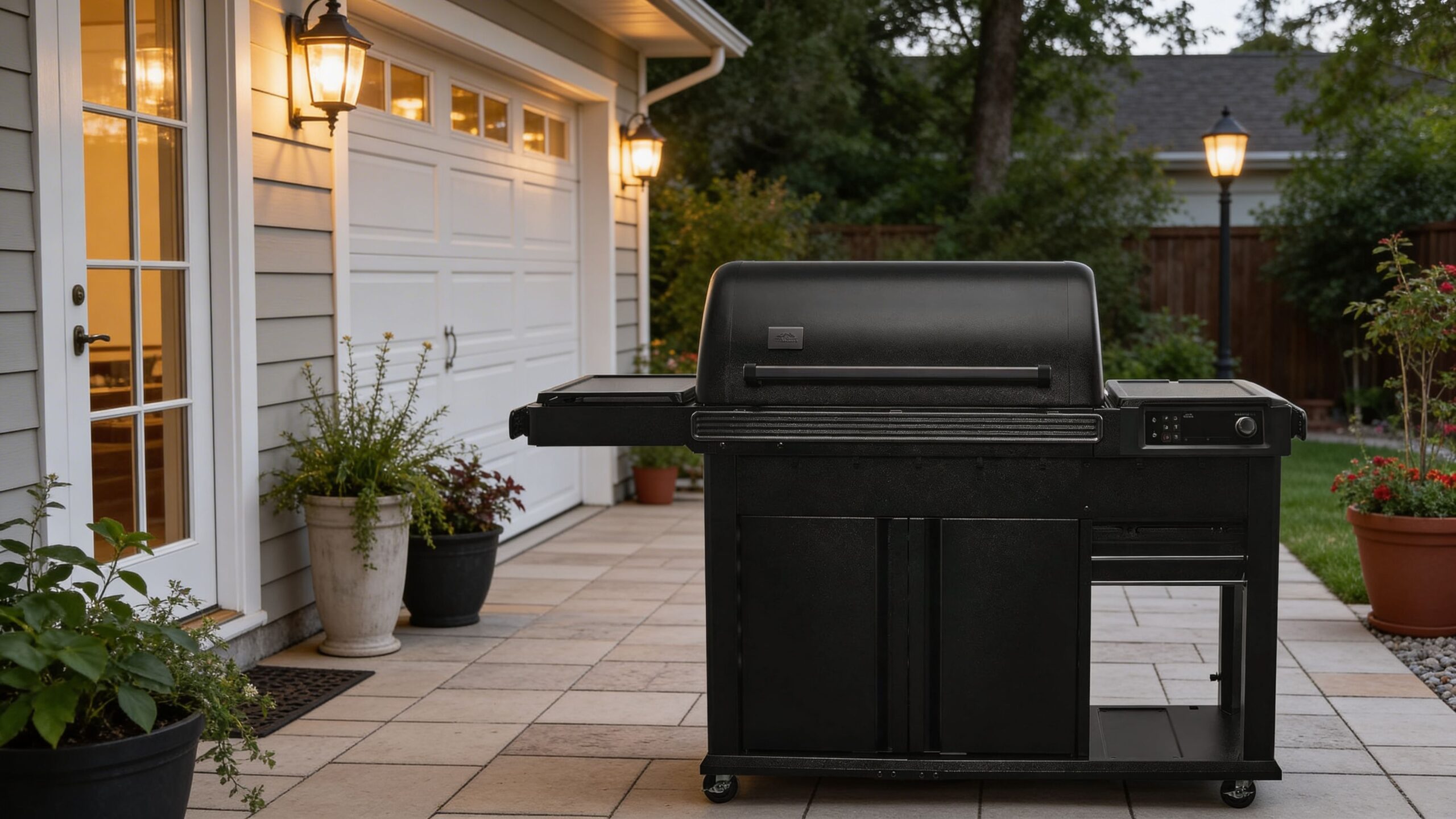
Traeger Grill

Traeger Grill

A convenience-first pellet grill that suits longer cooks, steadier temperatures, and owners who want wood-fired flavor with less hands-on fire management during the session.

Score 9.1 Best for low-and-slow ease Battery wood pellets Why buy temp control + convenience
  • More forgiving for long cooks like ribs, pork shoulder, and brisket-style sessions
  • Digital control usually makes it easier to hold a target cooking temperature
  • Better fit for buyers who want smoking versatility with less constant tending
Power under load
Strong direct-heat searing
Steadier low-and-slow output
Tie
Control & clutch consistency
Manual, more involved
Very consistent digital control
Traeger
Ergonomics (feel + fatigue)
Simple, fast, hands-on
Less babysitting on long cooks
Traeger
Value (typical kit pricing)
Usually lower buy-in
Higher upfront cost
Weber
Battery ecosystem depth
Focused grilling simplicity
Broader smoking features
Traeger
Real-world context
This comparison reflects a synthesis of professional reviews, manufacturer data, long-term user feedback, and use-case patterns to highlight how each grill typically performs in everyday backyard cooking.

Weber — Why people choose it

  • More immediate, traditional grilling feel for quick dinners and hotter direct-heat cooking
  • Usually easier to justify on price if you want dependable results without stepping into pellet grilling
  • Appeals to buyers who want fewer electronic systems and a more straightforward ownership experience

Traeger — Why people choose it

  • Better match for cooks who want smoked flavor and easier temperature management over longer sessions
  • Convenient for mixed-use households where consistency matters more than hands-on fire tending
  • Strong fit for people expanding beyond basic grilling into ribs, roasts, and weekend barbecue projects
Verdict: Choose Traeger if you want the easier path to steady temperatures, longer smoking sessions, and a more convenience-focused cooking experience. Choose Weber if you care most about classic grill flavor, faster direct-heat cooking, lower upfront cost, and a simpler hands-on setup for everyday backyard meals.
Read FAQs

Deep dive

What actually matters in this matchup

On paper, both grills can handle everyday outdoor cooking, but the meaningful differences show up in how they fit your routine. This comparison is less about headline features and more about how each grill changes the cooking experience, from weeknight speed and fire management to long-session consistency, cleanup, and how much attention the cook demands.

For everyday grilling: the bigger question is whether you want a more direct, hands-on cooking style or a system that reduces babysitting and smooths out temperature swings during longer sessions.

For flavor and cooking style: Weber tends to favor traditional grilled texture and faster, hotter direct-heat meals, while Traeger makes more sense when smoked character and steady low-and-slow cooking matter more than speed.

For ownership over time: the decision often comes down to simplicity versus convenience—Weber generally asks less of the owner upfront, while Traeger rewards buyers who want easier temperature management and broader smoking flexibility in regular use.

Methodology

How we evaluated these grills

Our evaluation focused on real cooking tasks that expose meaningful differences between grills, not headline features on a product page. Each model was assessed through practical use scenarios designed to show how these grills actually differ in everyday ownership, weeknight cooking, and longer barbecue sessions.

Tasks: direct-heat meals like burgers and steaks, longer cooks that require temperature stability, repeated lid-open cooking cycles, and typical prep-to-cleanup routines that affect convenience and workflow.

What we scored: cooking consistency, ease of temperature management, day-to-day usability, build confidence, and the ownership factors that shape long-term satisfaction, including fuel system, flexibility, and overall value in regular use.

How results are interpreted: outcomes are assessed using a context-aware evaluation approach, recognizing that the importance of speed, smoke capability, simplicity, and control can shift depending on cooking style, meal type, and how often the grill is used.

What we ignored: advertised claims, isolated lab-style numbers, and feature lists that do not consistently translate into repeatable real-world cooking performance.

FAQ

Weber vs Traeger: Common questions

Which is easier for beginners to use?
Traeger is often easier for beginners because pellet operation and digital temperature control reduce the amount of manual heat management during the cook. Weber can still be straightforward, but it usually asks for more direct involvement with setup, heat adjustment, and timing.
Which one is better for low-and-slow cooking?
Traeger generally makes more sense for low-and-slow sessions because steady temperature control is a core part of the ownership experience. Weber can handle longer cooks depending on the setup, but it is usually chosen more often for traditional grilling and shorter, hotter sessions.
Is Weber or Traeger better for quick weeknight meals?
Weber is often the more natural fit for quick weeknight grilling, especially when the goal is direct-heat cooking with less emphasis on long smoke times. Traeger can certainly cook everyday meals, but its strengths tend to stand out more when the session is longer or more temperature-sensitive.
Does the flavor difference matter in real-world use?
It can, depending on what and how you cook most often. Buyers who want a more classic grilled finish may lean toward Weber, while those who want an easier path to wood-fired, smoked character are often more comfortable with Traeger over time.

Key Takeaways

  • Weber leans toward faster, hands-on cooking with more direct control, while Traeger prioritizes consistency and reduced effort during longer sessions.
  • The decision often comes down to cooking style—traditional grilling versus wood-fired smoking—rather than overall capability.
  • Traeger typically fits better into routines where temperature stability and convenience matter more than speed or manual control.
  • Weber makes more sense when quick setup, straightforward operation, and lower upfront commitment are higher priorities.
  • Ownership experience differs over time, with Weber favoring simplicity and Traeger offering broader versatility for varied cooking methods.
  • For most buyers, choosing based on how often and how long you cook will matter more than feature differences on paper.

Verdict

Choosing Between Weber and Traeger

In a true head-to-head, the better grill is the one that aligns with how you actually cook—whether that means faster, hands-on grilling sessions or longer, more controlled cooks with less ongoing adjustment.

#1 Winner

Traeger Grill

A stronger overall fit for buyers who prioritize consistency, convenience, and flexibility across longer cooking sessions.

  • More stable temperature control during extended cooks
  • Less hands-on management once cooking is underway
  • Better suited for expanding into smoking and multi-hour meals

Runner-up

Jump to the Head-to-Head

Tip: The right choice often comes down to how you cook most often—quick grilling sessions or longer, more controlled cooking over time.

Where to Buy

We prioritize reputable sellers, easy returns, and reliable availability.

Price checks happen regularly. Some links may earn a commission—never affects rankings.

Accessories You’ll Want

  • Grill cover (helps protect the cooker from weather, dust, and year-round outdoor wear)
  • Instant-read meat thermometer (useful for checking doneness accurately without guessing by time alone)
  • Pellets or charcoal refills (keeping the right fuel on hand matters more than most buyers expect once cooking becomes routine)
  • Grill cleaning brush and scraper (makes regular grate cleaning easier and helps maintain more consistent cooking results)
  • Drip tray liners or foil trays (cuts down cleanup time and makes ownership less messy after heavier cooks)

Tip: Buy accessories that match how you actually cook most often—quick grilling setups and longer smoking sessions usually benefit from different fuel, cleanup, and maintenance habits.